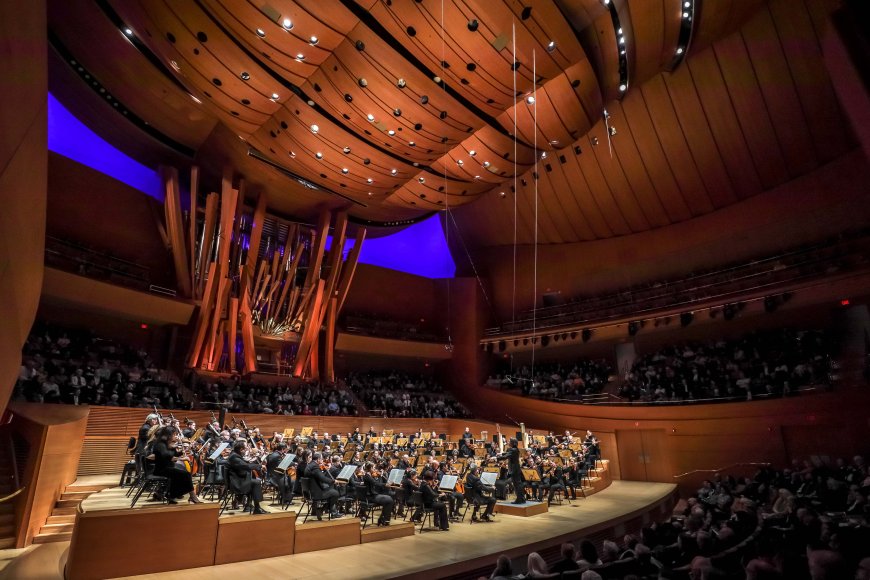
SF Classical Voice reviewed more than 250 performances in 2025! In Los Angeles, we covered everything from major arts organizations and lively festivals to intimate recitals and local groups.
We asked our expert arts writers — Charles Burns, Jim Farber, Richard Ginell, and Harlow Robinson — to select their favorite performances of the year and here is what they chose. Join us in celebrating L.A.’s greatest musical achievements of 2025.
Carl Nielsen's Symphony No. 4 with the Los Angeles Philharmonic (April 26)
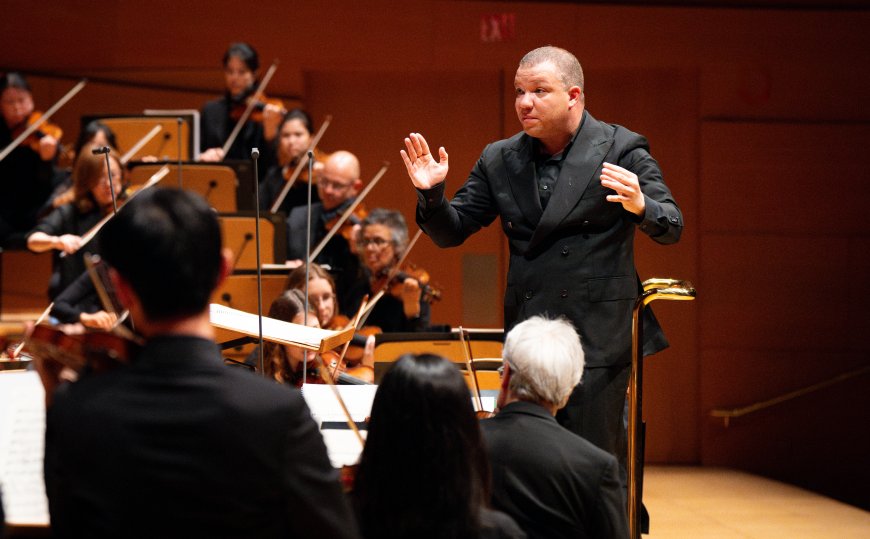
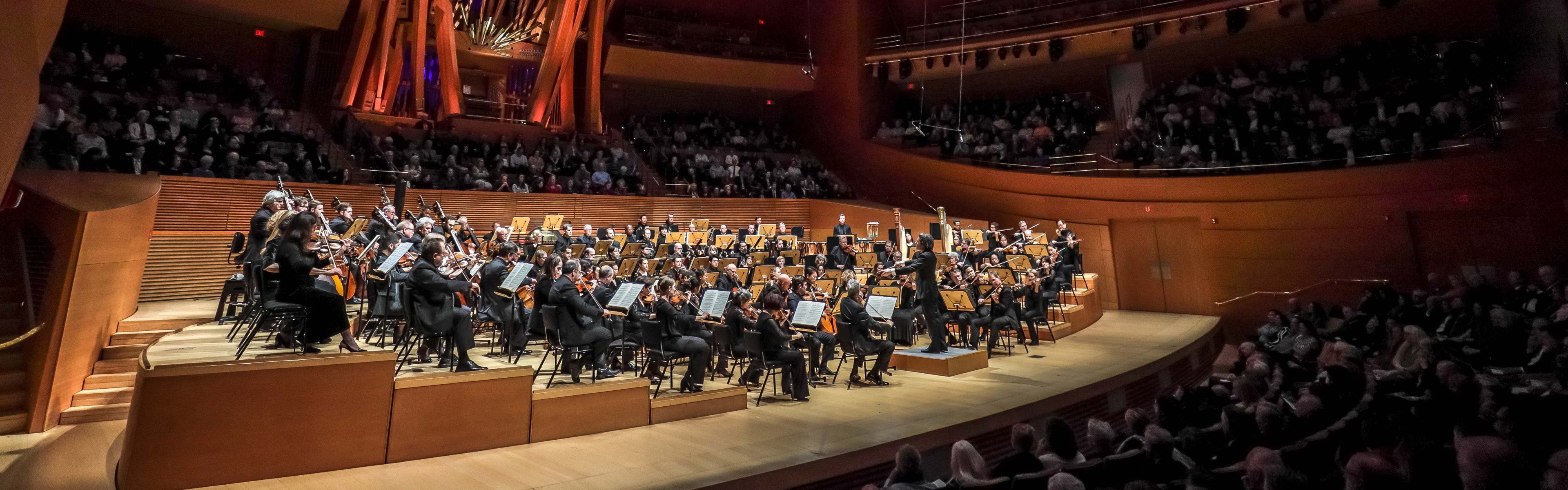
A native of Lakewood, conductor Ryan Bancroft made his Disney Hall debut with the belated U.S. premiere of Anders Hillborg’s Sound Atlas, a mesmerizing tone poem that combines a glass harmonica with wind instruments and bristles with unnerving microtones. Later on, Bancroft unleashed his burning passion for Carl Nielsen’s highly-dramatic Symphony No. 4, The Inextinguishable. As the Phil continues to search for a music director, it might want to give this guy a good look. (Read SFCV's review.) — Richard Ginell
Ainadamar at Los Angeles Opera (April 26)
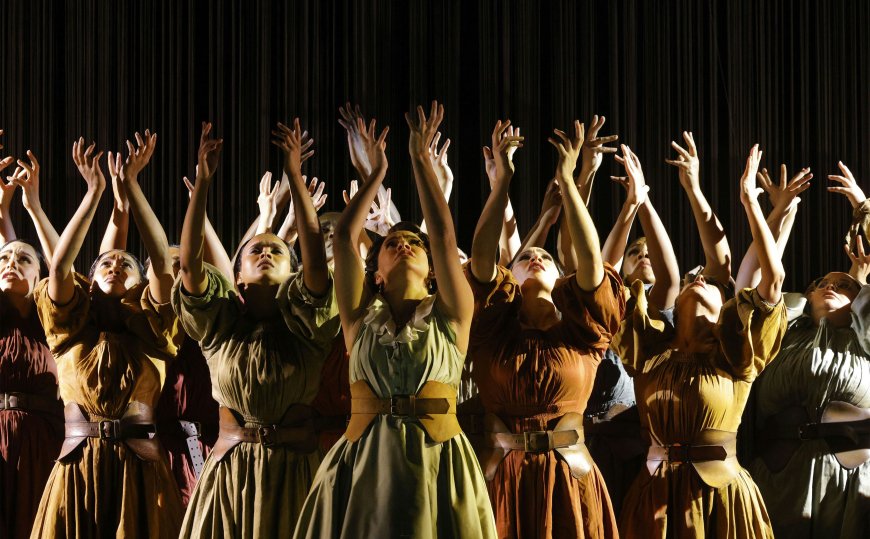
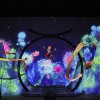
Since its 2003 premiere at Tanglewood, Ainadamar by composer Osvaldo Golijov and librettist David Henry Hwang has never left the world’s stages — and for good reason. Based on the life and death of the Spanish poet/playwright, Federico García Lorca, Ainadamar is a powerhouse of an opera that offers a heady blend of politically charged history and poetic abstraction. Los Angeles Opera’s production was skillfully directed by Deborah Colker and dynamically conducted by Lina González-Granados. It featured eye-dazzling sets and costumes, a stellar cast of singers, and an ensemble of flamboyant flamenco artists. (Read SFCV's review.) — Jim Farber
“Boulez 100” with the Los Angeles Philharmonic (May 11)
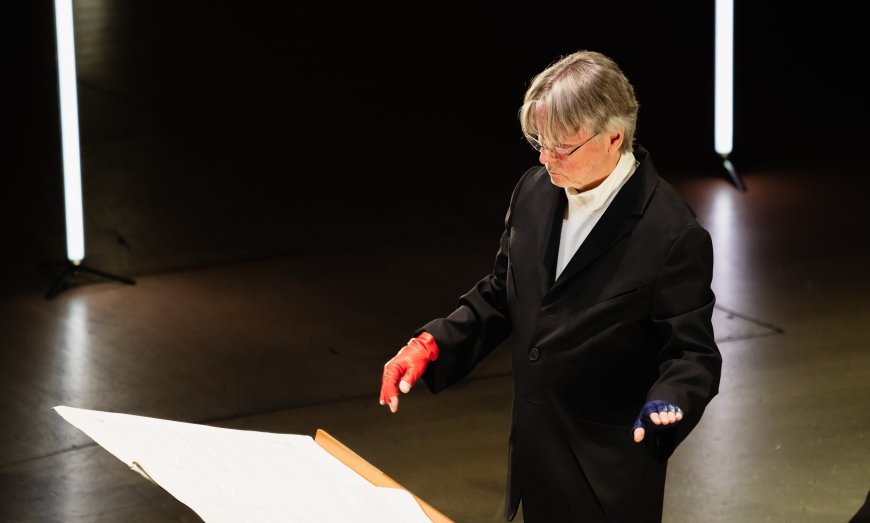
To commemorate the 100th anniversary of Pierre Boulez’s birth, Esa-Pekka Salonen offered a bold, innovative program. Lavish orchestral expansions contrasted the original piano versions of the composer’s Notations. The concert also gave a shatteringly clear reading of Claude Debussy’s La Mer that evoked memories of Boulez’s own performances, and concluded with a multimedia surround-sound rendition of Boulez’s Rituel in memoriam Bruno Maderna. Concerts like this no doubt prompted the Phil to bring Salonen back to L.A. in 2026 as its Creative Director. (Read SFCV's review.) — Richard Ginell
Ojai Music Festival with Music Director Claire Chase (June 5–8)
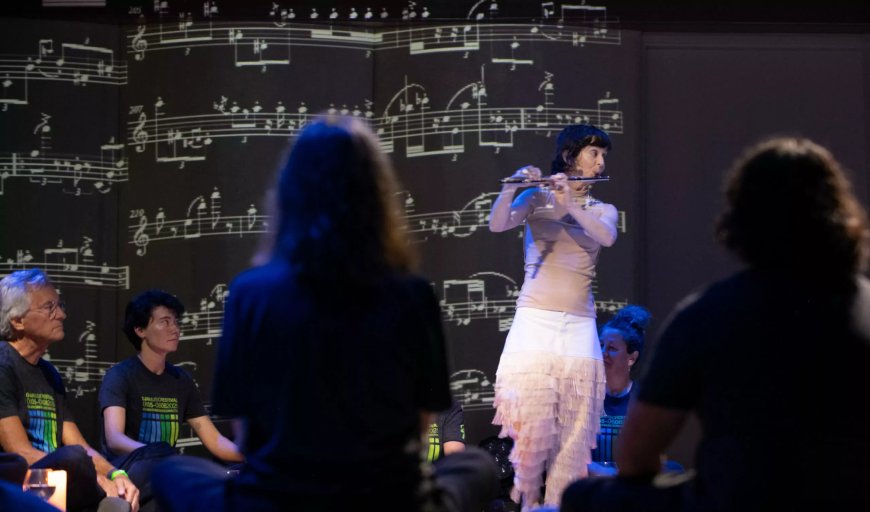
The interplay between music and nature has been a key element of Ojai Music Festival ever since its founding. But, as expressed by this year's music director, Claire Chase, the goal for the 2025 version was "becoming maximally attuned to each other and our environments." Marcos Balter's Pan (with Chase and her flute as the ultimate forest-dweller-life force) introduced audiences to the nature-inspired music and immersive soundscapes of Annea Lockwood. The integration of field recording, natural sounds, and instrumentation in works by composers Liza Lim, Leilehua Lanzilotti, and Suzie Ibarra were highlights. (Read SFCV's review.) — Jim Farber
“Pop Up” with the Brightwork Ensemble (June 17)
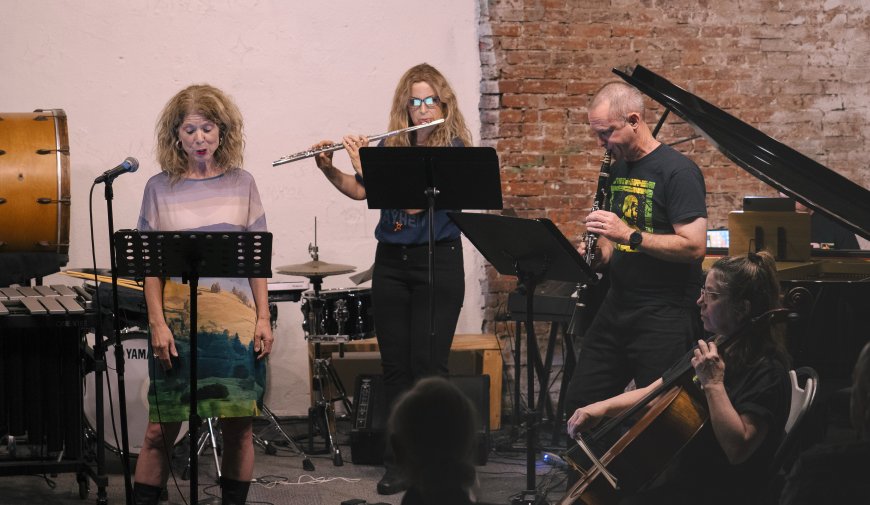
Brightwork newmusic’s concert at Monk Space showed that stylistic fluidity need not come at the expense of musical rigor. Across eight works, pop hooks, jazz grooves, and contemporary chamber textures coexisted naturally. From Nina Shekhar’s gently grooving Don’t Beat a Word to Aron Kallay’s playful Luciano Berio–Beatles arrangements, Brightwork treated all musical idioms with equal care and ease, ending the night with Clarence Barlow’s dense Septima de facto as proof that approachability and ambition can comfortably share the same stage. (Read SFCV's review.) — Charles Burns
Summer of Angels Chamber Music Festival with the New Hollywood String Quartet (July 10)
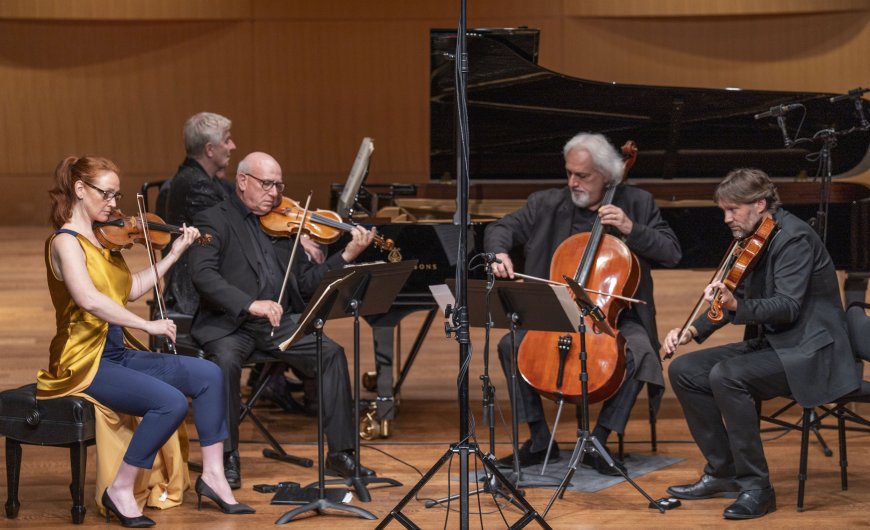
Like hot dogs and caviar, Hollywood and string quartets are an odd couple. But in the first of four concerts celebrating its 25th anniversary, the NHSQ made a strong case for the pairing. Engaging performances of Alexander Borodin's Second Quartet, Hugo Wolf's Italian Serenade, and César Franck's F Minor Quintet (with pianist Jean-Yves Thibaudet) were refined and technically polished. Conductor Leonard Slatkin, son of the founders of the original Hollywood String Quartet, provided witty and entertaining commentary at all the concerts. (Read SFCV's review.) — Harlow Robinson
“A Concert for Sarah” at Piano Spheres (July 14)
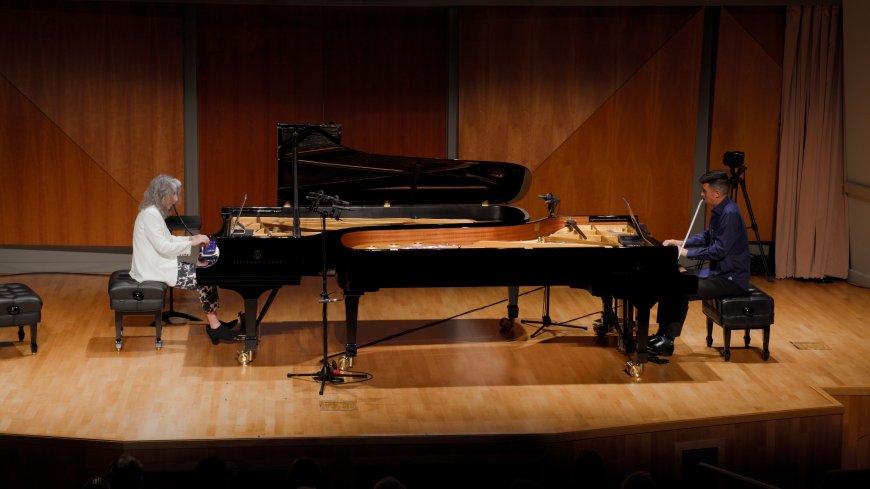
For listeners encountering the late Sarah Gibson’s music for the first time, “A Concert for Sarah” was a welcoming introduction. Works such as Every Something, The Pepper Tent, and our eyes once watered emphasized postminimalist clarity, artistic collaboration, and a joyful sense of play. Pianists who knew Gibson shared moving stories about how she touched their lives. They performed her music with the concision, exuberance, and generosity it asks for, spotlighting a composer whose voice still feels present a year after her passing. (Read SFCV's review.) — Charles Burns
Mozart’s Requiem at Carmel Bach Festival (July 15)
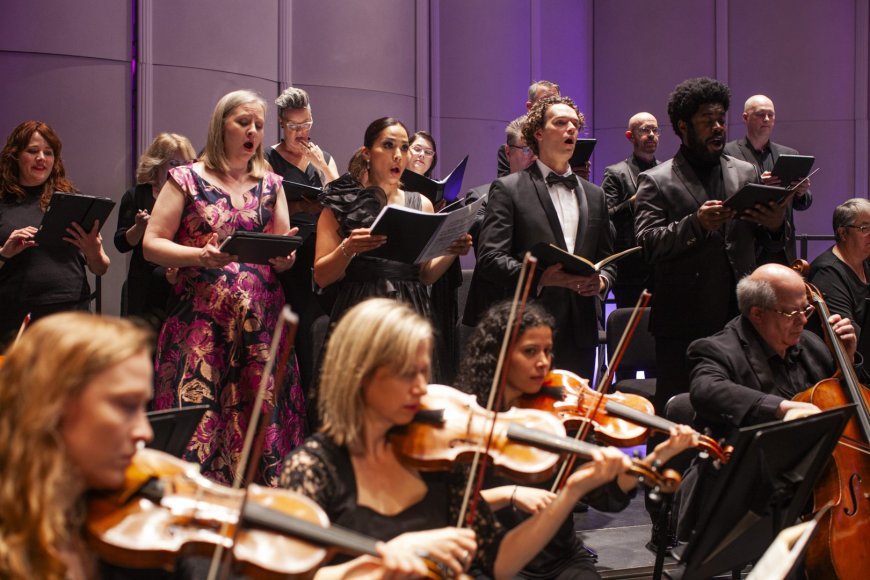
The highlight of this long-running, increasingly interesting festival was an inspired brainstorm from its choral director, Andrew Megill. Rather than conclude a performance of Mozart’s Requiem with Franz Xaver Süssmayr’s generic-sounding completion, Megill segued from Süssmayr’s Lux aeterna movement directly into Latvian composer Peteris Vasks’ calm, tintinnabulating, spiritually beautiful Dona Nobis Pacem. The ploy really worked, making us forget about Süssmayr with a finish that lingered in the soul for hours. (Read SFCV's review.) — Richard Ginell
The Turn of the Screw at Santa Fe Opera (Aug. 1)
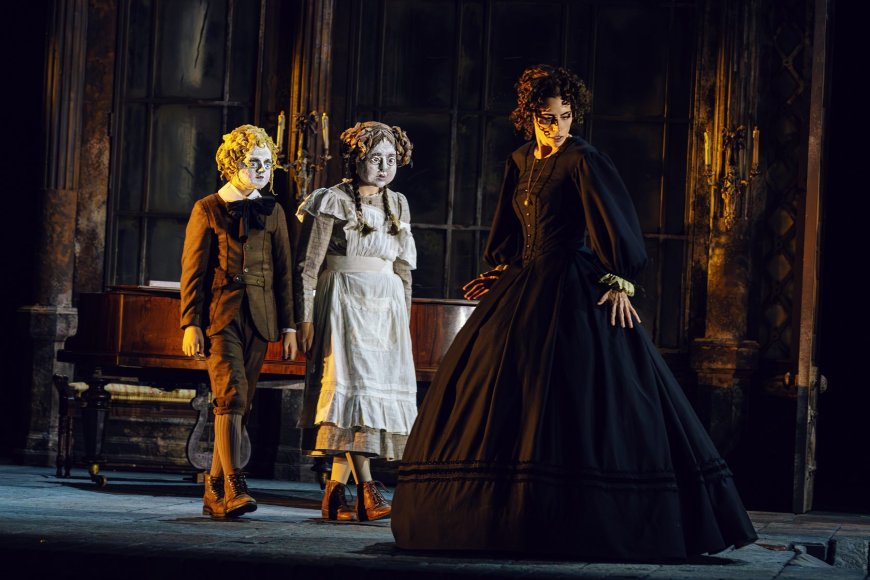
Director Louisa Muller took full advantage of Santa Fe Opera's spectacular outdoor setting to create a haunting staging of Benjamin Britten's psychological ghost story. As the sun set at the back of the stage, the shift from light to dark "turned the screw" from sanity to madness. Leading a stellar cast was Jacquelyn Stucker as the haunted governess of two twisted children. Conductor Gemma New and the unusual chamber-sized ensemble painted a dazzling chiaroscuro palette, with spine-tingling percussion effects. (Read SFCV's review.) — Harlow Robinson
Gemma New Conducts Tchaikovsky with the Los Angeles Philharmonic (Aug. 14)
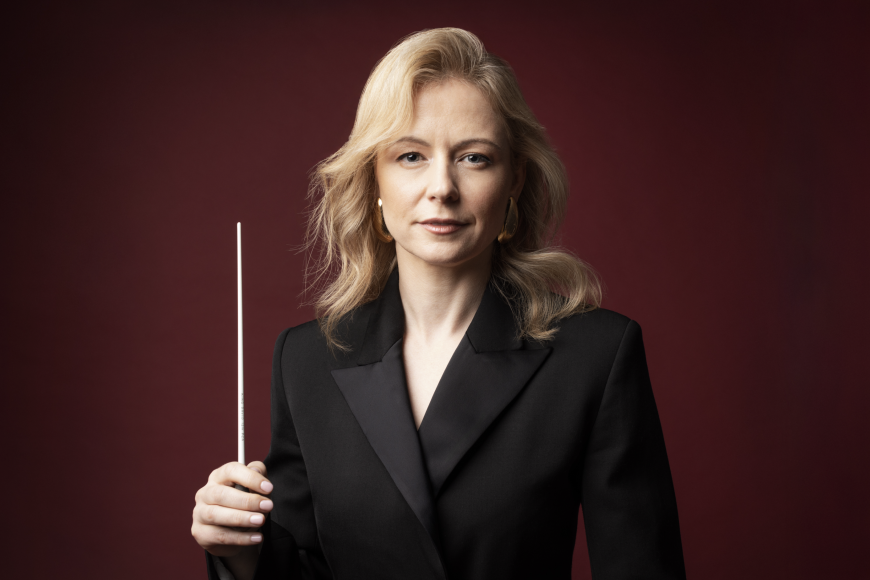
Big, brassy, bold and emotional, Russian music has the sonic power and drama to fill the fabled Hollywood Bowl — and bring in the crowds. With expressive New Zealander Gemma New on the podium, the LA Phil displayed its Slavic chops in Tchaikovsky's heart-on-the-sleeve Fourth Symphony and Nikolai Rimsky-Korsakov's love letter to Spain, Capriccio Espagnole. In between came the Trumpet Concerto of Armenian composer Alexander Arutiunian, brought to flashy and soulful life by soloist Pacho Flores. (Read SFCV's review.) — Harlow Robinson
West Side Story at Los Angeles Opera (Sept. 20)
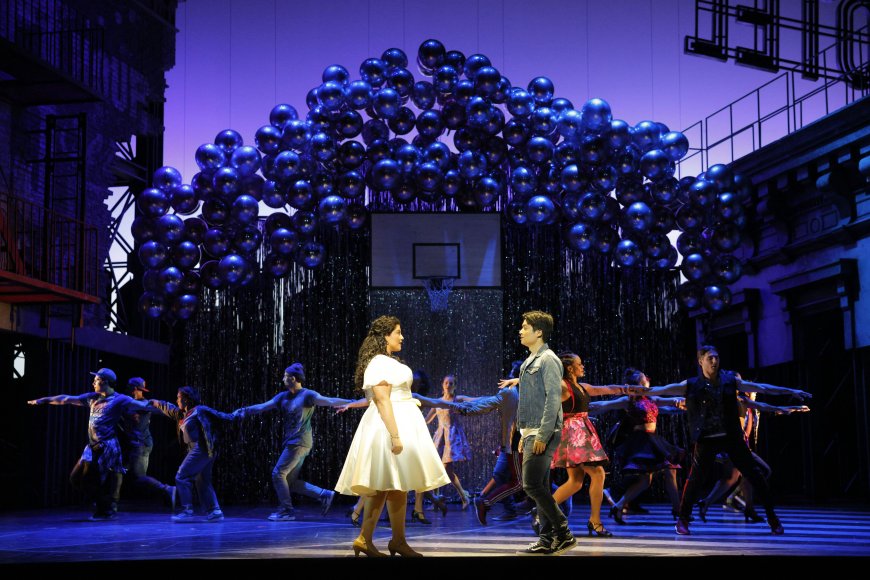
Using Joshua Bergasse’s reproduction of Jerome Robbins’ original choreography, Francesca Zambello’s production captured the tension, pizzazz, and shock that the 1957 Broadway outing must have created. The cast was mostly young and full of energy. It was a kick to hear LA Opera Music Director James Conlon, who grew up with this score, swinging the jazzy big band and quasi-bebop passages and making the Latin rhythms percolate. (Read SFCV's review.) — Richard Ginell
Mahler's Symphony No. 2, “Resurrection” with the Los Angeles Philharmonic (Oct. 9)
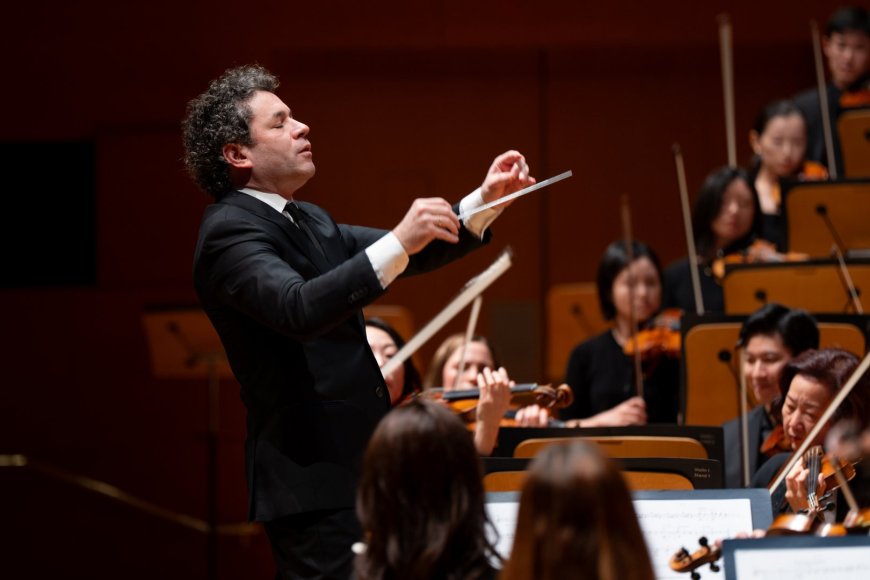
A highlight of his final "Gracias Gustavo" season, Gustavo Dudamel's intimate, healing, and passionate performance of Mahler's stupendous and epic Symphony No. 2 came as a reassuring parting gift to his fire-weary Los Angeles community. Commanding an army of musicians stationed around Disney Hall, including the Los Angeles Master Chorale and soloists Chen Reiss and Beth Taylor, Dudamel seemed to draw on his own personal journey, rediscovering the musical and spiritual meaning of every bar and phrase. Special kudos to the impeccable brass playing. (Read SFCV's review.) — Harlow Robinson
Hildegard, Beth Morrison Projects, at Los Angeles Opera (Nov. 5)
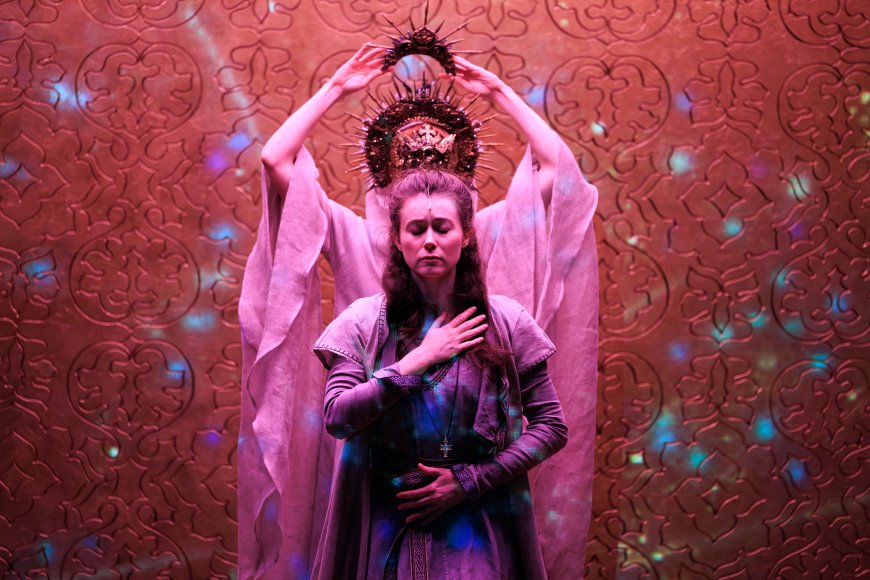
Hildegard, composed by Sarah Kirkland Snider, is an ode to the art of the chamber opera and a brilliant statement of how less can be so much more. Inspired by the real (and imagined) life, music, and spirituality of visionary Hildegard von Bingen, the opera combines a contemporary musical vocabulary — used to depict the modern aspects of the drama — and adds the monastic atmosphere of 12th-century polyphony. The cast was top notch, led by Nola Richardson as Hildegard. Elkannah Pulitzer's direction and choreography was pitch perfect, as was the musical performance led by Gabriel Crouch. The sets and projections were simple but evocative in the Wallis Theater. But ultimately, it is Hildegard's ability to achieve a state of transcendence that makes it shine. (Read SFCV's review.) — Jim Farber
Nic Gerpe's “Islands” at Piano Spheres (Nov. 10)
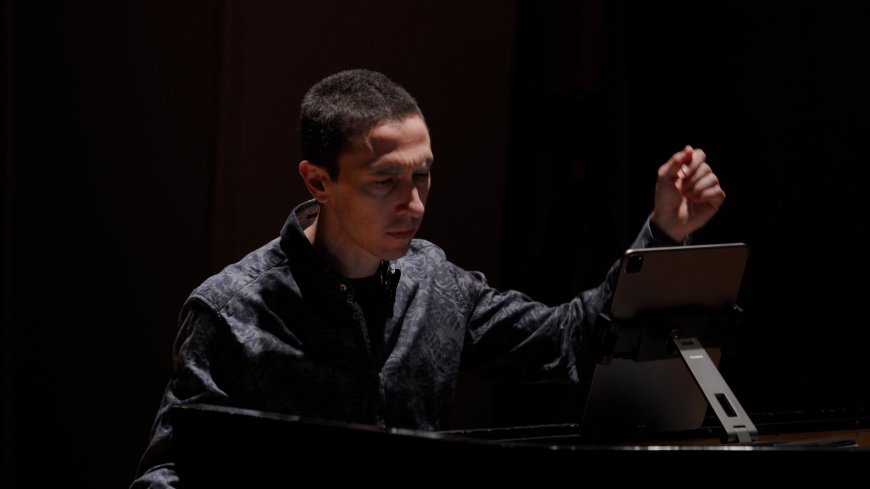
Nic Gerpe's Islands stood out this year for its pianistic virtuosity and narrative coherence. Gerpe rendered physical environments as continuous sonic ecology across eight works evoking volcanoes, oceans, and cityscapes. Visual projections by Miguel Galindo and electronic musical elements grew naturally from the evening’s environmental themes, and from the sound of the piano itself. This concert was a clear demonstration of how technical mastery, coupled with selfless execution, can render even the most complex and intense music approachable and emotionally accessible. (Read SFCV's review.) — Charles Burns
“Recovecos” Green Umbrella Series with the Los Angeles Philharmonic (Nov. 18)
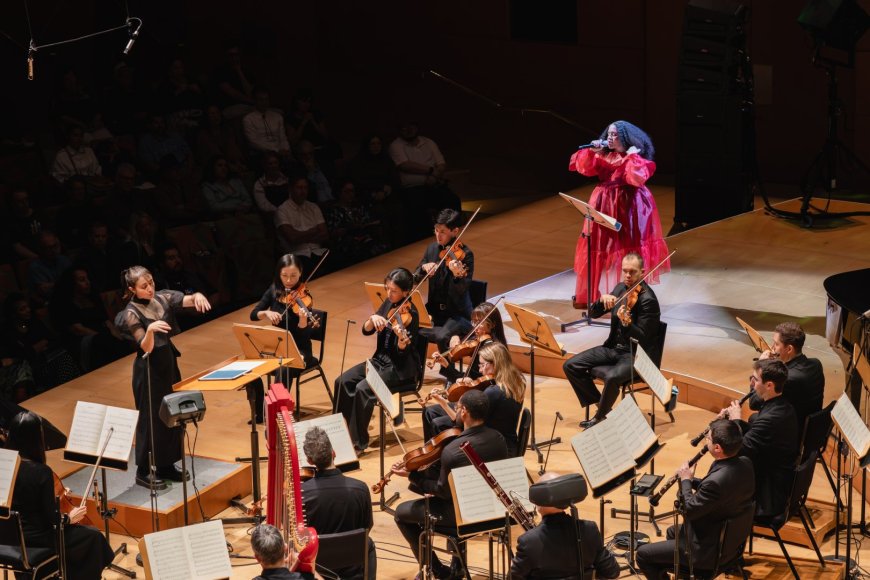
Presented by the LA Phil’s Green Umbrella series, Recovecos brought together works by Caribbean and Latin American composers exploring themes of memory, identity, and place. The program moved from the groove-based physicality of Christian Quiñones’s Pasemisí, Pasemisá towards increasingly spare and inward music, ending with Darian Donovan Thomas’s Volver, Volver and Lido Pimienta’s Corazón. The evening’s music, curated by Angélica Negrón and conducted by Raquel Acevedo Klein, provided broad stylistic diversity and a shared focus on how music can reflect diverse lived experiences. (Read SFCV's review.) — Charles Burns
Ai Weiwei’s Turandot, Documentary Screening (Nov. 30)

The Academy Award for Best Feature Documentary is always a toughly fought category. But one of the contenders is likely to be Ai Weiwei's Turandot, inspired by the first opera production to be directed and designed by the world-renowned Chinese artist and free-speech advocate, Ai Weiwei. When the film's director, Maxim Derevianko, set out to document the Teatro dell'Opera di Roma's 2020 production of Puccini's opera, he had no idea the project would collide head-on with the COVID-19 pandemic and Russia's invasion of Ukraine. Combined with archival footage, the film explores Ai Weiwei's art and activism, and delayed 2022 production; his Turandot depicts China through a political lens like no other. (Read SFCV's review.) — Jim Farber