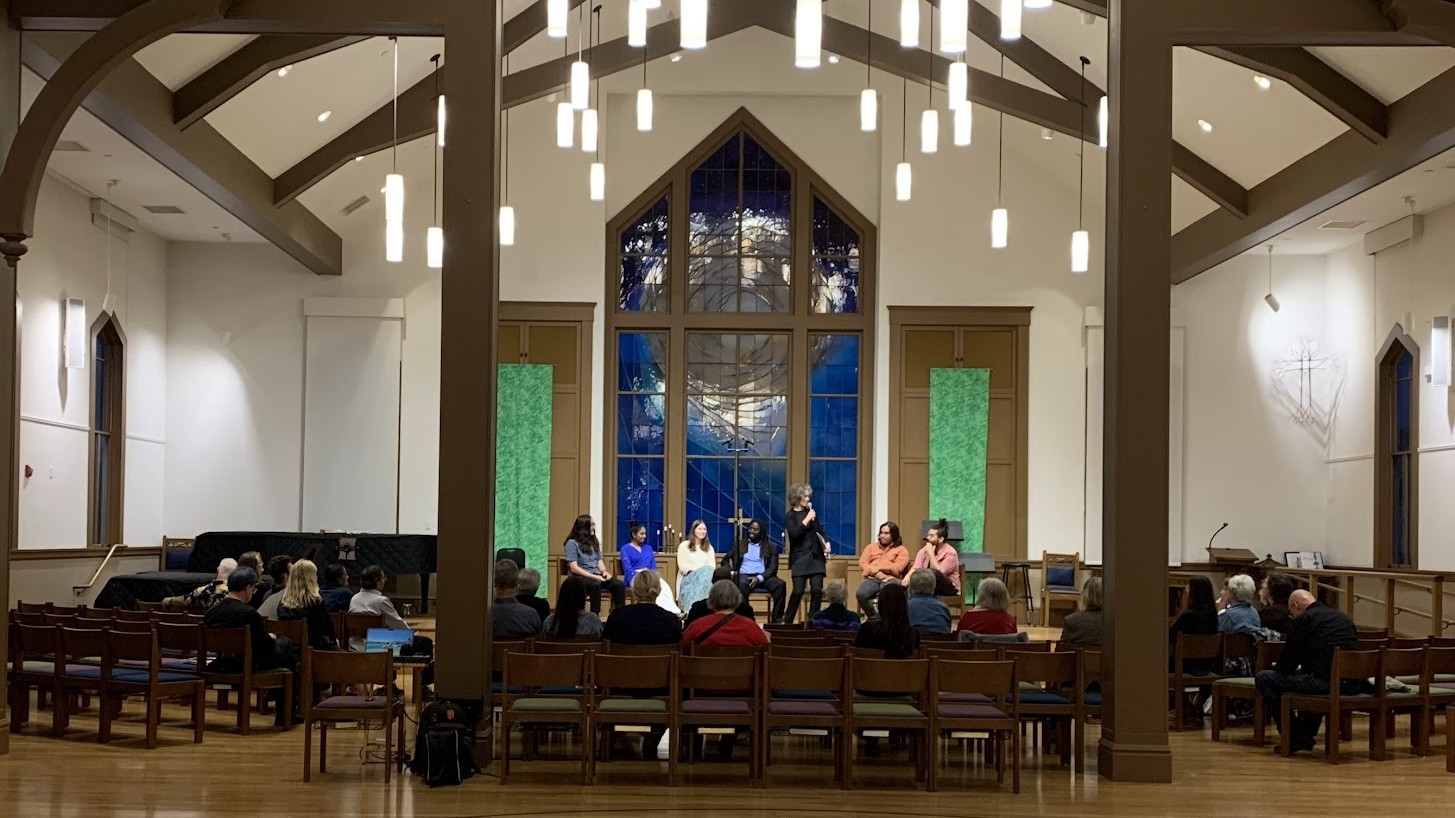
Paul Novak’s 2024 string quartet impossible inventions, a fizzy, fabulous, and impossibly inventive charmer of a score, proved to be the highlight of Left Coast Chamber Ensemble’s strongly programmed first concert of the season.
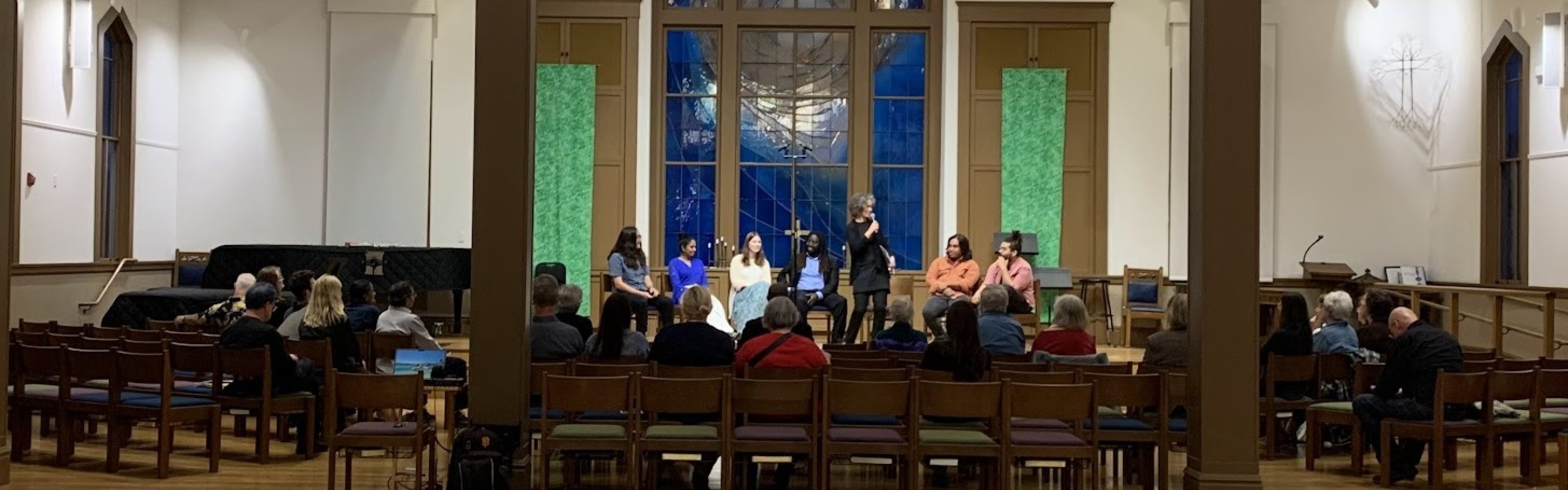
The program, named “Impossible Inventions” after the quartet and heard at Noe Valley Ministry on Sept. 19, featured works by composers born generations apart, from Thea Musgrave, still composing at 98, to 22-year-old Namratha V. Kasalanati.
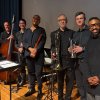
Novak named the four movements, played without a break, after devices found in science fiction and portrayed each brilliantly in sound. The quartet of Anna Presler and guest artist Chase Spruill on violins, violist Phyllis Kamrin, and cellist Leighton Fong played impossible inventions with the dazzling verve it needed.
The composer opens the quartet with “faster – than – light – machine,” a spinning, whirling, perpetual motion machine of off-beat rhythms and extreme contrasts among the instruments as the movement seemingly accelerates toward the next. “Quantum – clockwork” clicks and skitters, plucked strings and harmonics ticking away.
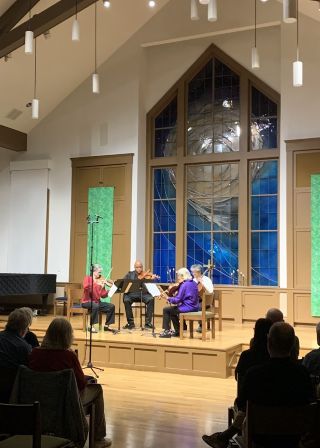
The natural harmonics in “anti – gravity – machine” make the movement float weightlessly through space and time. “Cyborg – falling – in – love” delivers deliciously dark lyricism, built around the viola’s alto warmth with even the violins in their own low register. At the close, the quartet soars with a high, hushed unison.
Left Coast opened with Musgrave’s In the Still of the Night (1997) for solo viola, one of several works the group will present this season by the composer, whose Mary, Queen of Scots is set to open at San Francisco Opera on Sept. 24. Kamrin played the piece with rich, robust sound and much rhythmic freedom, its many double stops and implied counterpoint connecting it back to J.S. Bach’s works for solo string instruments.
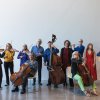
The balance of the first half of the program presented world premieres by four young composers from Left Coast’s Pathways Program, which provides mentoring, workshops, performances, and recordings for California residents under age 25 who have “limited access to professional performers.” Each work was composed for flute(s) (Stacey Pelinka), violin, cello, and double bass (Michel Taddei).
Justin Trujillo’s Iguana En La Sombra (Iguana in the shadow), whose three movements are each based on an Oaxacan folk song, is an exploration of Latin American music and his own cultural identity as a Mexican American. The terse “Dios Nunca Muere” (God never dies) uses the double bass as a percussion instrument, as does “Flor de Piña” (Pineapple flower), an exciting movement in 6/8 with cross-rhythms pulling at each other and lively writing for flute and piccolo. The sweet melody of “Canción Mixteca” (Mixtec song) worked its gentle way through the ensemble from the bass to the flute to the violin to the piccolo.
Namratha V. Kasalanati’s Sisters is exactly what it sounds like, a beautiful, loving tribute to her younger sister and their relationship. It’s full of character, with many charming moments, from Pelinka breathing into her flute to the bouncy spiccato of the violin to a brief canon. The music skips about, like children, and is full of lyric beauty as well.
In her gorgeous prelude & echolations, composer Alyse Murray sets up the short “prelude” as a sort of preview of the longer echolations (a portmanteau, she writes, of “echolocation” and “oscillation”). “Prelude” is lightweight and transparent, with lots of pizzicato in the strings and a tune in the bass flute. In echolations, there’s much alternation/ oscillation among pitches over drones. The movement gains in vigor, before a slow, tuneful close.
Alexander Reams’s Two Prayers from a Rainbow-Touched Soul arose from a period of personal struggle that led him to “return to…prayer and meditation.” Two Prayers is, for him, about meditation and exultation. The work is deeply associated with his spiritual state and different identities, incorporating concepts from Afro-Cuban culture and music.
“A Prayer of Meditation” is the slower and more introverted of the two prayers, “A Prayer of Exultation” the more extroverted and joyful. Both are written in a warmly lyrical style and feature call-and-response as a regular structure.
The closing Mendelssohn string quartet — the composer’s first, in E-flat major, written when he was just 20 — was sadly disappointing. The same quartet that brought such energy and imagination to impossible inventions here somehow lost most of its personality, backing off into genteel politeness in a work that would have benefitted from more guts and grit.
Everything was pretty, little stood out, though the scherzo had the needed verve. The atmospheric second movement needed more mystery; the last, more thrust and sharper edges.