In this Trumpian era of anti-diversity, how refreshing and affirming it is to discover an album of six Black men singing songs by mostly Black composers, accompanied by a person with a disability.
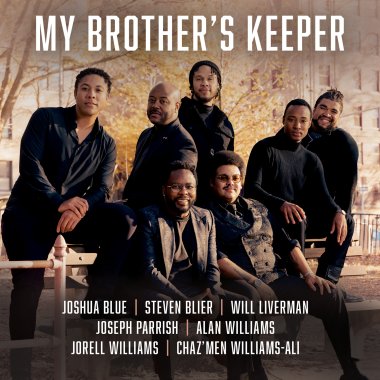
The album, My Brother’s Keeper (New York Festival of Song Records) includes works by Margaret Bonds, William Grant Still, Jorell Williams, Lead Belly, Steven Lutvak, and more. Recorded live in New York City's Merkin Hall in November, 2024, the 15-song program is so brilliantly performed and stitched together that it left me variously cheering, laughing, sobbing, and ecstatic.
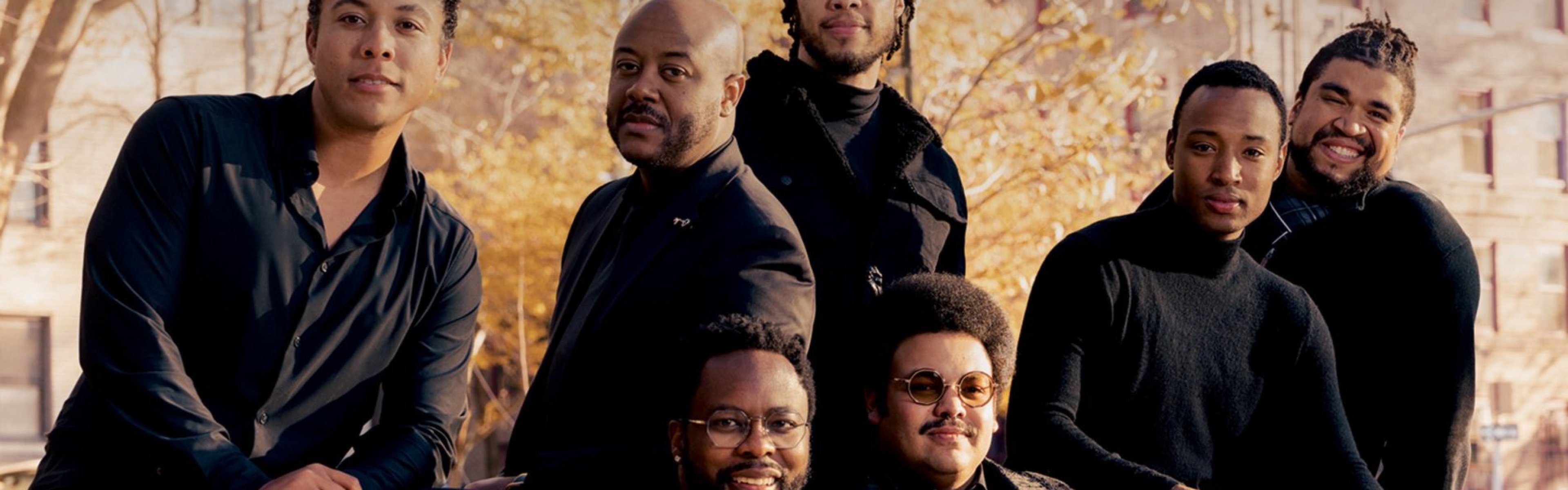
Grammy-winner and Juilliard faculty member Steven Blier accompanies and co-produces the album with baritones Justin Austin and Jonathan Estabrooks. The project brings together six gifted singers: tenors Joshua Blue and Chaz'men Williams-Ali; baritones Will Liverman, Joseph Parrish, and Jorell Williams; and bass Alan Williams. In addition to Blier, Williams, Liverman, and Parrish also play piano.
All six men introduce themselves with the Grammy-winning Black ensemble Take 6's arrangement of "Come Unto Me." Co-producer Austin, who was captivated as a child by Take 6's "six young Black men whose music celebrated the transformative power of goodness and love," conceived of the album as a showcase of the "mutual love and support" of Black men, and a means to encourage all people, regardless of race or creed, "to embrace the profound importance of selfless love for one another."
As heady or theoretical as that may sound, joy resounds through every song on this album. Not the unfettered variety, however. There's a lot of nuance here, as well as a lot of well-motivated outrage.
The album's gender-altered version of Brahms's "Die Schwestern," reinterpreted as a mini-drama between two brothers, veers between familial love and rivalry. Steven Lutvak’s "Beware the Anger of Soft-Spoken Men," included at Blier's request, is an ode to passive aggressiveness. "Sence you went away," from H. Leslie Adams's song cycle Nightsongs, addresses loss though imprisonment, and is dedicated by Joshua Blue to the men he worked with at the Oberlin Music at Grafton Correctional Institution Choir. Jorell Williams's arrangement of "Go Down Moses," expanded into a four-hand piece called "Americana," was inspired by the 2020 death of George Floyd. And Rachel J. Peters's 2011 screamingly funny masterpiece, "Santa Ain't Black," wraps outrage, humor, and joy into one unforgettable package. You must hear Jorell Williams perform this song!
Will Liverman's eye and ear-opening arrangement of "Some Enchanted Evening," which takes the song in directions that Ezio Pinza might not have recognized, is also included at Blier's request, as is Harry Revel and Noble Sissle's 1928 tune, "Guiding Me Back Home." Of the latter, Blier notes that it stands out as an early collaboration between a Jewish immigrant (Revel) and a Black lyricist (Sissle). This gay Jewish civil rights movement veteran can relate.
Of special interest is the opportunity to hear two composers' settings of the defiant poetry of Langston Hughes: Margaret Bonds’s 1959 Three Dream Portraits — "Minstrel Man," "Dream Variation," and "I, Too” — and William Grant Still's 1959 "A Black Pierrot." The ensemble's performance of Lead Belly's "Sylvie," which sounds very different than Harry Belafonte's famed performance of the song in Carnegie Hall, is excellent, and Chaz'men Williams-Ali’s warm baritone is irresistible in his arrangement of "He Ain’t Heavy, He's My Brother." The final "bonus track," Jorell Williams's arrangement of "Hold Fast To Dreams," left me sobbing.
My Brother’s Keeper is a must-hear, must-play-on-repeat album.