
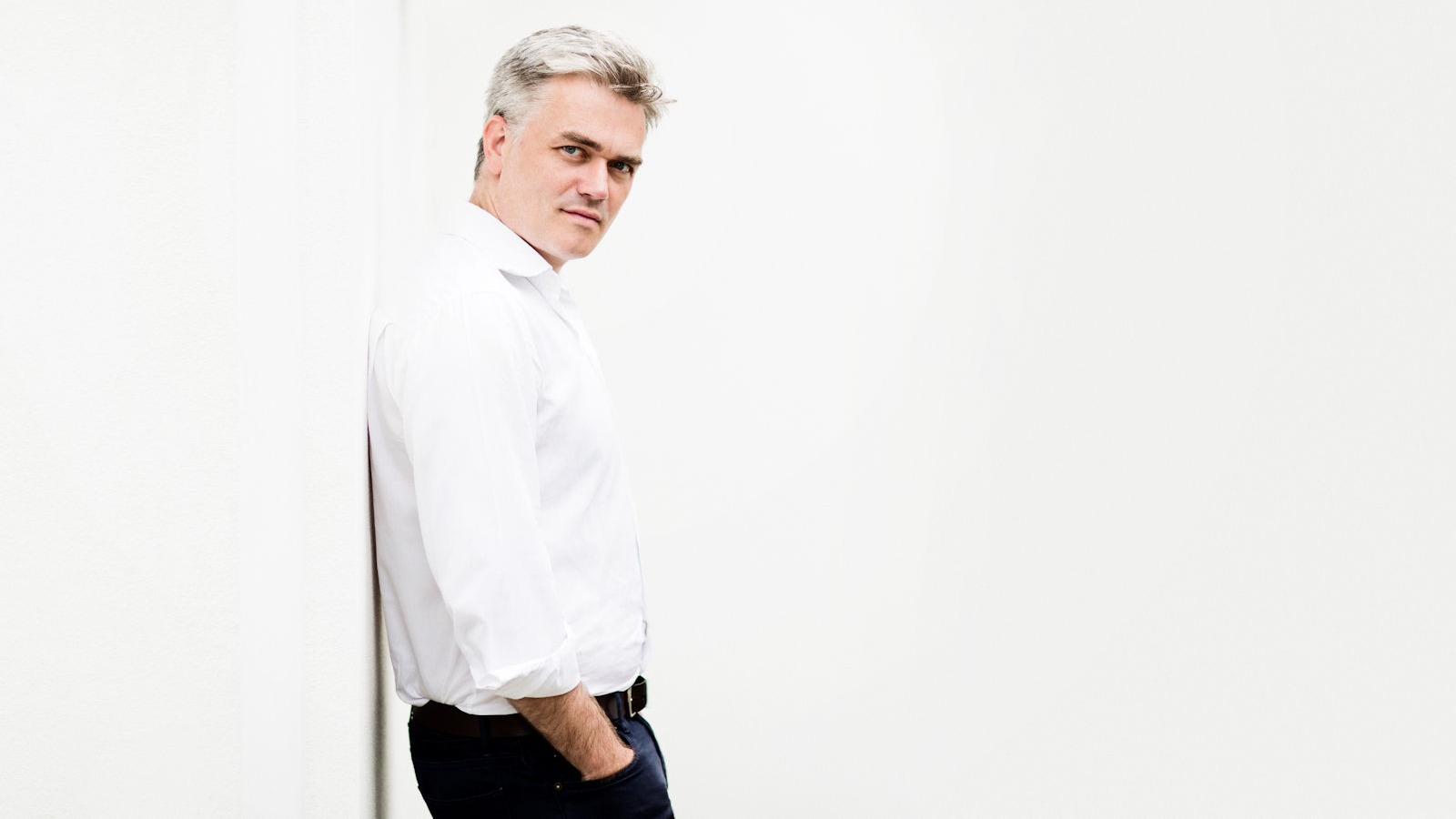
Before he gave his first downbeat, guest conductor Edward Gardner had caught the Davies Symphony Hall audience’s attention.
In brief remarks from the podium on Thursday, Jan. 15, Gardner framed Gustav Holst’s The Planets — the main event of this San Francisco Symphony concert — as a work that was as shocking as Stravinsky’s nearly contemporaneous The Rite of Spring (1913). In crediting Holst for shuffling off a lingering post-Brahmsian coil to create something freshly “pictorial,” Gardner drove home his view of the composer’s 1917 musical tour of the solar system as a genuine break with the past.
“This,” he said, “is modern music.”
Listeners at the concert would have to wait until after intermission to hear for themselves if Gardner could make a convincing case in performance. There were two other matters to dispatch first, one very familiar and the other a San Francisco Symphony premiere.

First performed in 1909, Ralph Vaughan Williams’ overture to his operatic adaptation of The Wasps, a fifth century B.C. political satire by Aristophanes, is hardly a novelty. In its first local hearing, the eight-minute piece came off as a bright and buoyantly eventful miniature.
In what must be the default mode for depicting such insects (see Rimsky Korsakov’s Flight of the Bumblebee), high, buzzy whirring strings set the piece aloft. From there, after the buzz shifted into the lower strings, the Wasps overture flew off in various directions, from faux military flourishes to pompous anthems, gushy effusions and a few galumphing bits before the strings snarled one more time. You didn’t have to know Aristophanes to hear how Vaughan Williams reflected the playwright’s timeless comic critique of the rich and powerful.
Max Bruch’s Violin Concerto No. 1 (1867) is a repertory staple. Sporting an untucked white shirt jacket over black trousers, soloist Randall Goosby made a strikingly elegant impression. I wish I could say his performance measured up.
With his clear, light tone and smooth delivery, the soloist seemed to be holding things in reserve to uncork later. But as the concerto progressed from its early contrast of solo passages and urgent orchestral responses, a payoff remained elusive.
Goosby played with technical assurance and did some of his best work in the lyrical sections. Yet there was a sameness to his performance that came off as guarded and reserved. The passagework was clean but unexciting, the double-stops landed without fury and fire.
Goosby, whose advocacy for African American composers is a central tenet of his career (captured in his excellent Roots recordings), played Samuel Coleridge-Taylor’s Louisiana Blues Strut as an encore. It was good to hear him cut loose and fiddle.
Performed here just a little over two years ago, in a dynamic performance led by Elim Chan, Holst’s seven-panel astrological tone poem was back for another ride. Gardner, principal conductor of the London Philharmonic, let out all the stops in a reading at once boisterous and attentively detailed. His big crisp beat, which seemed to involve his entire limber body, was perfectly suited to the size of the piece
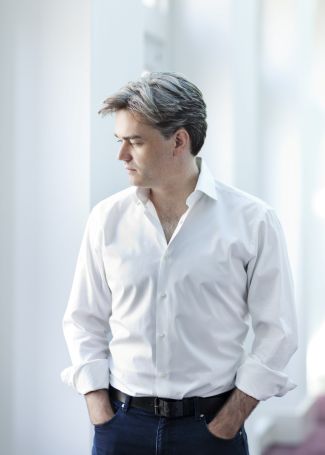
Hitting decibel levels rarely heard at Davies, the opening of “Mars, The Bringer of War,” was like an aerial attack. Over ominously pulsing strings, a large brass ensemble all but exploded with exultant alarm. “Venus, the Bringer of Peace” seemed to hover in space with a beguiling interplay of horns and harps. Principal cellist Rainer Eudeikis added some lovely lyrical torque.
And so it went, from the skittering whisper of the strings in “Mercury” to the brawny familiar strains of “Jupiter, the Bringer of Jollity,” and the atmospheric haze of “Neptune, the Mystic.” Brimming with orchestral color and light, The Planets brought all sorts of associations to mind, from Bolero and The Sorcerer’s Apprentice to film scores and Dmitri Shostakovich’s snare-drum driven Seventh Symphony.
I’m not sure if its eclectic scale and painterly use of the orchestra make The Planets modern. But in the current time of global unease, the piece seemed at once aptly alarming and, in the wordless offstage voices of the San Francisco Symphony Chorus at the end, faintly, shimmeringly hopeful.