From start to finish, San Francisco Ballet’s haunting and beautifully wrought new production of Eugene Onegin sounds the narrative’s oscillating deep chords. Power. Betrayal. Regret. Innocence. Sex.
The work, mounted in collaboration with The Joffrey Ballet, had its world premiere on Friday, Jan. 23 at the War Memorial Opera House. Performances continue through Feb. 1. Balletomanes and ballet newcomers alike are in for a fully realized work of art.
Based on the 1833 Alexander Pushkin verse novel about a moody Russian aristocrat and the destructive path he carves, this Onegin is distinct from its well-known predecessors that include the 1879 opera and a 1965 ballet — the latter was choreographed by John Cranko and presented by SF Ballet in 2012 and 2016. The opera and that ballet are set to different Tchaikovsky scores.
This time, the music is new — a wonderfully eclectic score by Ilya Demutsky that carries only trace elements of Tchaikovsky, along with those of Prokofiev, Kabalevsky, lush movie musicals, and more. What matters is how the music shifts and morphs to manifest the storyline and the characters’ emotional arcs. Conductor Martin West led a vividly alert performance.
In a long-cherished dream, SF Ballet’s Choreographer in Residence Yuri Possokhov has brought Onegin to the stage in a production that synthesizes movement, music, and design to telling effect, at once unified and expansive.
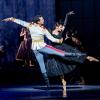
It begins with a stark prelude that finds the title character alone on a dark stage. A single grand arched window signals his new good fortune of an inherited estate. A black-clad Joseph Walsh, in a lead performance of suppressed passion and self-consuming hauteur, brings a highly detailed Onegin to life in his swooping solos and preening pas de deux. Watch, for example, how he fussily picks a piece of lint from his sleeve.
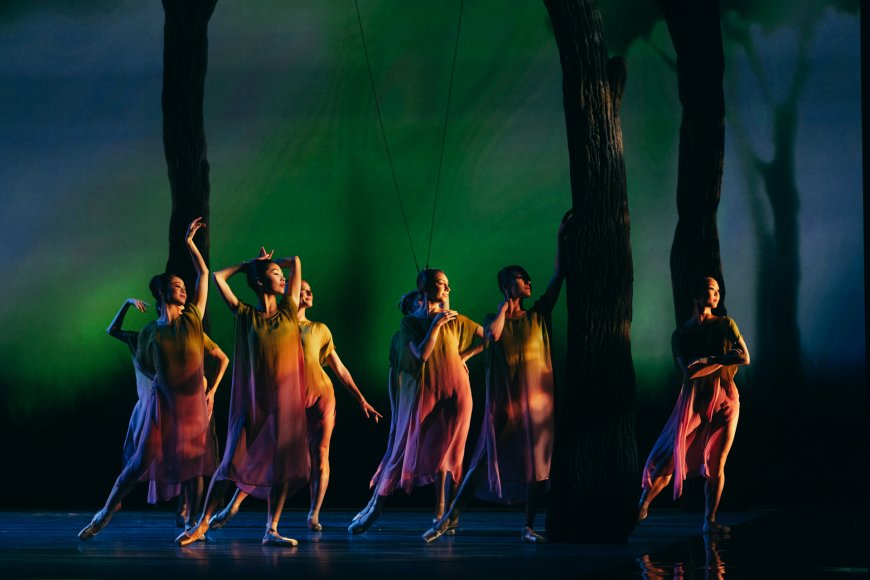
In an inspired realization of Cranko’s concept, and using four acts linked to the seasons, Possokhov, working with a libretto by Valeriy Pecheykin, first fills the stage with a swarm of Spring Spirits. Costumed in flowing, rainbow colors (Tim Yip designed the excellent costumes) the Spirits gambol about for what seems a lot of stage time. But this is spring, after all, in its blossoming too-muchness. “What tender and oppressive yearning,” runs a Pushkin line that appears on a scenic drop and is vocalized by the recorded narrator Alex Jennings, “possesses me on spring’s returning.”
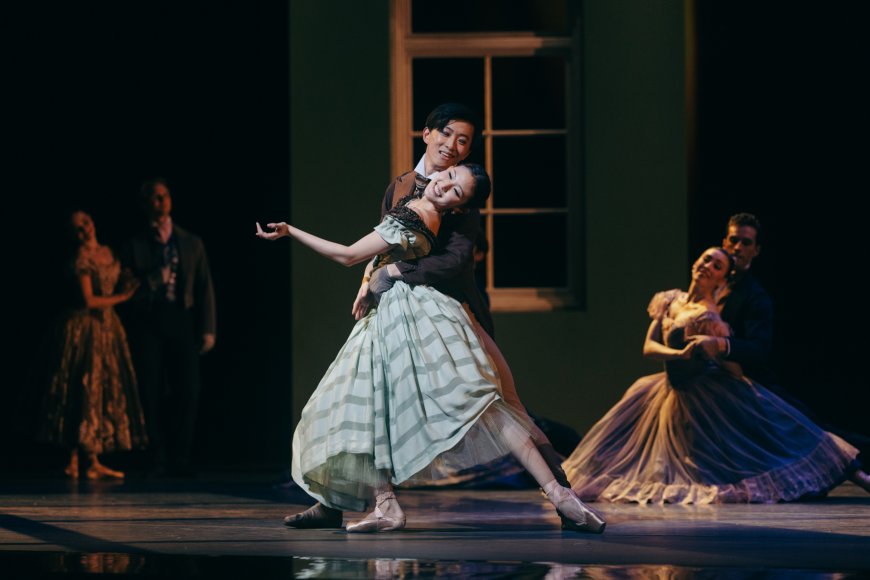
Arriving on a funereally dark carriage, Vladimir Lensky (Wei Wang) and his friend Onegin have traveled to a country estate to meet Lensky’s fiancée, Olga (Wona Park), and her bookish friend Tatiana (Katherine Barkman). Wang and Park are like eager puppies, falling into each other’s arms and beaming their way through a pas de deux that’s as clear and sparkling as a spring-fed lake.
When Tatiana sends him a love letter, an emotionally unavailable Onegin pockets it in the sort of careless way he might a bill from his laundress.
Come summer, the clothes begin to come off, literally and figuratively. A somersaulting team of male Spirits shuck off their bright red shirts unbuttoned and toss them about in bare-chested glee. Tatiana, her subconscious triggered by Onegin, has a fever dream full of animals both gentle and menacing. One in particular play-acts the tragedy to come.
Here and elsewhere, Tom Pye’s set design, Finn Ross’s projections, and Jim French’s lighting conjure a kind of visual half-dream state. Trees and structures are sometimes conventionally explicit, descending from and lifted to the flies. But those same objects also might appear as blurry mirages.
The ballet moves more quickly after intermission, with the characters’ fates foretold. But through the evening, time stops for some marvelous, charged partnered dance. In an early scene, when Onegin toys with a smitten Tatiana, Walsh keeps his own counsel, holding out a hand to her like a crossing guard warning a child to stay back. Later on, their connection has a coiled intensity, with Barkman, tumbling over his back, tugging and pulling away then coming in close. You can almost feel her Tatiana emerging and changing in real time. (In one misgiving, there’s an awful lot of tours en l’air through the evening, the men pogo-ing into twirling jumps.)
Two other more potent duets stand out. One comes when Wang’s recklessly jealous Lensky, his cozy world shattered, falls into the force field of Onegin’s mastery in a duel. It’s staged so well that the result drew more than a few gasps from the audience.
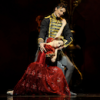
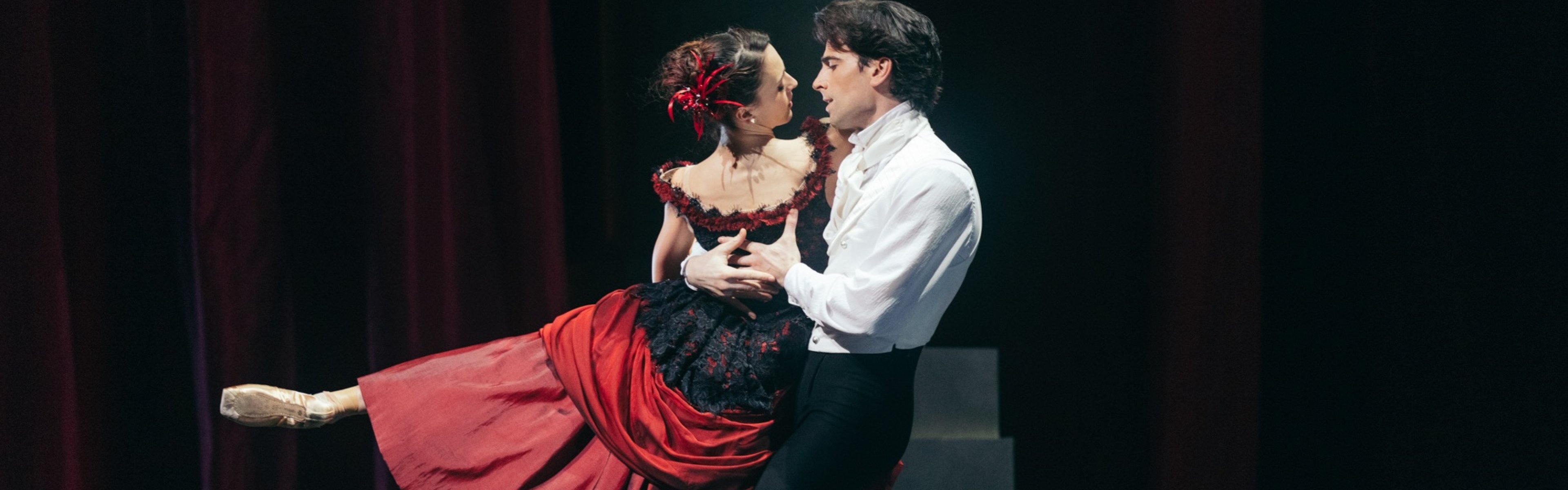
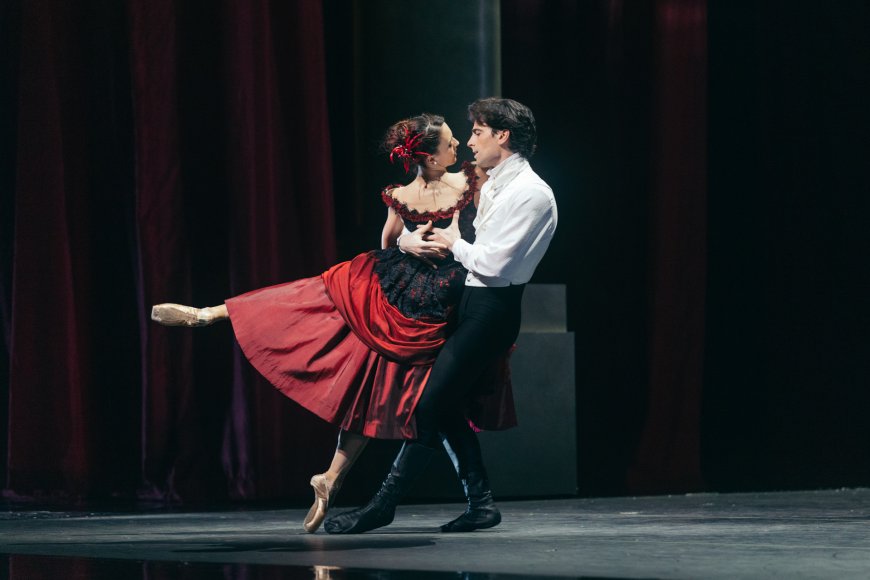
Finally, in a winter years later, Onegin encounters a much-altered Tatiana, now married to a wealthy and courtly prince (Harrison James). Nature scenery has been supplanted by classical pillars and red velvet drapes. Onegin’s love for her has come too late, a reality sealed with their farewell pas de deux. It’s to Walsh’s, Barkman’s, and Possokhov’s credit that the ballet’s ending is not maudlin. Like so much in this triumphant premiere, it’s deeply, movingly human.