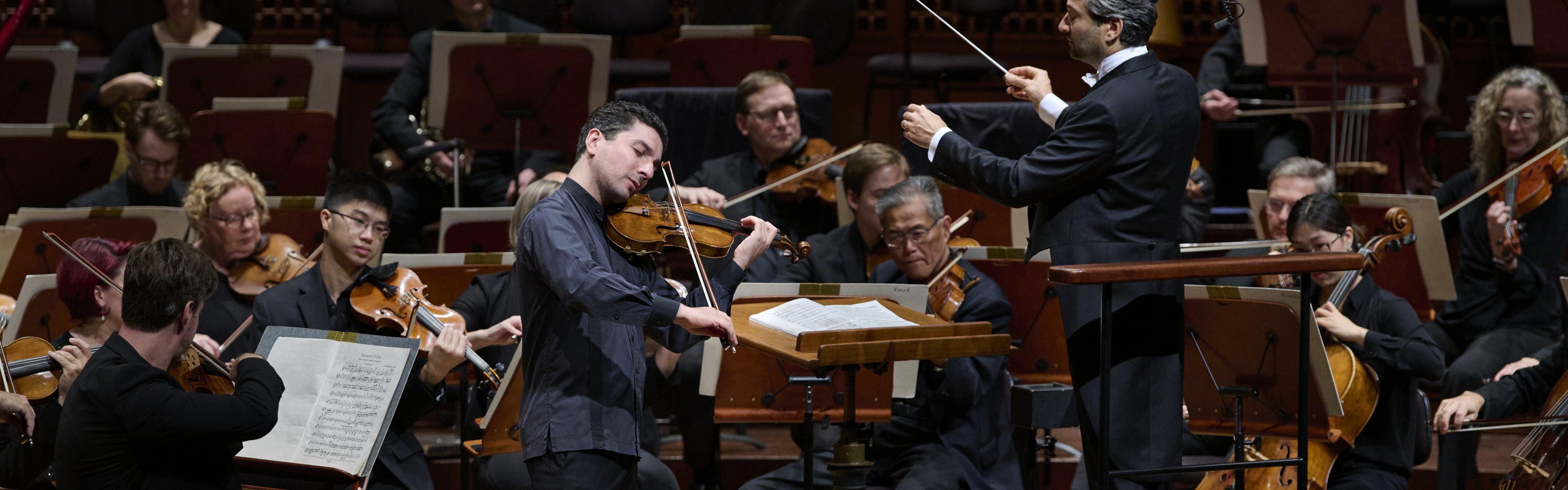
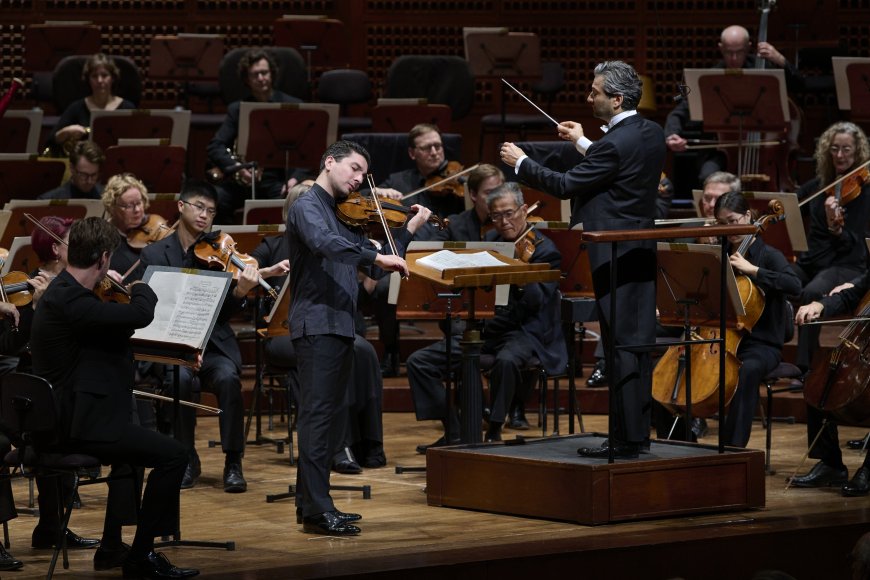
Elegance and poise may not be the qualities that first come to mind for Tchaikovsky’s bravura Violin Concerto. But in a performance built on just those virtues, Armenian virtuoso Sergey Khachatryan partnered with the San Francisco Symphony under guest conductor David Afkham to refashion the war horse as a sleek, self-assured stallion.
The terms were set, on Friday, Oct. 24 at Davies Symphony Hall, with the orchestra’s crisp opening bars, answered by Khachatryan’s shapely development on the first movement’s principal theme. When it came to the reprise, the violinist brought a fresh, vocal character to the melody, as if he’d gained new insight since expressing it the first time. That sense of lucid transparency prevailed throughout the evening.
Khachatryan’s performance was neither cool nor dispassionately calculated. Whether he was firing off a volley of double-stops, making every note count in the concerto’s furious passagework or lofting harmonics in a tender, almost ethereal way, the soloist was in sensitive control of the work’s shifting terrain. Eighteen years after his 2007 Symphony debut as a Shenson Young Artist, Khachatryan has clearly fulfilled his early-career promise.
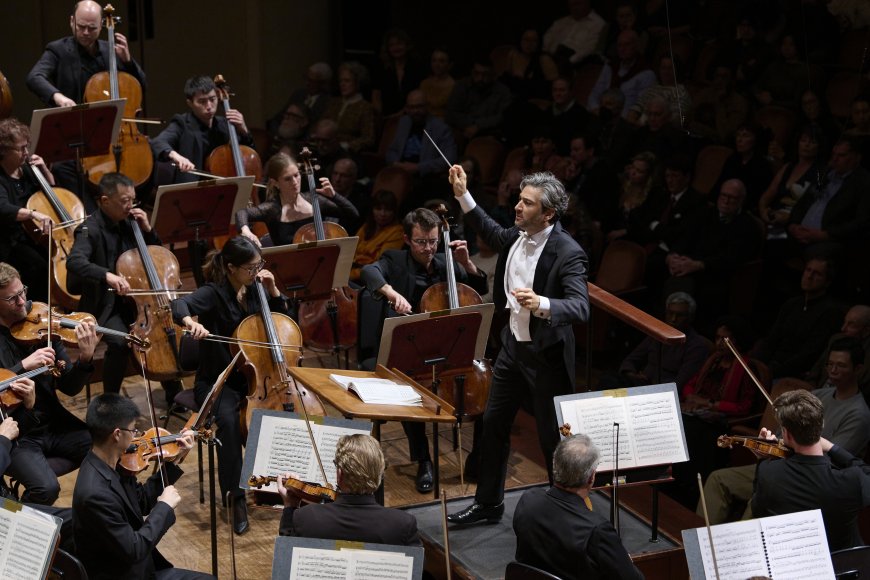
Standing upright and largely still, the poker-faced Khachatryan projected an air of focused calm. His bowing was simultaneously deep, lush and labile. When a passage called for fortissimo attacks or pungent phrasing, the violinist carried them off without any of the fiddle-sawing effects that can creep into some performances of the work.
The violinist had an attentive conductor in Afkham, who was making his Symphony debut. Elegant himself, in white tie and tails, the Spanish National Orchestra’s chief conductor and artistic director led a keen and balanced reading of the score. The woodwinds did some choice work in a pensive middle movement.
After the Concerto, Khachatryan offered an elegiac encore — an improvisation on a traditional Armenian tune.
Before launching into Dmitri Shostakovich’s long and anguished Symphony No. 8, which occupied the second half of the program, Afkham delivered a verbal program note from the podium. Calling the 1943 symphony a “masterpiece,” he characterized it as “a requiem for all the victims” of World War II.
The journey began with an urgent quotation from the composer’s famous Symphony No. 5 (1937), which degraded and disappeared after a fiery blast from the brasses. It felt as though the past were receding, and a dangerous future was taking hold. The strings keened. The woodwinds and trumpet, played by the exquisite Mark Inouye, haunted as though from a great distance. Martial fanfares and outbursts from the brusque percussion section upped the stakes of the long first movement’s unfolding tragedy.
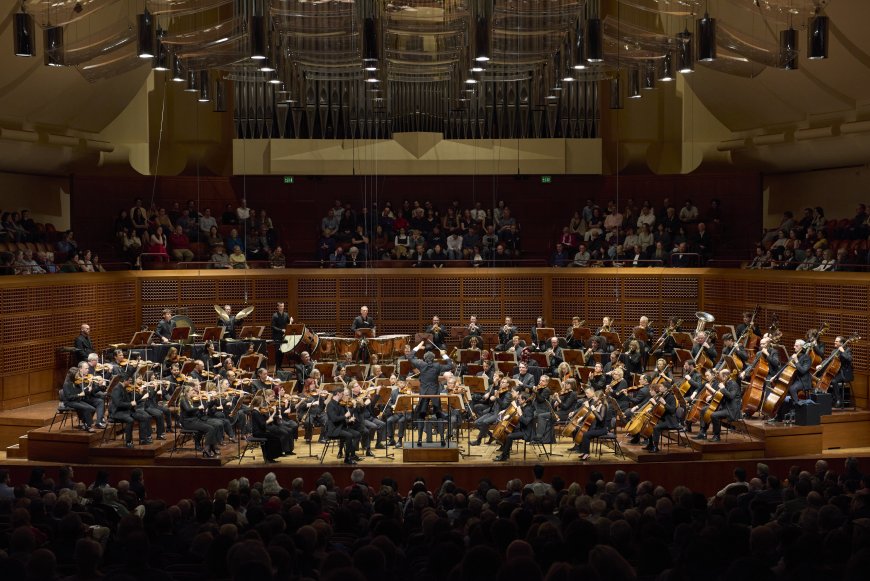
The middle three movements are marches in distinctive moods. Touched by Catherine Payne’s antic piccolo, the first of them was nightmarish. The lower string rumbled. The brasses brayed. A tambourine jangled.
The violas launched the symphony’s third movement, voicing a restless, diabolical theme flung from one section to another. The violins caught it first, then sent it to the trombones and tuba, cellos and basses and even the timpani. It was like a contagion that swept through the orchestra, impossible to contain.
The orchestra was firing on all cylinders until the very end, with an animated Afkham in command. Played without pause, the concluding three movements felt like a complex and eventful second act. Strident and even self-mocking phrases gave way to a mellow woodwind choir. The horns and brasses sounded alarms as a snare drum clattered. In a performance that ran over an hour, it was hard to take in all the drama.
The work’s harmonic undertow took hold in a mostly hushed and quiescent final movement. The clarinets began the pull from C minor to C major. Then the flutter-tongued flutes concurred. Resolution came only after struggle, the music wandering through dissonance before finding its way home.
Steven Winn is a freelance writer. This article has been provided in partnership with San Francisco Chronicle.