If you weren’t paying much attention, the Los Angeles Chamber Orchestra’s program with guest conductor Dinis Sousa at The Wallis Center for Performing Arts in Beverly Hills Thursday night, March 12, didn’t look much out of the ordinary. It seemed on paper like j another traditional, triple-decker, new work/ concerto/ symphony lineup. But thinking about it, the concert was indeed rather unusual — in both good and not-so-good ways.
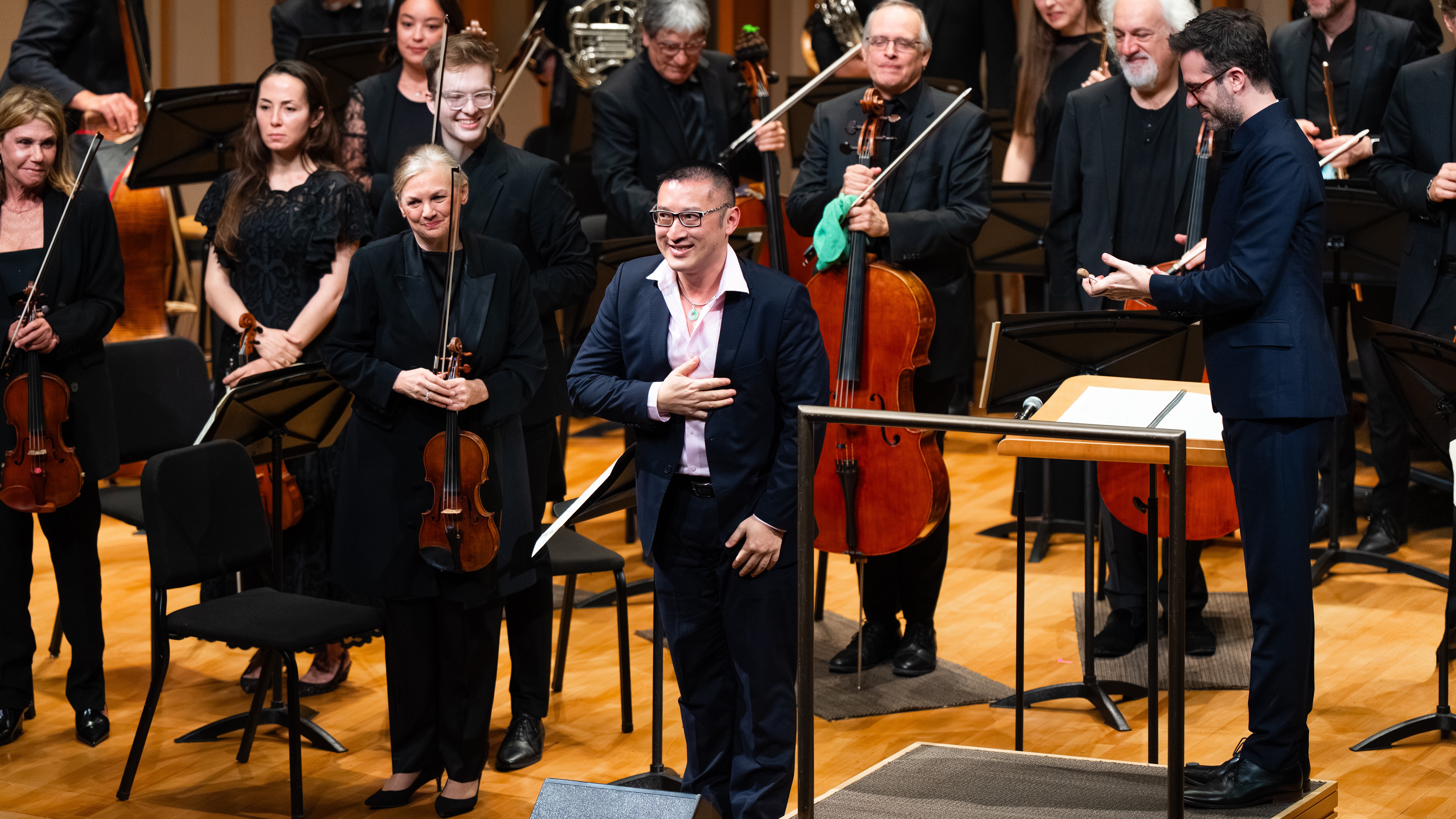
First, there was Tipping Point (2023), a startling tract of environmental prophecy by Huang Ruo, fresh off his triumph with San Francisco Opera’s world premiere of his The Monkey King in November 2025. Tipping Point starts with a recording of U.S. Senator James Inhofe (R-OK) delivering a speech on the floor of the U.S. Senate in 2015 denying the existence of climate change, during which he notoriously brought a snowball into the chamber as “proof” and tossed it at the presiding president of the Senate. A “ticking” sound from a wood block accompanies the recording.
At first, the orchestra is locked into the ticking with blunt chords. Then they rouse themselves, breaking out into busywork against the beat as if in a rush toward oblivion, while occasionally being reined in. The ticking stops, the strings begin a series of ostinatos underneath sustained notes, and suddenly we are in minimalist Steve Reich territory.
But the ticking soon resumes and picks up speed. Things get panicky, and the orchestra comes to a sudden stop, with the recorded sounds of either flames or melting glaciers trailing off in the distance. We’ve reached the tipping point of the future of the planet, it seems.
Musically, Tipping Point is a clever orchestral stunt in surprisingly strict sonata form. Politically, it is a disturbingly ominous cry of Ruo’s outrage at Sen. Inhofe’s views, which have become akin to official policy during the second Trump term. Sousa beat time efficiently, and though the brass had some trouble toward the end, the orchestra mostly coped well.
Robert Schumann’s Violin Concerto has long been, and continues to be, the problem child among the composer’s orchestral works. It is rarely performed, and the composer’s own wife, Clara, and its recipient, violinist Joseph Joachim, tried to disown it. Though it was written in 1853, it wasn’t even played until 1937, nor recorded until violinist Yehudi Menuhin and conductor John Barbirolli did so in 1938 (My copy of the original album is autographed by both performers, who evidently believed in the work).
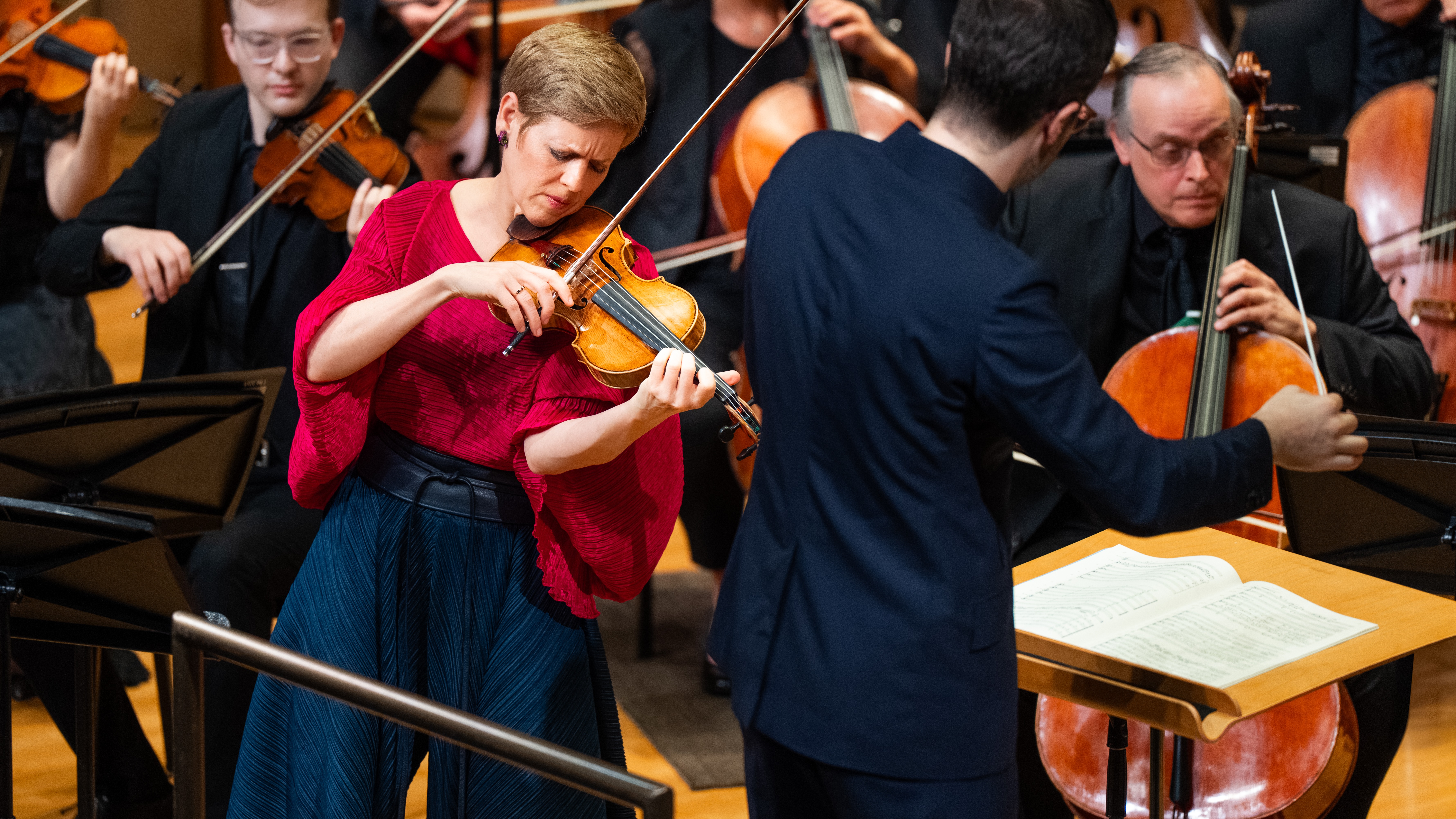
Sadly, I think Clara Schumann was right. Even in the skilled hands of the LACO, the orchestration is terrible — mushy, thick, congested, and tiring to the senses within seconds of the piece’s opening. The violin just keeps on going its melodic, pleasant way, searching and trying to say something — anything — yet not seeming to get anywhere. Some modern critics attribute this lack of vision to the composer’s struggles with mental illness at the time of the piece’s writing. The composer attempted suicide a year later, in 1854.
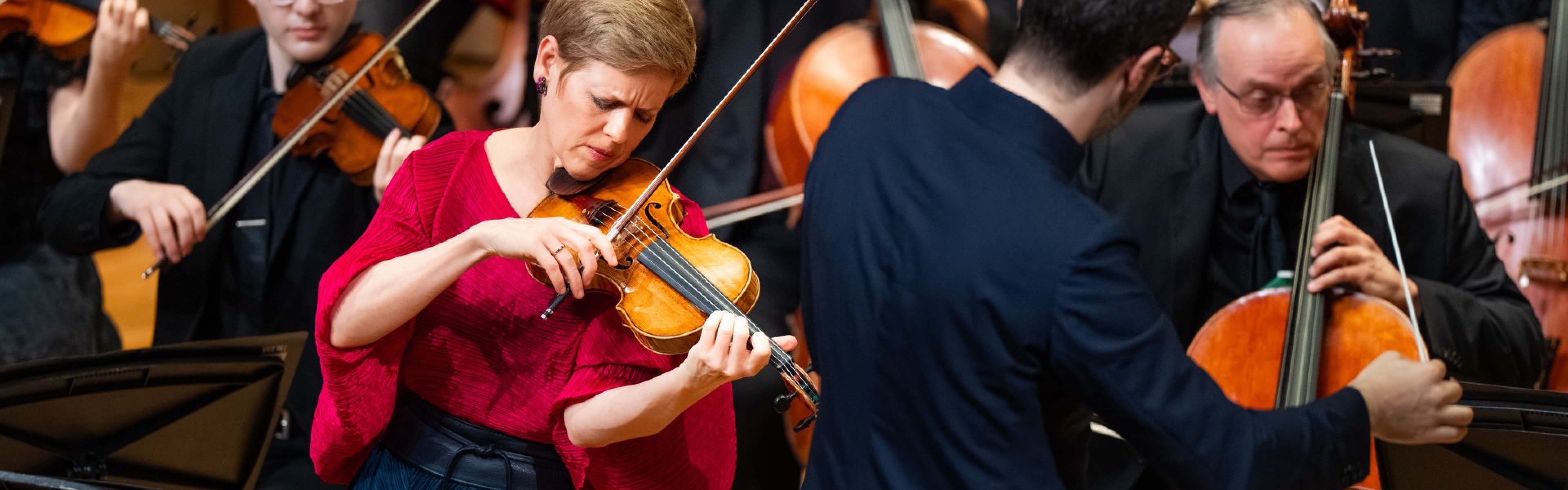
Isabelle Faust, one of just a few violinists who play the work these days, has an attractively dark, mellow timbre. The relatively dry acoustics of the Bram Goldsmith Theater within The Wallis weren’t of much help, though: the hall could not disguise, nor even partly relieve, the relentless fatigue that this score produces.
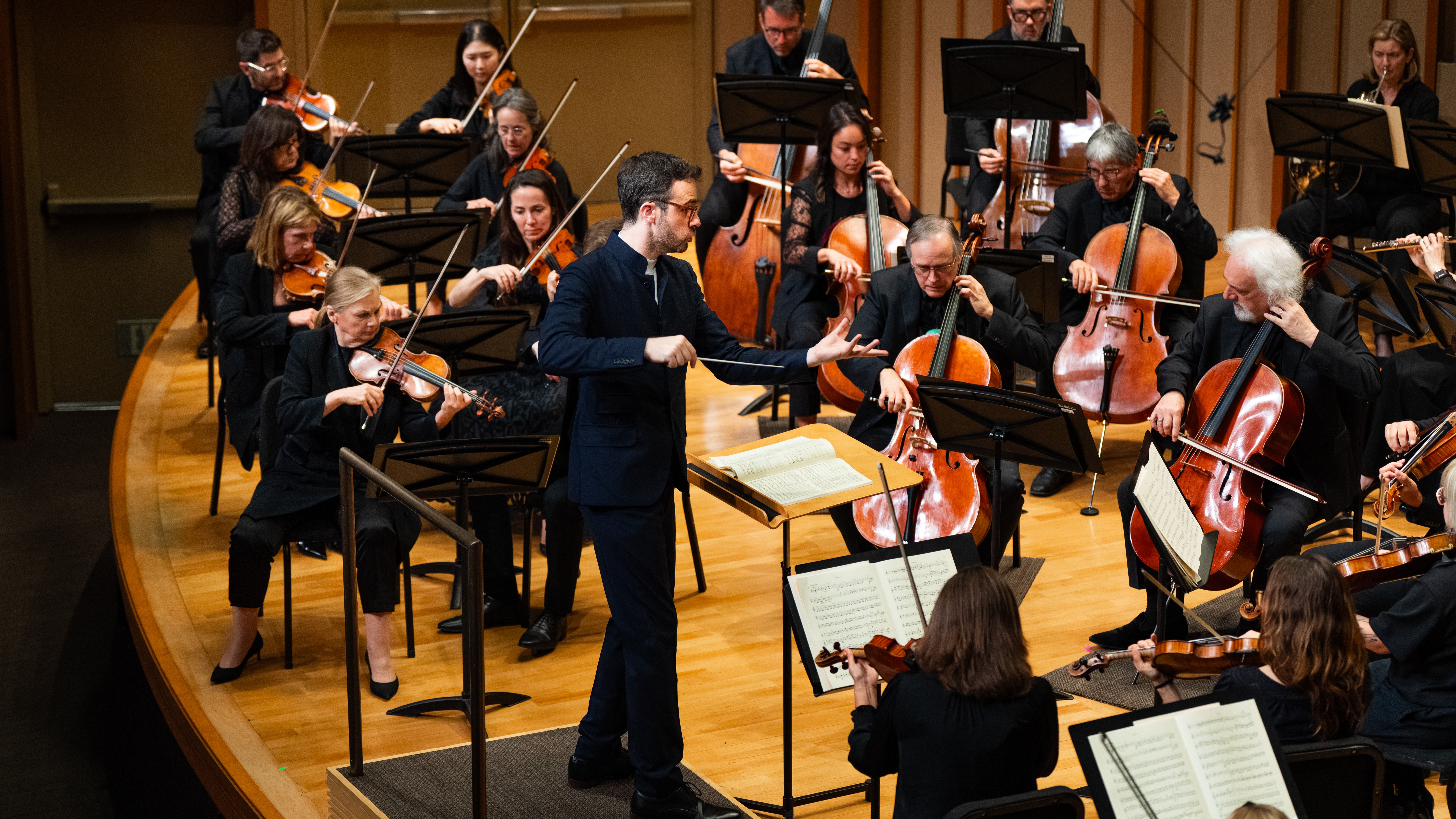
Lastly, there was Felix Mendelssohn’s Symphony No. 4, “Italian”, performed to a crisply swift turn by Sousa, wild gestures and all. Yet even in this familiar piece, there was a wisp of adventure. Mendelssohn had a habit of revising his works, and he subjected the Italian Symphony to what amounted to a rewrite of several passages in the second, third, and fourth movements. We almost always hear the original version these days; the revised movements weren’t recorded until 1998, with John Eliot Gardiner and the Vienna Philharmonic.
So, Sousa experimented by incorporating a few ideas from Mendelssohn’s third movement revision into this performance — some added comments from the brass instruments, a slightly tinkered-with melodic passage in the violins — all occurring in the repeat of the minuet toward the end of the movement. These were by no means all of Mendelssohn’s revisions, which can be disconcerting for those who grew up hearing the original version. But it’s good that Sousa tried to inject something unusual into the performance.