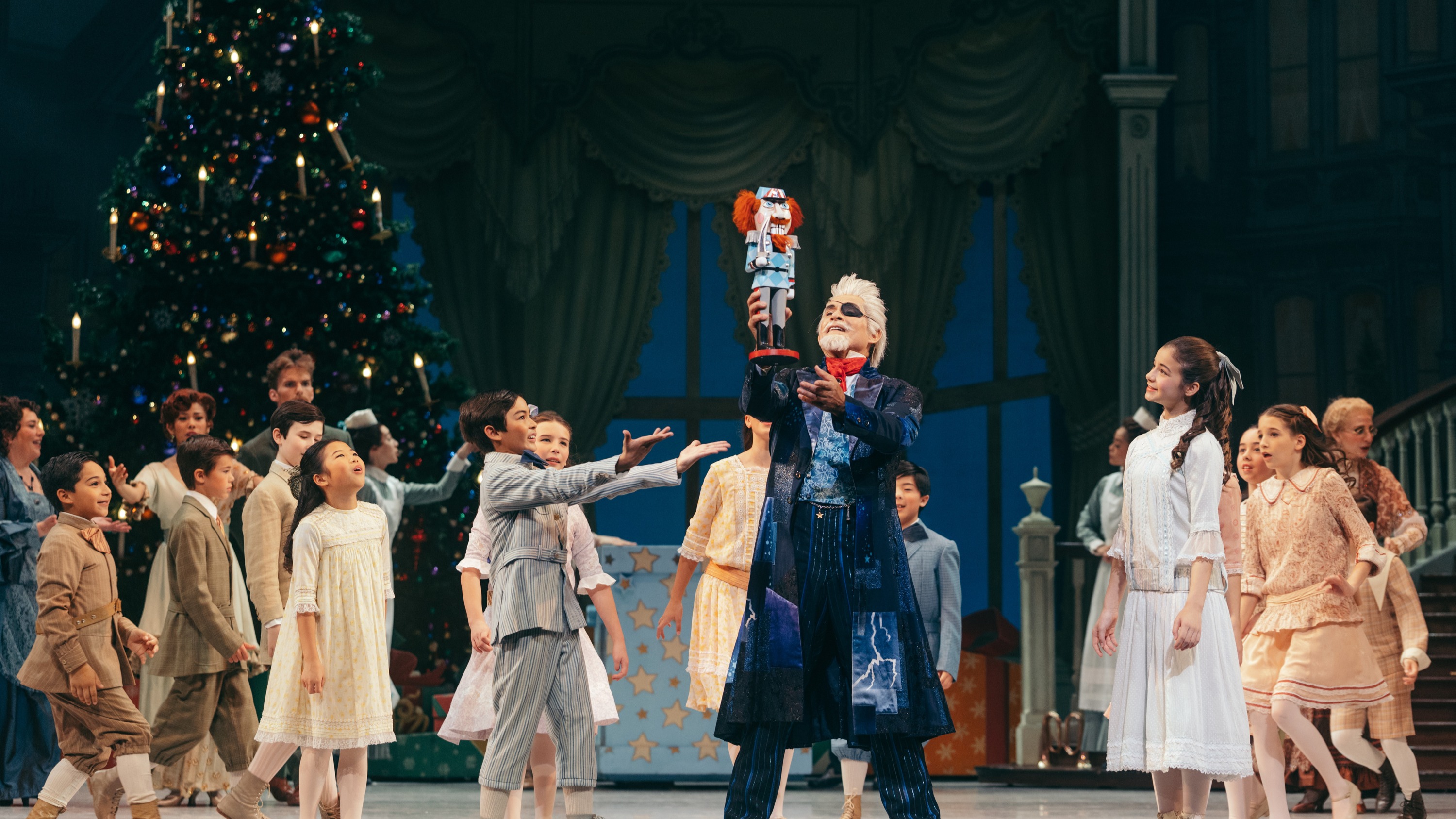
At 133 years and counting, Nutcracker is forever young — and nowhere is its perennial magic more deeply rooted than in San Francisco.
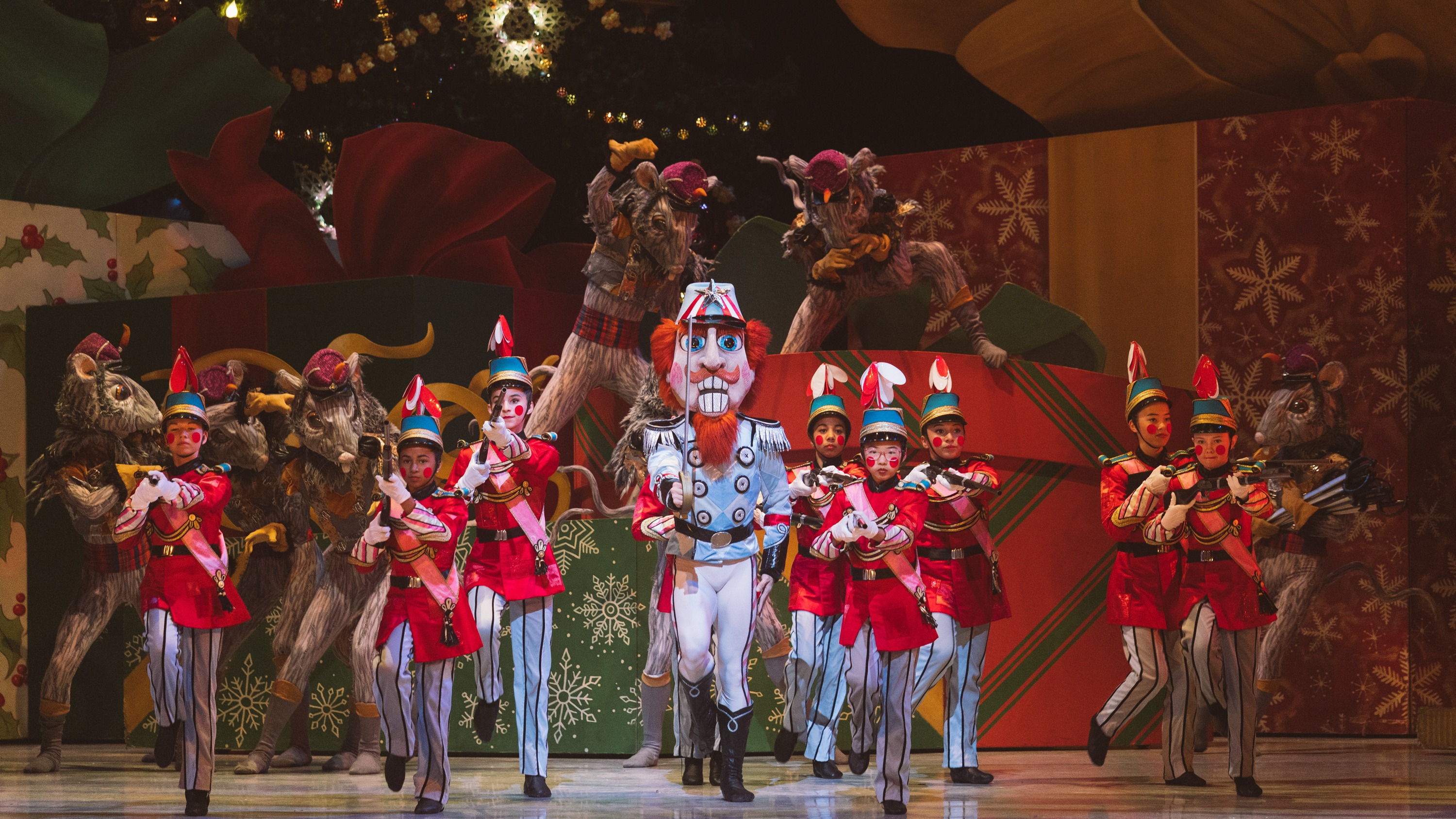
Tchaikovsky’s effervescent, evergreen 1892 score deserves a lot of the credit. So does its storyline brimming with fantastical, even surreal events, including a pitched battle between giant mice and an army of toy soldiers to name just one. There are also all those young ballet students scampering about, first as excited party guests and later as fluttering insects.
More than any holiday entertainment staple, Nutcracker casts a dreamy, enveloping glow, capturing the innocence, imagination, anxieties and reassuring rituals of childhood.
When asked at the Friday, Dec. 5 opening in the War Memorial Opera House’s garland-festooned lobby what he was looking forward to on a fourth viewing of San Francisco Ballet’s production, 9-year-old San Franciscan Ronin-Maximus Loo replied, “Everything.”
Seven-year-old Grace Sallee, one of three Oakland family sisters in attendance, had a preference “for the part with the genie,” which turns up in the Act Two Arabian Dance. Julia, 10, keyed in on the coming-of-age subtext for the ballet’s young heroine.
“I like the scene where Clara turns into an older girl,” she said.
Adults are hardly immune to the draw. A beaming Caitlin Hui, 24, of San Jose, returned for the first time since she’d had a small role in the Ballet’s production as a child. Meanwhile, 27-year-old Ben Salquist attended with his corporate sales team.
“Something different than another golf outing in Napa,” he said, noting that he was 10 when he last saw a Nutcracker.
San Francisco has a special claim on the Tchaikovsky classic. Nutcracker had its American premiere here in 1944, choreographed by William Christensen. Former San Francisco Ballet artistic director Helgi Tomasson’s inspired staging, set in San Francisco, opened in 2004 and is now in its 21st revival, with performances through Dec. 28.
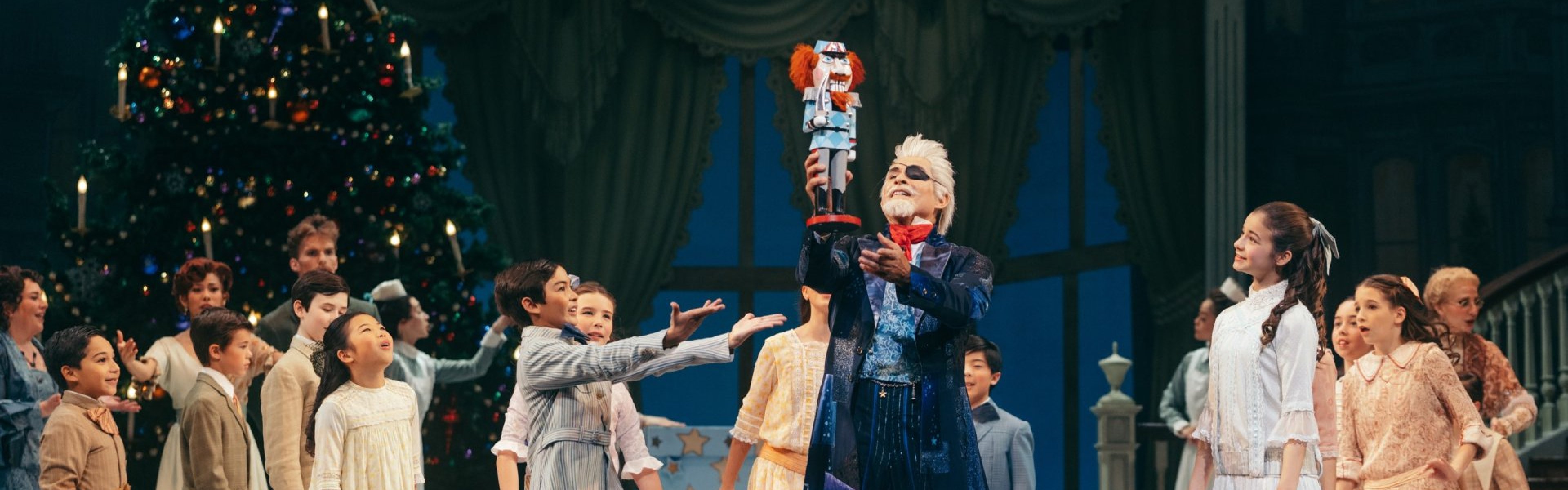
The action begins and ends in a 1915 Victorian, where the Stahlbaums are hosting their annual Christmas party. The home’s exterior, in Michael Yeargan’s splendid set design, has a sepia drabness. The interior feels formal and chilly, dominated by a daunting, long staircase. Even the life-size toys Uncle Drosselmeyer (Ricardo Bustamante) brings to dancing life have a comic creepiness — a floppy boneless jack-in-the box, a stiffly mechanical ballerina. It’s all a set-up for a delirious transformation.
When Clara (a tender, curious Ava Allaire on opening night) falls asleep with her nutcracker toy, all the Victorian confinements and customs get thrillingly swept away. The house flies apart, the Christmas tree grows to 30 feet tall, and everything is weirdly, wonderfully enlarged.
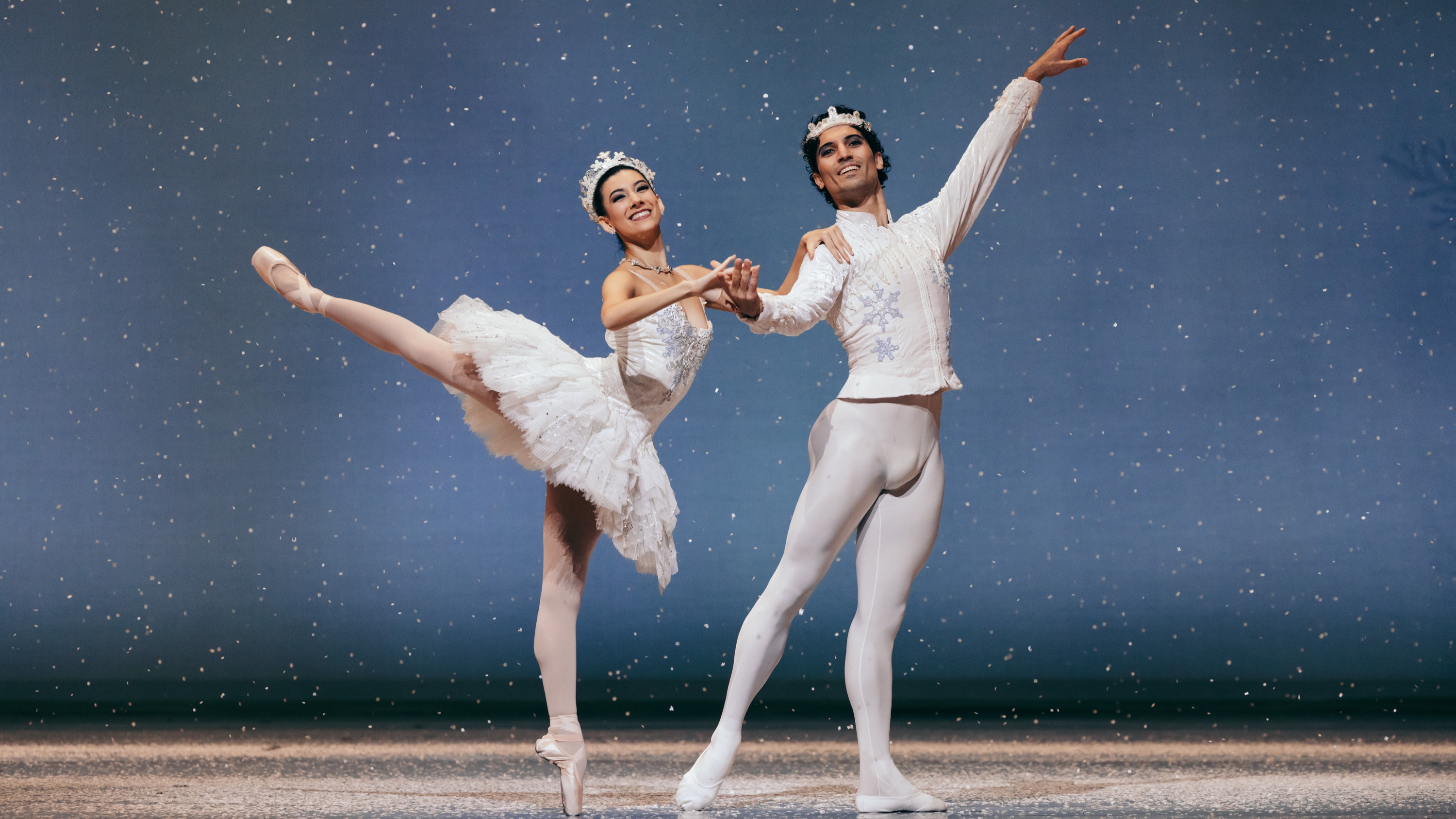
Drosselmeyer, the dream master, transforms the now human-sized Nutcracker into a Prince (an elegant Wei Wang). Soon enough, after the prince and Clara enjoy their first sweet dance, the Snow Queen (Jasmine Jimison) and King (Fernando Carratalá Coloma) send them off in a horse-drawn sleigh.
The second act features a series of bravura dances in shorthand national styles (Spanish, Arabian, Chinese, French, Russian) that may strike some viewers as dated stereotypes while delighting them all the same. Joshua Jack Park, as the lead Russian, earned high-jumping honors,
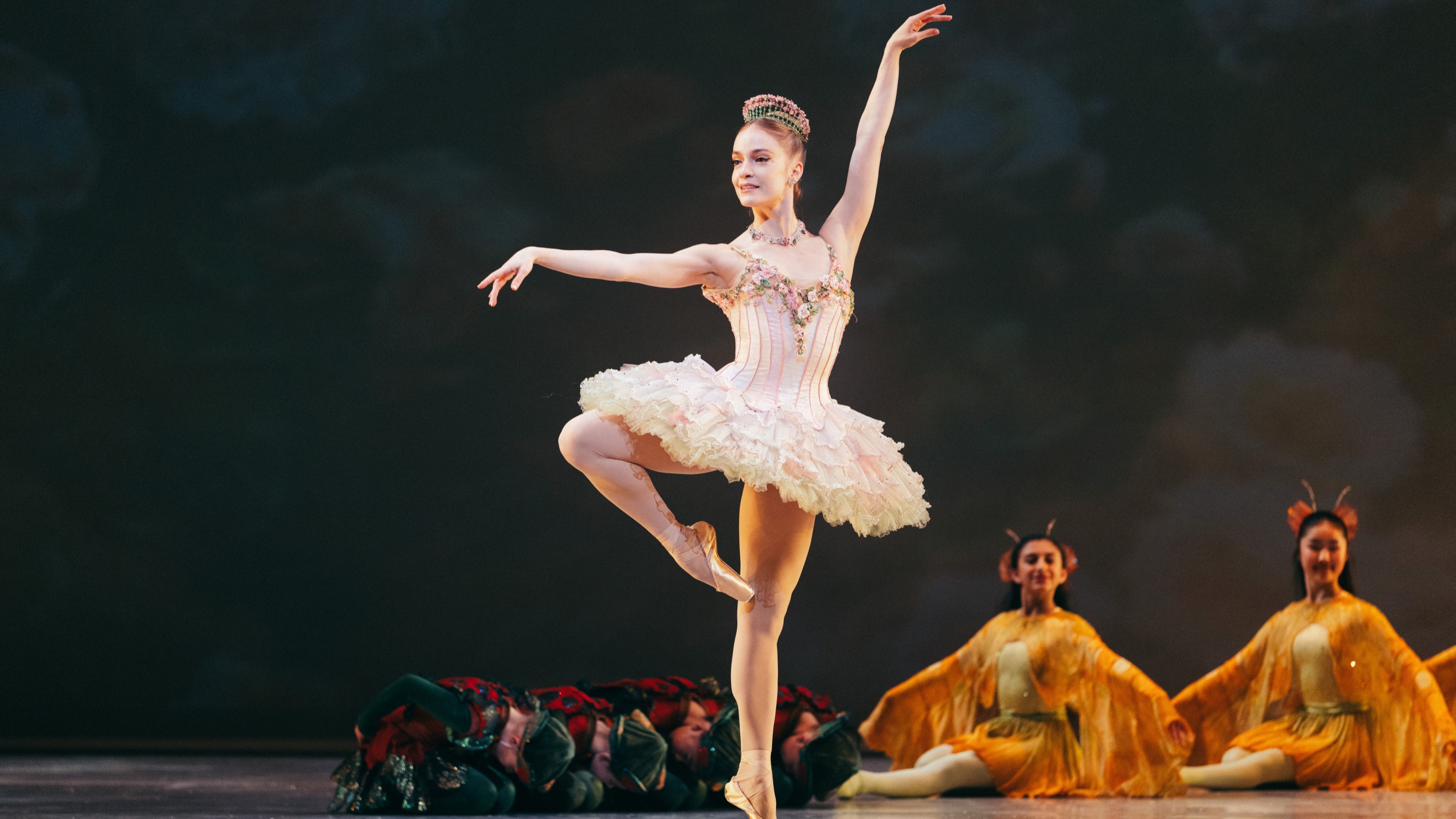
The evening’s balletic glory comes in the Waltzing Flowers. In the gorgeously graded pastels of Martin Pakledinaz’s costumes, the dancers flowed through Tomasson’s organically inventive and seemingly inevitable choreography. The whole stage was in bloom.
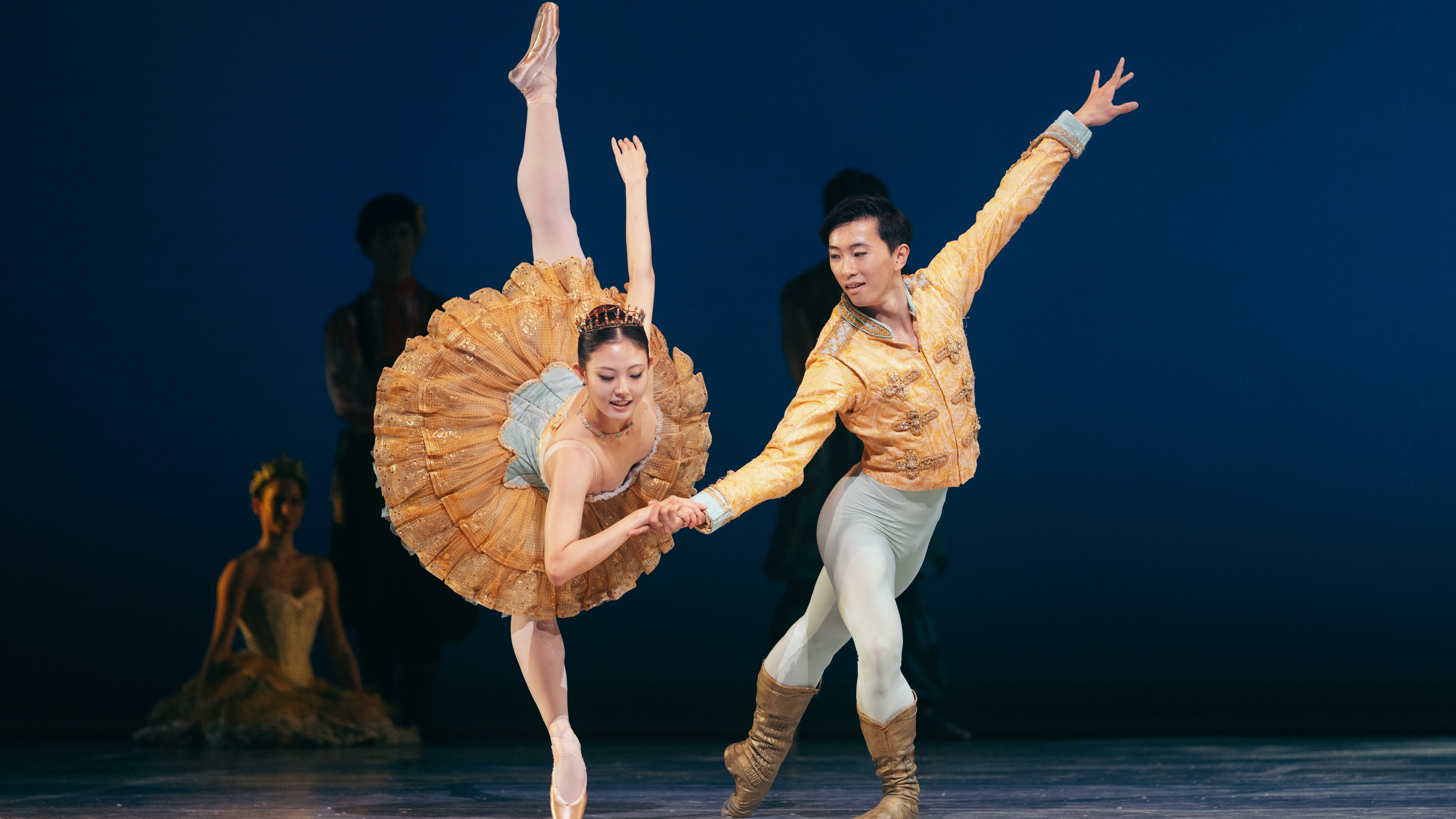
The principals were dancing roles they had all filled before. Greeted with applause whenever she appeared, a fleet and feathery-light Sasha De Sola was the night’s Sugar Plum Fairy.
While the women do most of the dancing, it was Wang who made the Grand Pas de Deux take flight. Whether he was paying graceful court to his partner (Wona Park) or taking the stage himself, everything he did had suavity and power. His jumps seemed to linger in the air an extra, gravity-defying half second — a last bit of Nutcracker magic.
This article has been provided in partnership with San Francisco Chronicle.