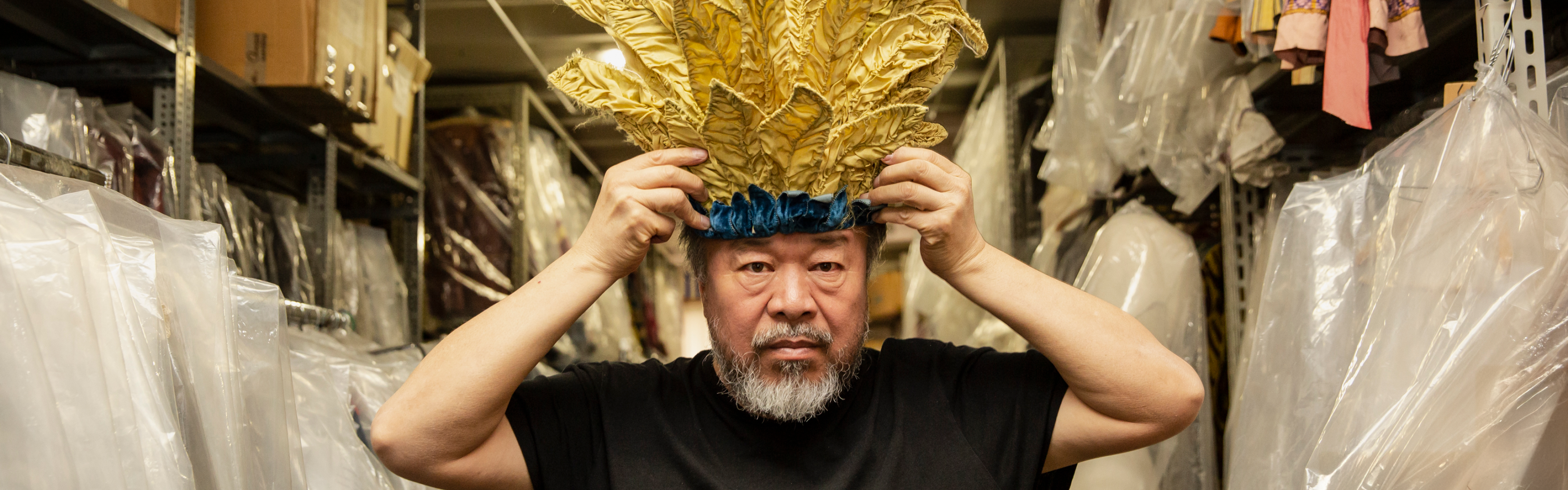

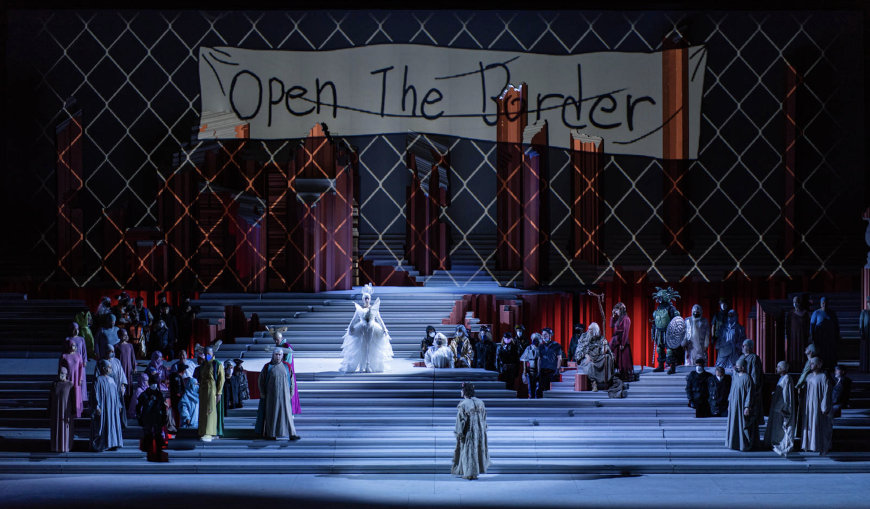
It was fascinating listening to filmmaker Maxim Derevianko describe the challenges he faced while documenting the Teatro dell'Opera di Roma's 2022 production of Puccini's Turandot, designed and directed by the world-renowned Chinese artist and free-speech activist Ai Weiwei.
Produced by Christine La Monte, Marta Zaccaron and Andy S. Cohen, Ai Weiwei's Turandot is available to Academy and Guild members for screening and Academy Award qualification. The documentary is currently seeking a distributor to go into public release.
Following the film’s private screening at the UTA Theater in Beverly Hills, Derevianko participated in a discussion with opera and theater director Peter Sellars. As Derevianko described it, his straightforward concept — to document Ai Weiwei's debut opera production from first rehearsal to curtain up— turned into something much more complex when the production was impacted by the outbreak of the COVID-19 pandemic and Russia's invasion of Ukraine. But over the course of the years it took to film, the production and its participants all evolved. It is this interplay between artistic creation and the overwhelming impact of world events that makes Ai Weiwei's Turandot, so illuminating and provocative. Or, as the artist is fond of putting it, “Everything is art. Everything is politics.”
As the documentary opens, Ai arrives at the theater for the first rehearsal and introduces himself and his closest colleague, choreographer Chiang Ching. He takes a moment. Then, in his soft but affirmative English, states to everyone's astonishment, "I'm not interested in opera at all. Ordinarily I don't listen to music. My Turandot is going to be different."
It was like throwing down the gauntlet, because Puccini's opera has consistently been staged as a commedia del'arte inspired by Carlo Gozzi’s orientalist fantasy tale. In two of the most famous productions, David Hockney transformed the opera into a dazzling succession of colorama cut-outs, while Franco Zeffirelli’s immensely successful long-running production for the Metropolitan has been jokingly accused of stealing its decor from every Chinese restaurant in Manhattan. An odd exception was Sally Jacobs's designs for the Royal Opera Covent Garden (a production that was seen as part of the 1984 Olympic Arts Festival in Los Angeles). It presented the action in the context of a traditional Chinese opera.
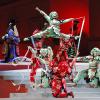
Ai's production still has a sense of fantastical wonder in the costuming. But his view of this opera reflects his first hand experience with the brute force of government oppression, the isolation of being disappeared and imprisoned, and the displacement of life as a political refugee.
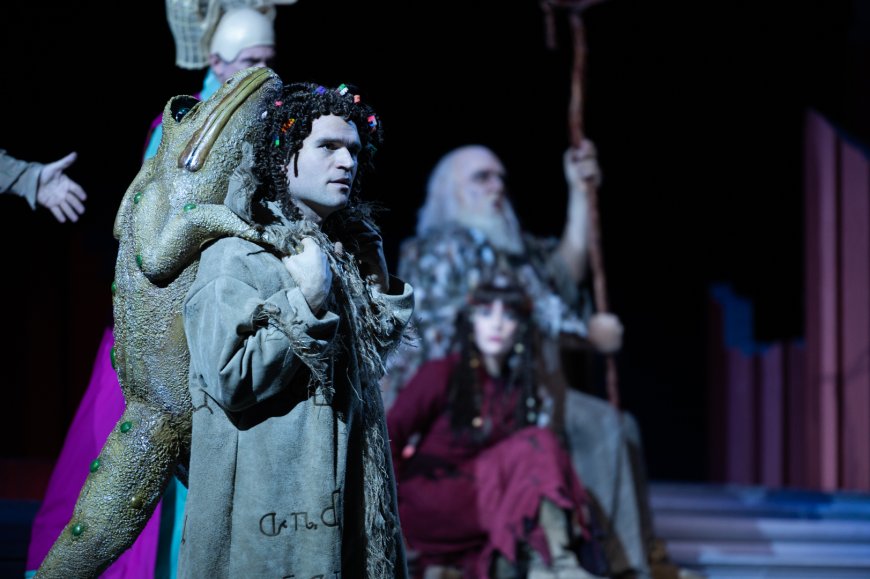
For this artist, Puccini's fantasy directly relates to hard reality. He sees the character of Turandot as the personification of China's viciously repressive government, Timur, Liu, and Calaf as uprooted refugees. In the world of Ai's Turandot, AK47 rifles can transform into hallucinogenic mandalas interspersed with black and white newsreels of battlefronts and mud-spattered fleeing civilians, as the sky rains bullets.
The daily routine of staging and blocking commenced, the remarkable sets and fantastical costume designs began to take shape, the cast digested the concept. It was business as usual.
Then news about a virulent virus began to proliferate until, on March 4, 2020, Superintendent Carlo Fuortes gathered the company (all caught on film) and told them everything was shutting down indefinitely and to go home. Rehearsals would not begin again until March 15, 2022.
The interim, however, gave Derevianko time to thread together archival footage of Ai Weiwei's life, ranging from his youth to a time when his artistry merged with his political dissidence, ultimately bringing him to the attention of the Chinese Communist Party.
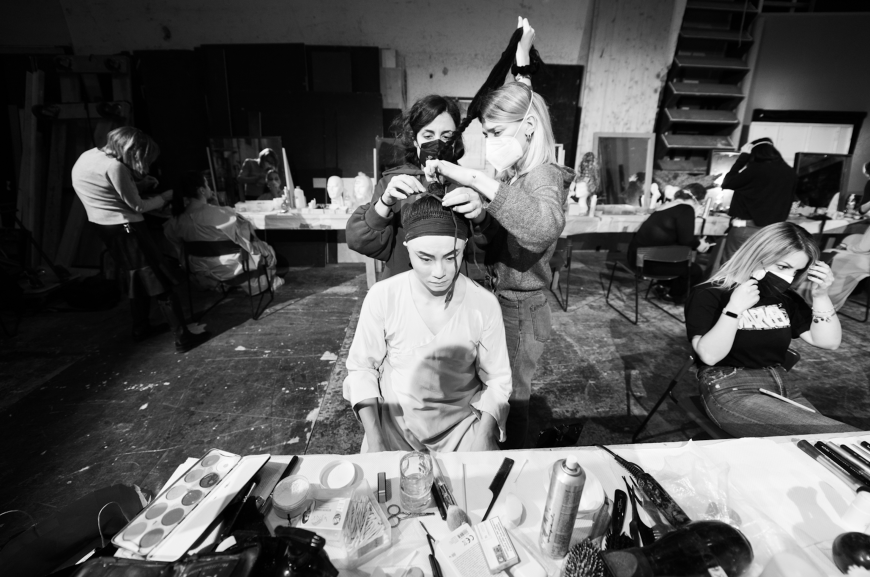
By the time rehearsals resumed in March, 2022 (with an abundance of masking and social distancing), Russia had invaded Ukraine. The days leading up to opening night on March 22, 2022 proved particularly stressful to the production’s Turandot, Oksana Dyka, and the company's principal conductor, Oksna Lyniv, both of whom are Ukrainian.
As the opera director, Peter Sellars observed, Ai Weiwei's Turandot provides a skeleton key to the complex layers of the production and its visual iconography while offering biographical insights into the life and art of Ai Weiwei. Both for the insight and the inspiring production, this is a film that deserves to be seen.