Though ballet companies typically strive for fluidity and grace, Vancouver-based Ballet BC goes beyond that description. The company’s style involves movement patterns, body interactions, thrusts, lifts, and extensions that seem impossible while still projecting a sense of animalistic intensity.
During Ballet BC’s fifth appearance at the Younes and Soraya Nazarian Center for the Performing Arts on Nov. 15, there were times I thought these remarkable dancers must have bones made out of some space-age polymer that enabled super flexibility.
Saturday's performance combined Artistic Director Medhi Walerski’s Sway (first performed in 2019 by the Nederlands Dans Theater), the U.S. premiere of Sofia Nappi's super cool Lila, and a restaging and reimagining of Shahar Binyamini's Bolero X, an orgiastic finale which was premiered by the company in 2023.
The choreography combined immense originality with a treasure-trove of inspired references. Inspiration can be traced to the abstract gestural expressionism of Merce Cunningham, the animal passion of Pina Bausch and Maurice Bejart, the Sharks and Jets of Jerome Robbins’s dances for West Side Story, and hip-hop.
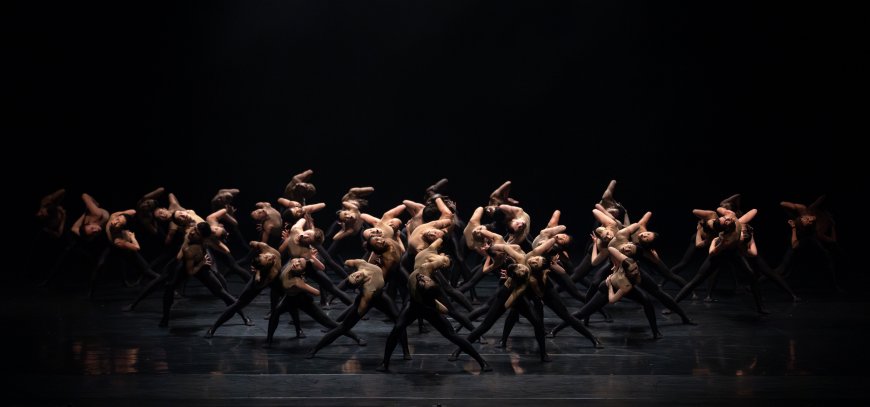
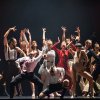
The evening began with seven dancers for Sway, then 16 for Lila. The performance’s grand finale of Bolero X combined the full Ballet BC company with 31 student dancers from USC’s Glorya Kaufman School of Dance. (The world premiere in Seoul, South Korea featured an ensemble of 60.)
Maurice Ravel's sexy Bolero is built on a sustained crescendo. Binyamini transforms it into a dance resembling a tribal ritual. For much of the ballet, most of the ensemble members are observers out of which sensuous solos and duets emerge. You might think of it as Pina Bausch's Rite of Spring without the violence. But when the climax comes in Bolero X, the entire ensemble sways and thrusts in unison like a pulsating organism. The effect is an eruption of Dionysian proportion.
In Sanskrit, Sofia Nappi wrote, the word “lila” means play, as in, "the Divine Play." Nappi is a choreographer of infinite variety. And Lila unfolds in six exceedingly diverse musical episodes (to music ranging from a movement of J.S. Bach's Violin Concerto No. 2, to the song "Un Mundo Raro," to contemporary compositions by Ciaran Morahan.)
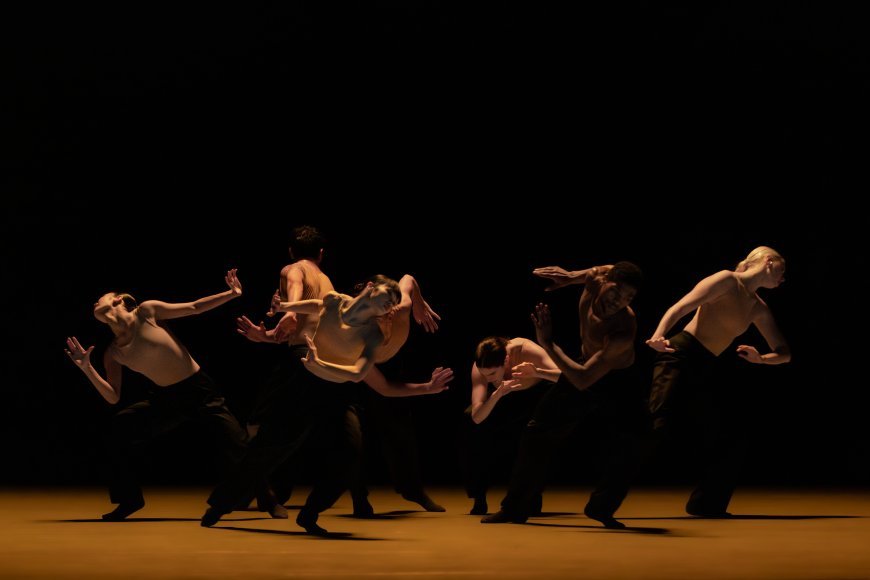
This is dance of the streets, all torn shirts and black jeans, viral, sensuous, and combative. The ensemble fades in and out of ominous shadows and billowing fog or smoke accentuated by Matthew Piton's fragmented lighting and Adriano Popolo Rubbio's costuming. There are rumble scenes, pan-sexual love duets, and a carnivorous sense of animals on the prowl that modulates to the ever-shifting moods of the music.
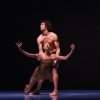
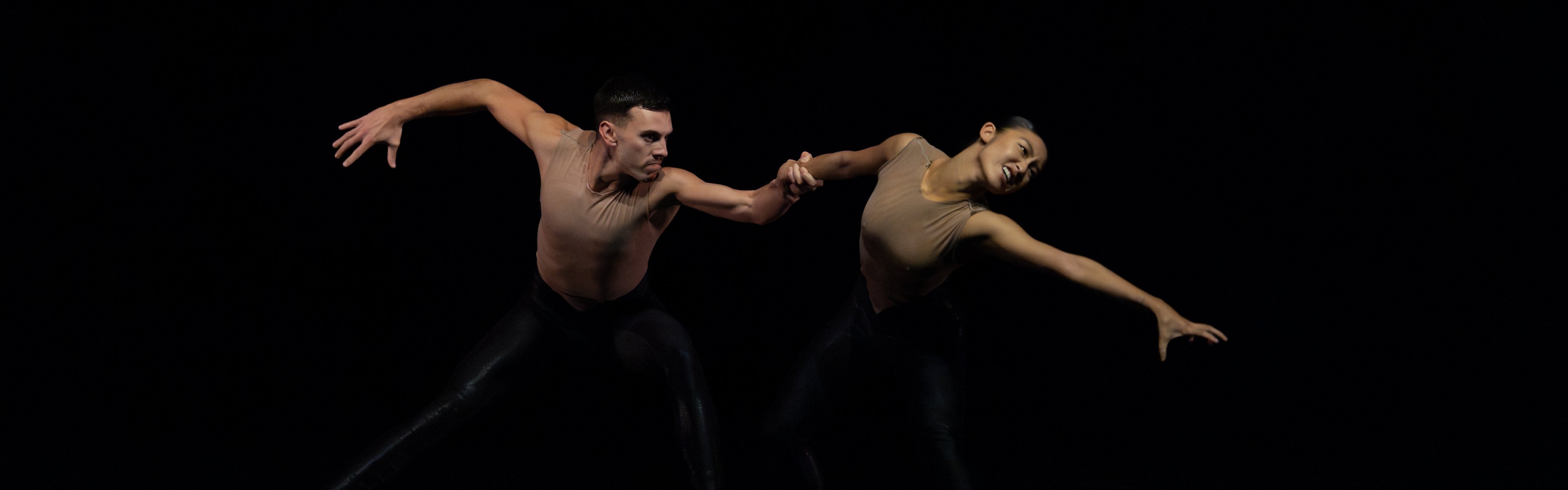
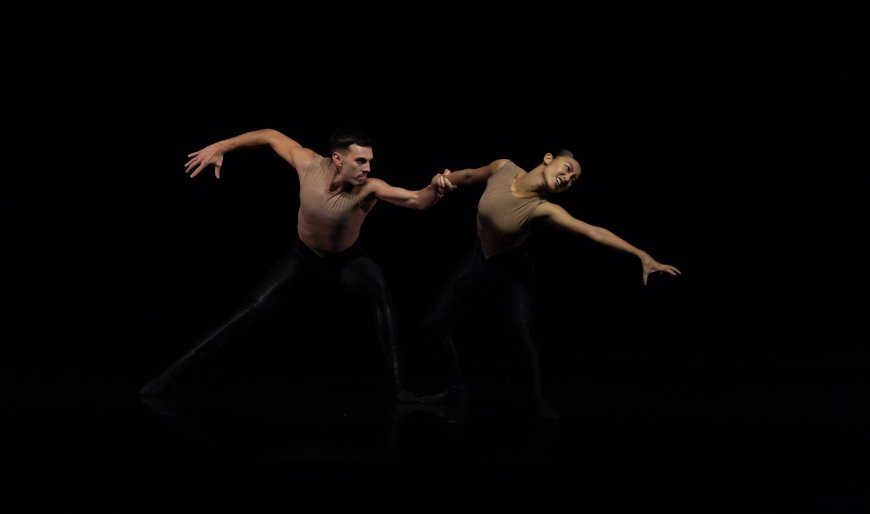
In contrast, Walerski's Sway is coolly abstract, the dancers androgynous, their interactions based on evolving shapes, shared and separated distances, intertwining and coming apart. In all, this was modern ballet at its highest, most provocative level.