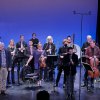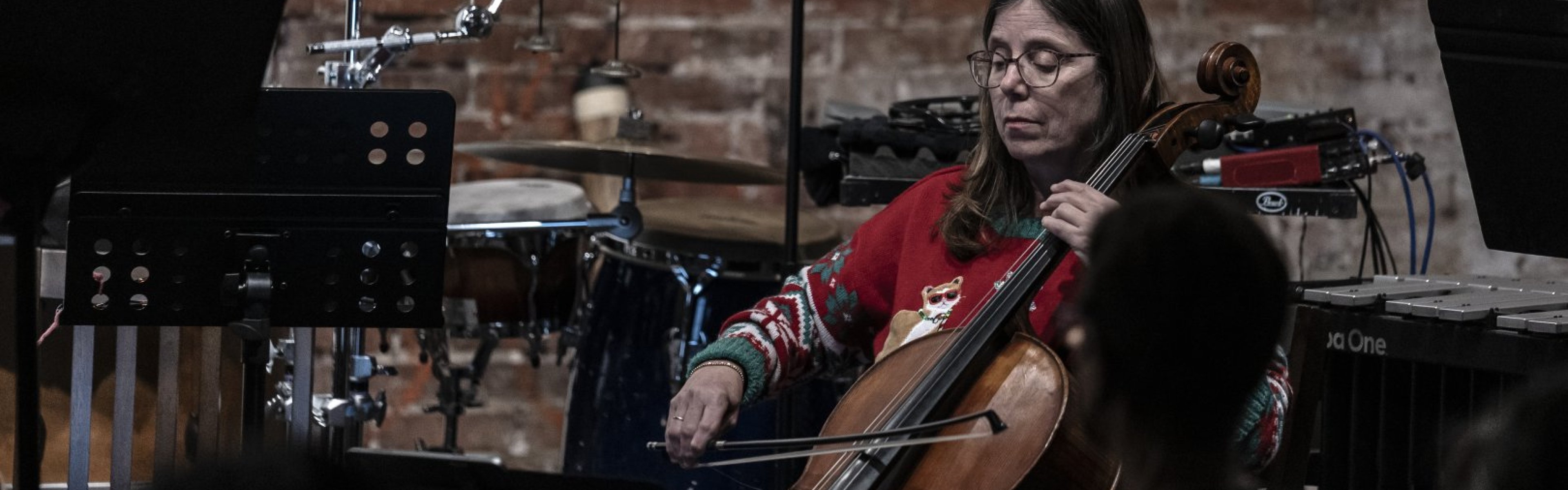
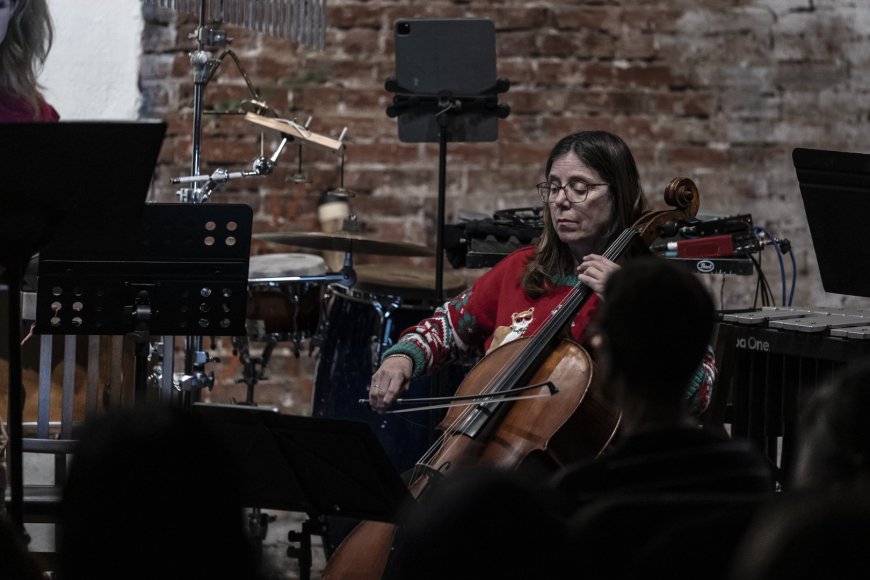
Brightwork newmusic unveiled its new digital label in a concert titled “Brightwork Digital Mixtape” at Monk Space on Tuesday, Dec. 9. The event also provided a snapshot of the ensemble’s core aesthetic values. The evening’s program highlighted the ensemble’s rare ability to make complex music feel clear, immediate, and intelligible. The audience’s vocal enthusiasm made clear that Brightwork has, over time, cultivated a community of musicians and listeners who gather around to hear adventurous music made approachable.
Much of the evening’s music foregrounded repetition and layering as compositional tools. Ian Dicke’s Isla did this with flute, vibraphone, and pulsing electronics. The interplay between the acoustic and electronic elements was steady yet flowing, slowly gathering momentum. Tom Flaherty’s Internal States, one of the standout pieces of the night, used similar techniques in a more dramatic arc.
Brightwork deftly navigated the shifts from winding, river-like lines to tightly metered mechanical passages and back again, garnering audible appreciation from the audience. Andy Akiho’s “Lost on Chiaroscuro Street” also centered on looping, but in a more fractal and kinetic style. Brightwork’s strong rapport and almost preternatural blend did justice to Akiho’s kinetic compositional style.
Nina Shekhar’s “Don’t Beat a Word” created a sense of wonder through the patient development of textures centered around breath sounds and gently swelling timbres. Molly Pease’s wordless vocals were focused and controlled, floating gently above. By the time percussionist Nick Terry shifted to drum kit at the climax of the piece, the whole ensemble swelled into larger, more forceful waves of sound.
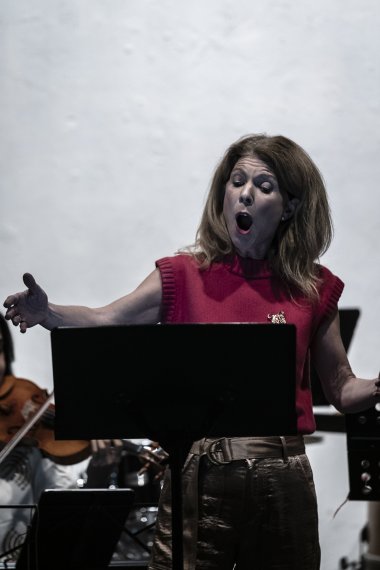
Some pieces created a clear emotional narrative through vocal expression. Stacey Fraser’s voice carried the emotional weight of Pamela Madsen’s “A Prayer for my Daughter” with lamenting clarity. Dana Kaufman’s Sappho Summer was joyously energized by the interplay of Pease’s and Fraser’s voices.
Pease’s “Waterways and Dwellings” contributed a more pensively atmospheric kind of vocal work. The piece featured HEX, the Los Angeles-based contemporary vocal ensemble known for championing new music. The sparse interplay between voices and instrumental music created a dramatic — almost operatic — narrative with spacious meditative textures.
The final two pieces of the night centered on unusual tuning and extended techniques. Eric Moe’s They Sang But Had Nor Human Tunes Nor Words, written in 19-tone equal temperament, produced the kind of delicate uncertainty that microtonal writing often brings. But once the ensemble and the audience settled into the tuning, the music gained ease and warmth. A later rhythmic section provided a surprising lift, which the players handled with notable calm and assurance.
By the time the music returned to the more filigreed passages, ensemble and audience alike seemed to embrace the uncertainty as a feature of the music. The evening’s final piece, Brightwork clarinetist Brian Walsh’s Scare Suit, explored strangeness through improvisation, extended techniques, and delicate textures that hovered at the edge of silence. The piece moved through distinct sonic “spaces,” each featuring a different member of the ensemble, before a satisfying return to its opening.
Brightwork newmusic consistently demonstrates how they’ve become such a steady presence in L.A.’s new-music scene. Their performances make the most complex writing feel human and approachable. We can expect that the music they release through their new digital label will document the relationships between players, composers, and the community of listeners — relationships that make concerts like this one so approachable and emotionally satisfying.