For as long as there has been music, there have been hitmakers. African American composer Francis Johnson (1792-1844) was undeniably one of them. A beneficiary of Pennsylvania's Act for the Gradual Abolition of Slavery, Johnson was able to operate as a free Black musician during America’s infancy at a level of success and autonomy that was hitherto unthinkable. He was one of the first American musicians to tour Europe with a band, and the first African American musician to publish original compositions at a significant scale, chiefly dance and military music.
Through beautiful orchestration of Johnson’s piano scores, Music of the Regiment, co-directed by Dominic Giardino and Chris Troiano, was able to bring these long-forgotten works to light. These were accompanied by period-accurate dance performed by The New York Baroque Dance Company, reconstructed by dancer Julia Bengtsson and Alan Jones, a former company dancer-turned-scholar of early American dance.
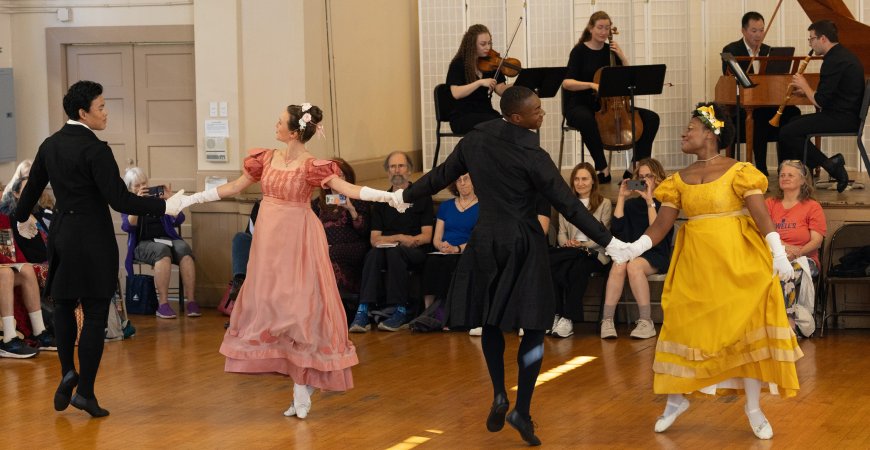
Music of the Regiment appeared as a quartet of clarinet, violin, cello, and fortepiano. The concert opened without introduction with Johnson’s rousing “Parade March,” followed by “La Fayette’s Grand March”—an anonymous composition credited only to “A Lady of Philadelphia.” Upon finishing the latter piece, Giardino, who also played clarinet throughout, informed the audience that many women composed military music in America’s early days. A concert of such compositions would certainly be a pleasure.
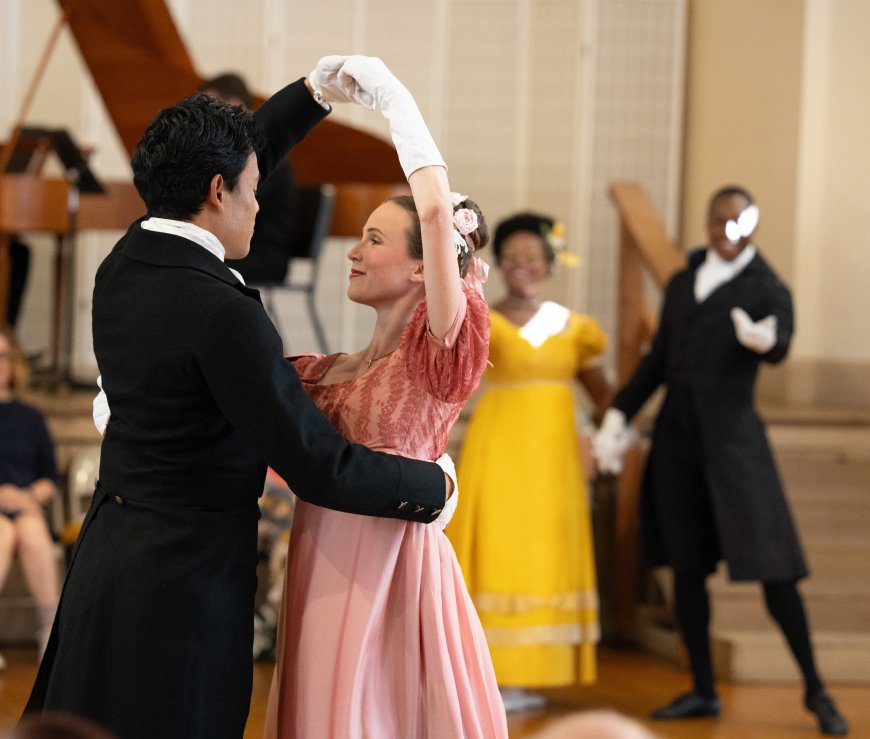
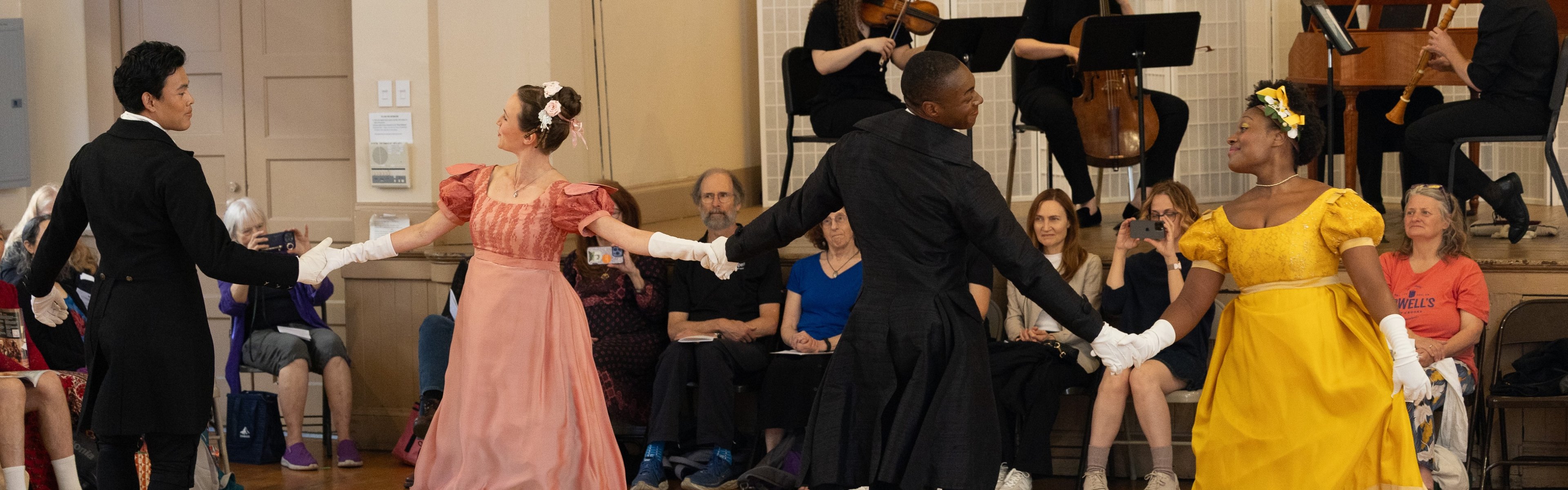
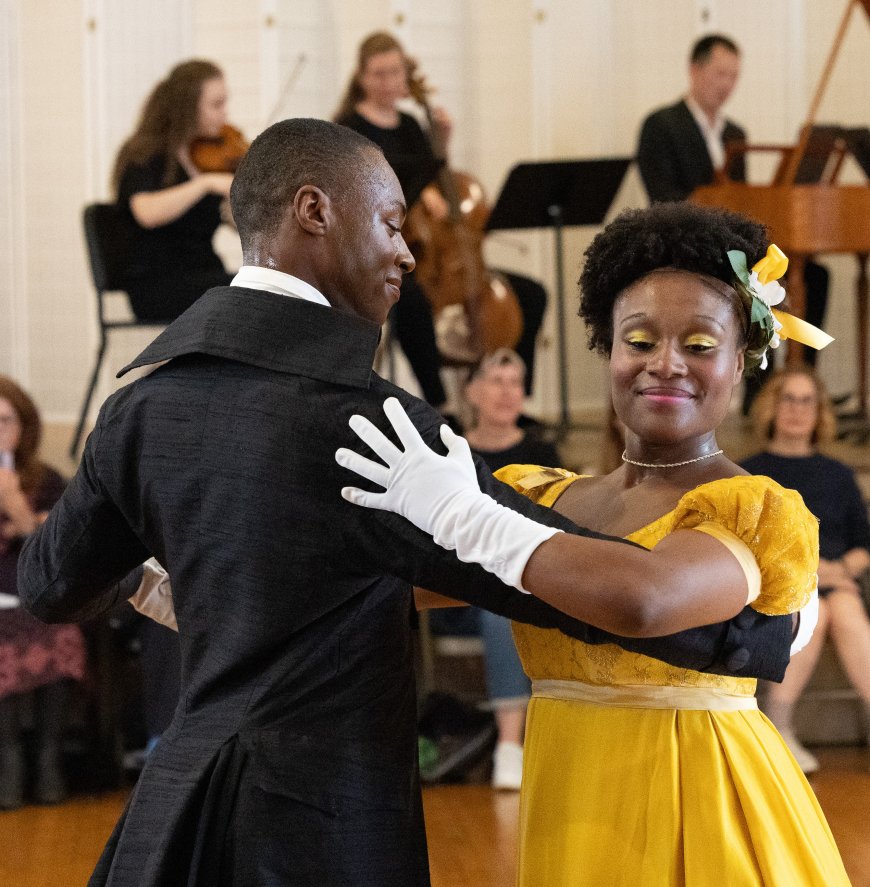
After this instrumental introduction, the dancers lilted across the hall; a quartet of two women and two men including Bengtsson and three others. Seeing the dancers brought out the true character of the music, which was already played with joyful vivacity. This was the social partner dancing of the period, performed with the skill and subtlety of lifelong professionals. It was also fascinating to see such beautiful costumes from this era, the likes of which are often seen anachronistically rendered in shows like Bridgerton. If only that show included music like Johnson’s, too!
The next pieces were a set of cotillions and a march composed for a grand ball honoring General Lafayette, a key figure in the American Revolutionary War. The pieces were depictions of the General and his friends; Lafayette’s music had a delightful melodic sensibility, whereas Washington’s by contrast was statelier, a touch rustic, even. These showcased Johnson’s masterful character writing.
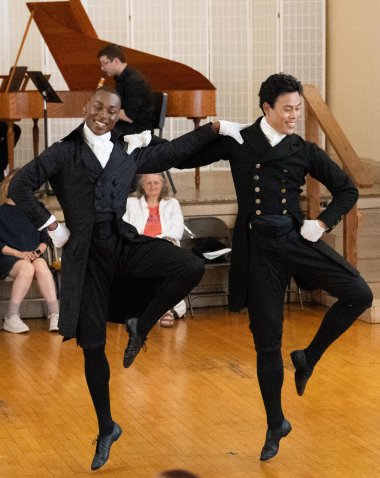
The next few works highlighted the dancers’ abilities: “General Lafayette’s Bugle Waltz” featured lovely, twirling embraces between dancers. “Potter’s Hornpipe” saw the two male dancers engaged in a comedic duel to outshine the other, replete with fancy footwork and exaggerated gestures, yet never losing their refined air.
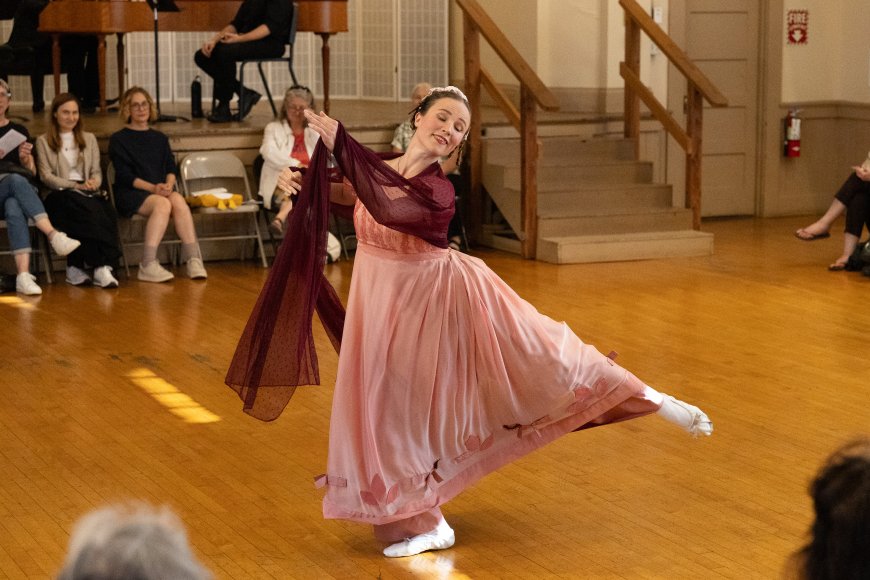
The eponymous dance accompanying the “Victoria Gallop” was absolutely thrilling, the four dancers prancing with speed and precision unlike the prior, more reserved partner dances. Bengtsson’s elegant solo during the “Shawl Dance” (composed by Daniel Steibelt) featured a final flourish where she tied her shawl into a knot to drape it over her shoulders, all while maintaining complex steps.
In the middle of these was an instrumental work, the “Recognition March of the Independence of Hayti,” composed by Johnson as an act of defiance, acknowledging the nascent Haitian nation decades before the United States did. Indeed, Johnson had an international eye: the last few pieces were dances he picked up from Europe.
There followed a series of waltzes, which gave the excellent instrumentalists plenty of moments to shine collectively and individually. The final two works were the “Congo Minuet,” a virtuosic duet condensing the cotillion, usually performed in groups of four or more, into a dance for two, and another impressive solo performed by Bengtsson, “A New Spanish Dance” complete with blisteringly fast castanet clicking as she brought the program to a fiery finish.
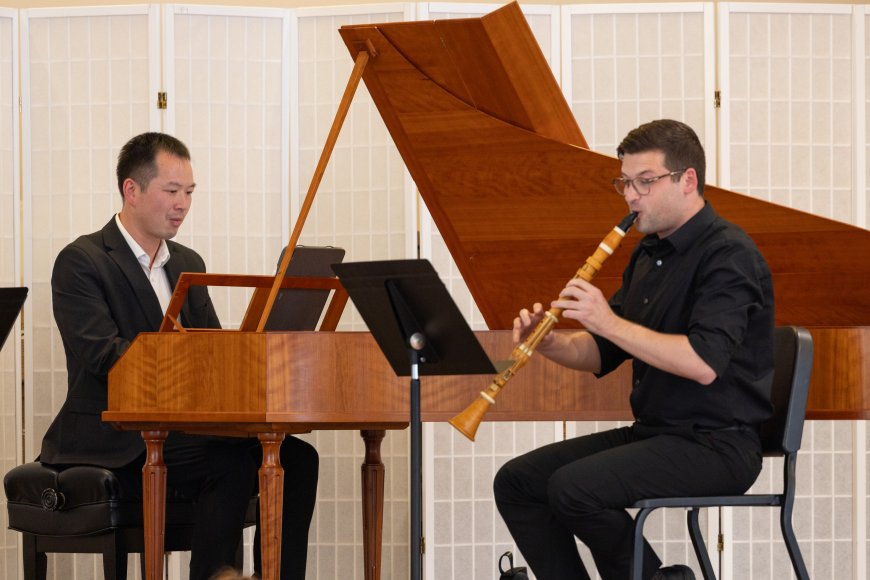
The ensembles were a phenomenally natural pairing. The Regiment musicians were very musical and played dynamically from scores that required significant interpretation. The dancers matched them in skill and fervor, and the use of period instruments provided a gentler, softer sound that gave their choreography space to blossom.
Above all, Johnson stands as a remarkable historical figure: he was a free Black man composing and performing for war heroes and heads of state and teaching an integrated music studio in the antebellum Northeast. He had an ear for trends and marketing reminiscent of Drake, the pop-rap icon who readily draws from genres like UK Drill rap and Jamaican dancehall. Unlike Drake, Johnson went further. He used his freedom to bring music to diverse backgrounds, and to speak for justice.