“Gustavo, don’t leave us for New York!”
A woman’s anguished cry in Spanish in Walt Disney Concert Hall Thursday night seemed to express what many Angelenos feel, unaware that Gustavo Dudamel isn’t leaving them high and dry. After all, he’s just been adorned with two imposing, if wordy, new titles – Artistic and Cultural Laureate of the Los Angeles Philharmonic and Founding Director and Conductor Laureate of Youth Orchestra Los Angeles – and is due to be back four weeks out of the year indefinitely, beginning this December.
The woman’s anxiety is understandable, given the way the past weekend’s concerts have been vigorously touted as Dudamel’s “last.” That alone was enough to fill the hall to capacity.
The programming on his final weekend — the music of John Adams, the Phil’s Creative Chair throughout the Dudamel era, and Antonio Estévez, a hero of Gustavo’s youth in Venezuela — displayed Dudamel’s dual allegiances to Venezuela and Los Angeles, and his efforts to unite them in music.
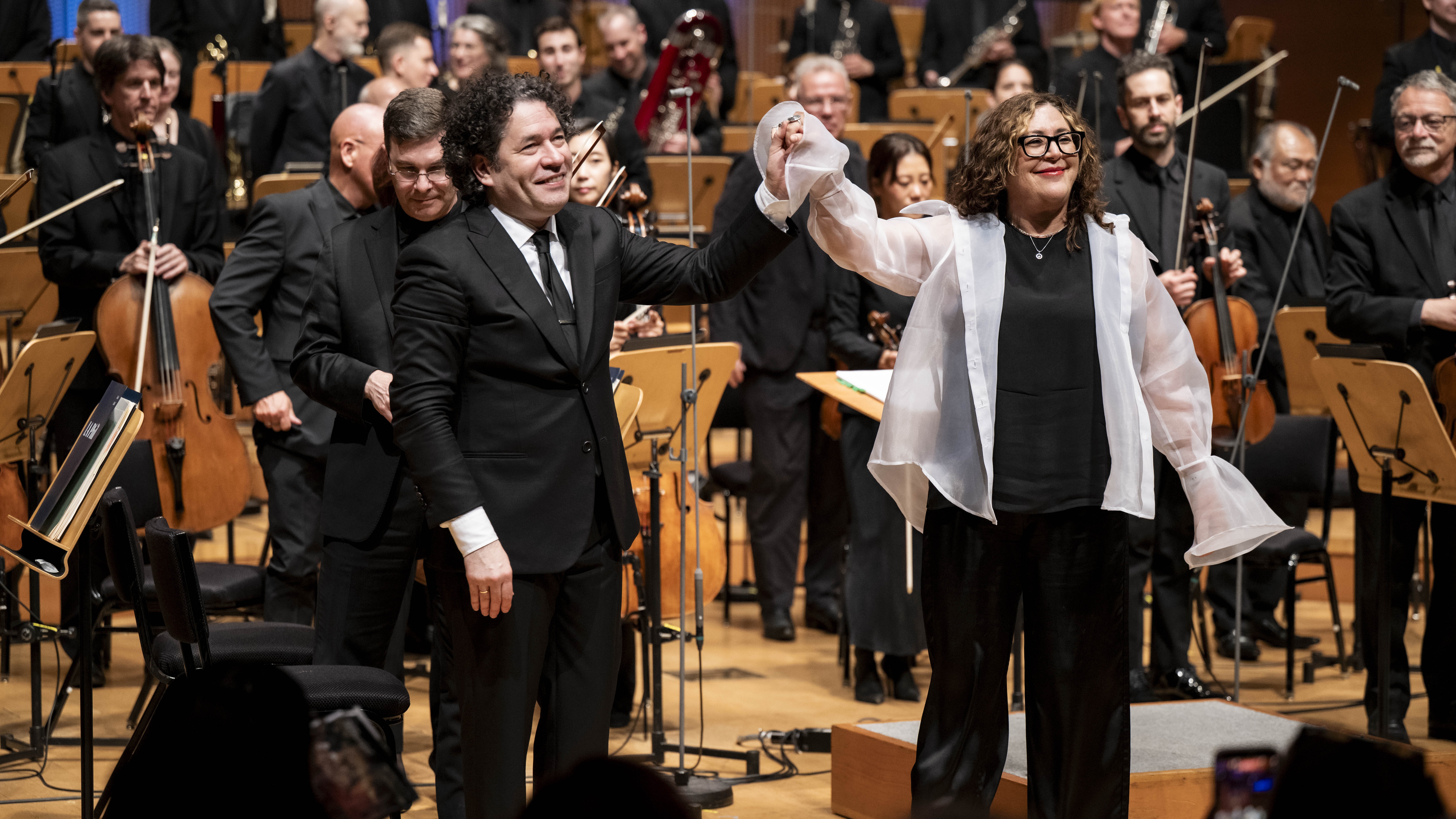
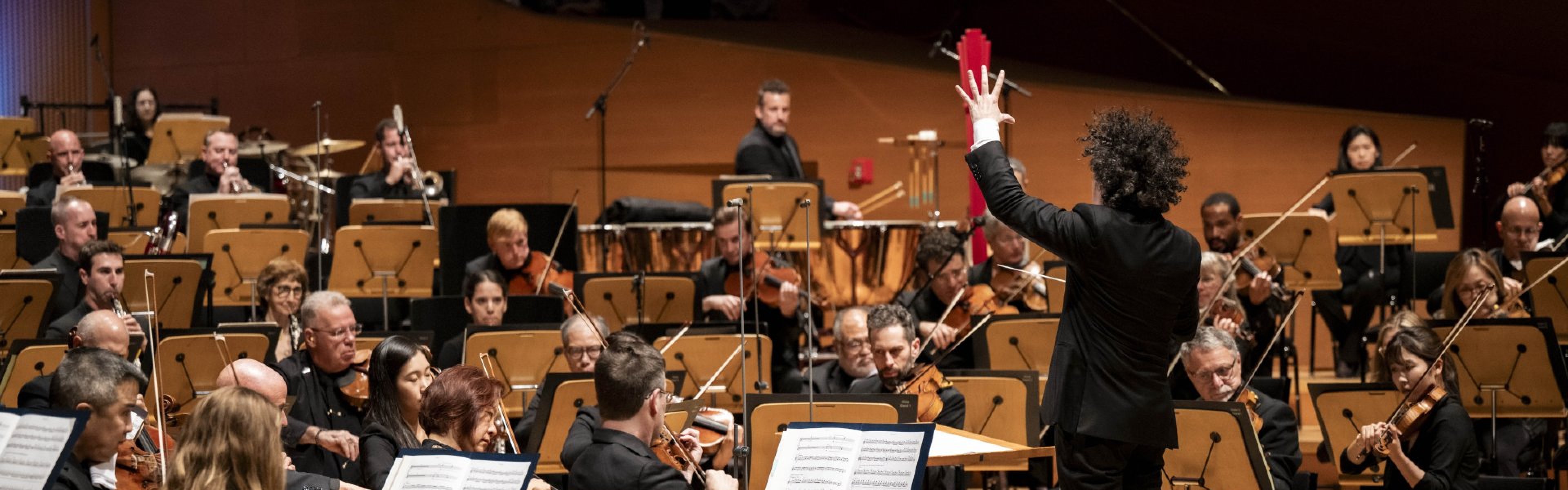
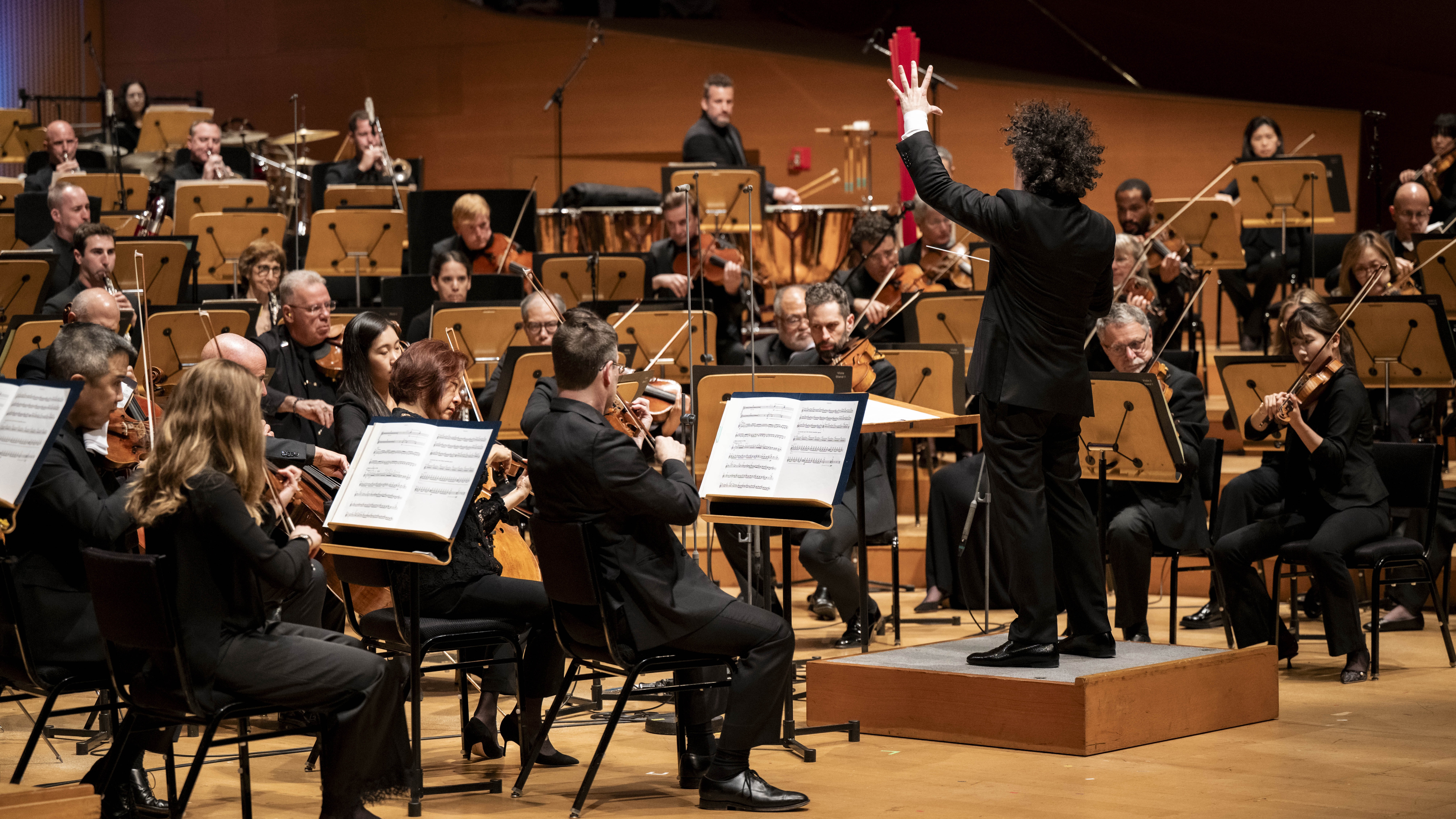
But on Thursday, Dudamel devoted nearly an entire evening to having the principal players of his orchestra take solo turns with the backing of their colleagues. It was a gesture of respect that I do not recall any other music director making here. With apologies to Benjamin Britten, the concert could have been subtitled “Gustavo’s Guide to the Orchestra.” All the soloists acquitted themselves beautifully.
There was even a pair of world premieres to bracket the evening — John Williams’s dynamic portrait of Dudamel, Bravo Gustavo!, which checked off several of the latter’s interests (new music, Beethoven, Latin American rhythms, extroverted climaxes), and Gabriela Ortiz’s quick progression from moonlit nights to roaring indigenous Mexican influences, Mujer Arena. Both composers were present to gather the long ovations.
On to Friday night, June 5, for the final program, which was repeated Saturday and Sunday. Adams was represented not by a new work — his usual contribution to Big Events — but by his first opus for a large orchestra and chorus, Harmonium (1980). This was a different Adams than the maximalist we know today. He was still in his minimalist phase, heavily influenced by the repeating, evolving string patterns of Sibelius.
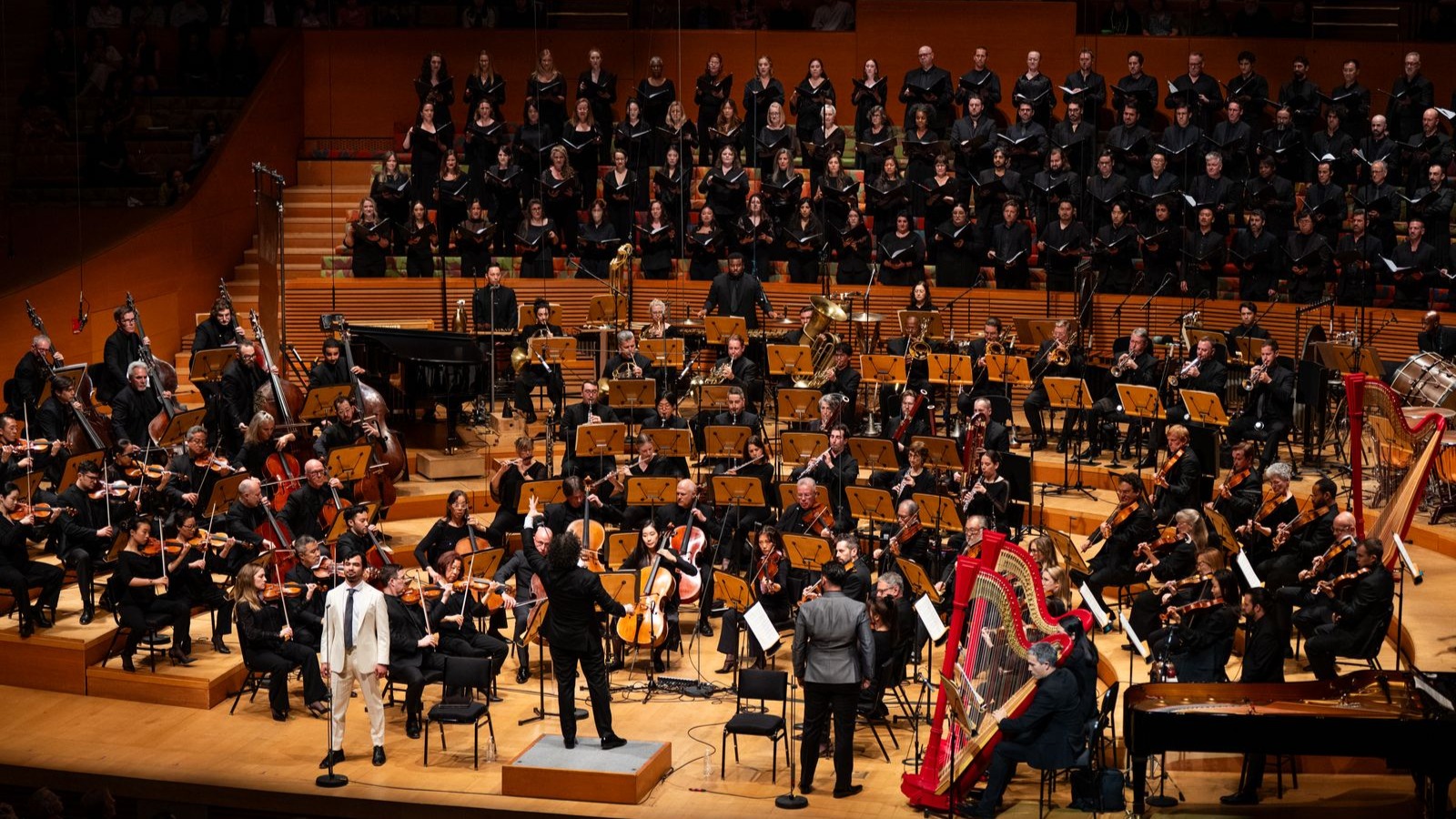
Dudamel pushed some of the dynamics to a level of fury that other, more relaxed performances never reach. Throughout, the LA Phil’s performance was top quality, as was that of the Los Angeles Master Chorale, which airily floated Adams’s settings of poetry by John Donne and Emily Dickinson.
The performance was recorded and will be released on LP, available only in the LA Phil Store — part of a growing series of expensive, in-house LA Phil vinyl artifacts. Evidently, the store has been listening to customers, some of whom are not satisfied with digital-only streams, wanting something physical they can own.
Estévez’s Cantata Criolla is still far better known in Venezuela than here. It tells a tale of a troubadour, Fiorentino, who engages in a singing contest with the Devil. It is set, at first, in an atmospheric neo-Romantic mood that is merely listenable. But from about the 25-minute mark, the real tasty Venezuelan flavors kick in, with maracas driving the distinctive rhythms and harmonic patterns. We are swept up in the music at last.
Dudamel, who grew up on this music, radiated joy and fervor as he drove the LA Phil and the Master Chorale onward, all from memory. The two vocal soloists were outstanding: tenor Anthony León (Fiorentino) heroically holding out the long, high-pitched notes in his part, and baritone Eliomar Cuello (Devil) exuding authority and giving credence to the often-cited notion that maybe the Devil does get all the best tunes.
Prior to the cantata, six young, eager members of YOLA recited América, an LA Phil-commissioned poem by Guillermo Arriaga, which consisted mostly of long lists of things about the Americas — every musical form under the sun, films, quotes by everyone from John F. Kennedy and Martin Luther King Jr. to Herman Melville, José Martí, Allen Ginsberg, and even Tupac Shakur (which got a rise out of the audience).
This reflected the side of Dudamel that I imagine he wants us to remember most — a unifier who thrives on diversity. We’ll be getting a lot more of that come August when Gustavo bids a temporary farewell to the Hollywood Bowl.