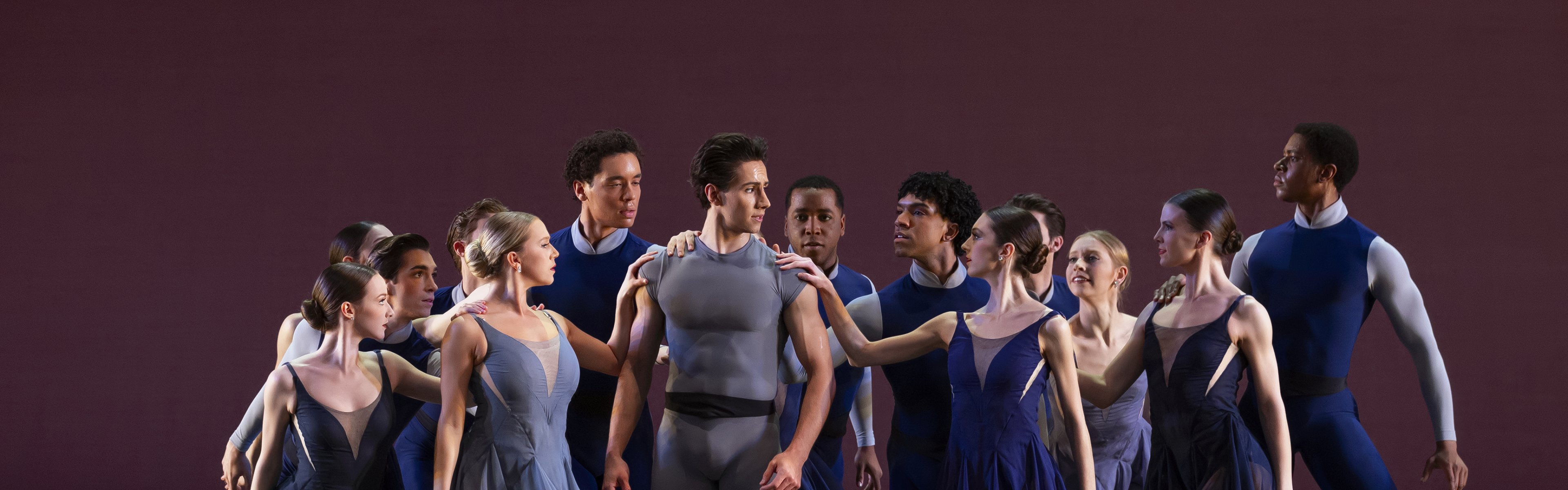
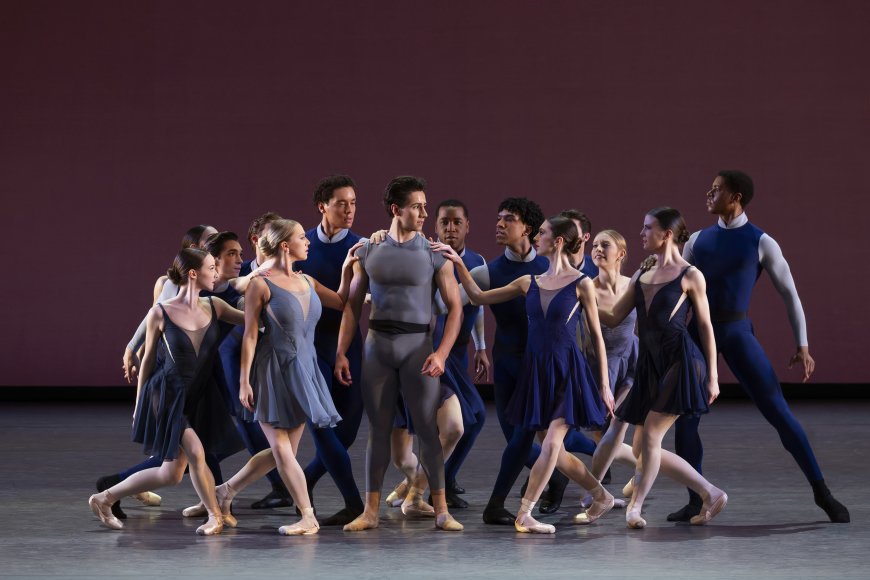
Returning to Los Angeles for the first time since 2004, the fabled New York City Ballet and its orchestra took the city by storm from June 24 to 28, giving seven performances of two programs comprising eight classical and contemporary works. The packed houses and rousing receptions that greeted NYCB at the Dorothy Chandler Pavilion left no doubt that LA’s balletomanes had been hungrily awaiting the company’s arrival. It even felt a bit like a homecoming.
Presented by the enterprising Glorya Kaufman Presents Dance at the Music Center series, the performances were dedicated to Kaufman, who passed away last August at the age of 95. This review covers the second of the two programs; the first featured choreographers Gianna Reisen, Ulysses Dove, Jerome Robbins, and Justin Peck, and music of Philip Glass, Richard Einhorn, Bach, and Dan Deacon.
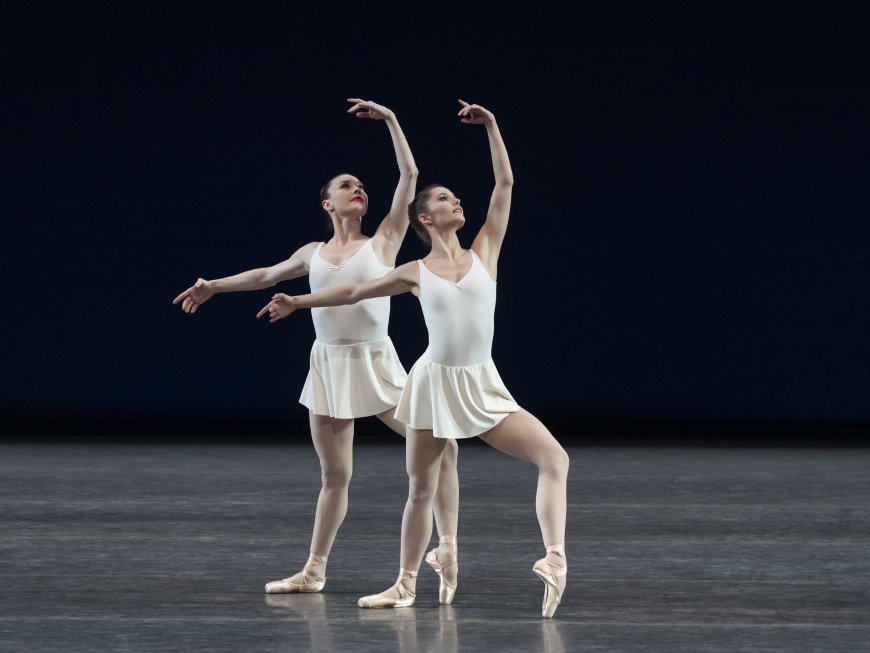
Although Georgian-Russian émigré George Balanchine (1904–1983), a dancer and choreographer trained in St. Petersburg, founded NYCB in New York in 1948, he was no stranger to Hollywood. During the 1930s and early 1940s he choreographed five major films there, and was friendly with composer Igor Stravinsky, who had relocated to Los Angeles.
Balanchine preferred to develop his own ballet company in New York, where he found important financial and artistic support. The core of the NYCB repertoire still consists of Balanchine’s ballets. Two appeared on the June 27 matinee performance: Concerto Barocco and Allegro Brillante.
Presented at the very first NYCB performance in 1948, Concerto Barocco was once described by dance critic Anna Kisselgoff as “the greatest of all Balanchine ballets.” This joyful and energetic masterpiece established the “plotless” neoclassical music-driven style that became the company’s trademark and revolutionized the field of dance.
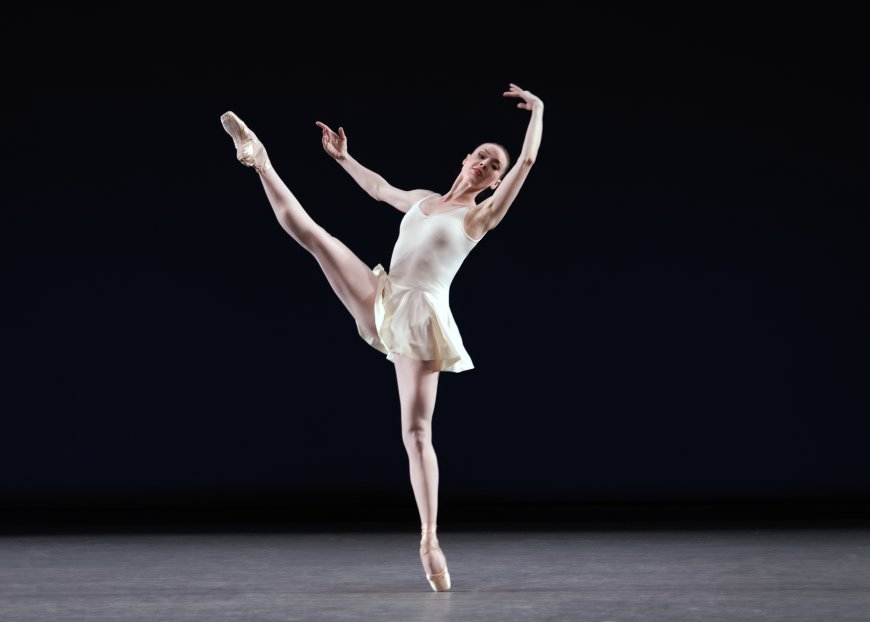
Choreographed for eleven dancers (ten female, all en pointe, and one male) to Bach’s Double Violin Concerto in D minor, the piece elegantly and precisely illustrates the music’s fabric and structure. The two female principals (Emilie Gerrity and Unity Phelan, both superb) represented the two violins, entering and intertwining in turn for solos and pas de deux,then joining members of the corps for the orchestral tutti sections, tracing elaborate geometrical patterns. In the second slow movement, Owen Flacke became a patient romantic partner, leading the dancers through a maze of embraces and turns.
Performed against a plain blue background with white costumes subtly lit by Mark Stanley, the ballet bounced and floated with precise elegance. The music was the story.
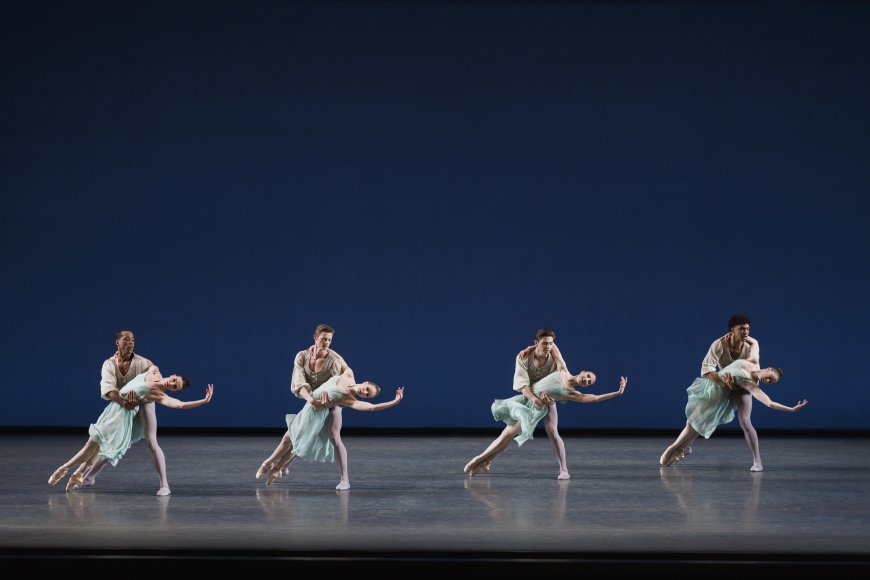
Balanchine called Allegro Brillante (1956), set to the first movement of Tchaikovsky’s unfinished Third Piano Concerto, “a concentrated essay in the extended classical vocabulary.” One of NYCB’s reigning stars, Tiler Peck, took the female lead with partner Ryan Tomash, who joined four couples in a highly physical but perfectly controlled and classically correct romp following the lines of the piano’s ebullient rhythmic pulse. In a clever trick, Balanchine gives the ballerina her virtuosic solos during the piano’s solo cadenzas. (Hanna Hyunjung Kim was the excellent pianist in the pit.) Born in Bakersfield, California and trained in LA, Peck received a huge ovation from the local crowd.
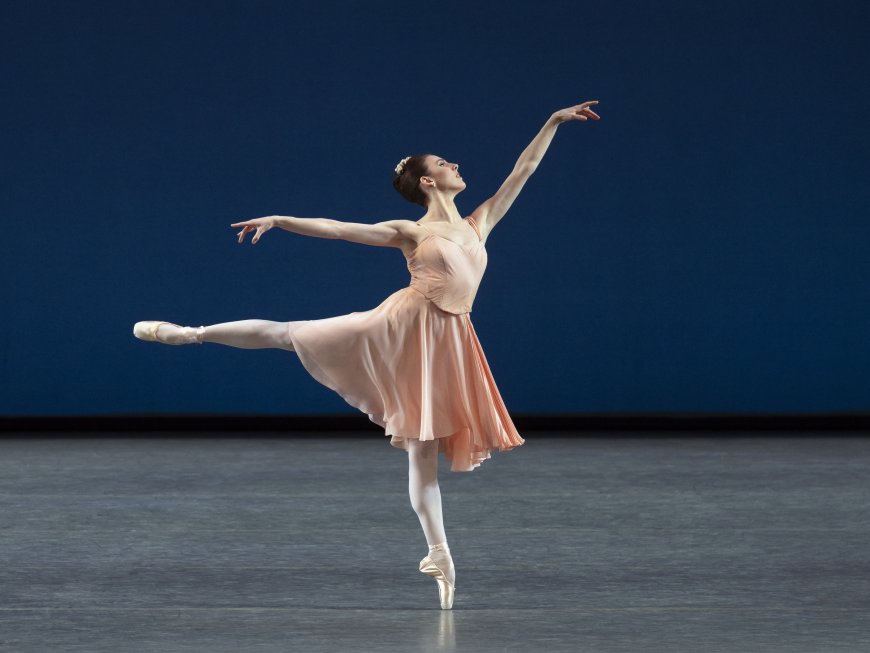
After a brief pause, the emotional and visual pace changed dramatically with This Bitter Earth, a pas de deux choreographed by Christopher Wheeldon as part of his longer piece from 2012, Five Movements, Three Repeats. The music is a “mash-up” of a moody orchestral piece by Max Richter, “On the Nature of Daylight,” and jazz singer Dinah Washington’s iconic recording of the soulful ballad “This Bitter Earth.”
Sara Mearns and Gilbert Bolden III gave a mesmerizing performance of this meditation on loneliness, mortality and romantic connection, moving and sliding along the stage floor, dressed and lit in evocative burnished earth tones. Mearns danced on point, while Bolden adopted a less formal style, which neatly matched the duality of the musical source.
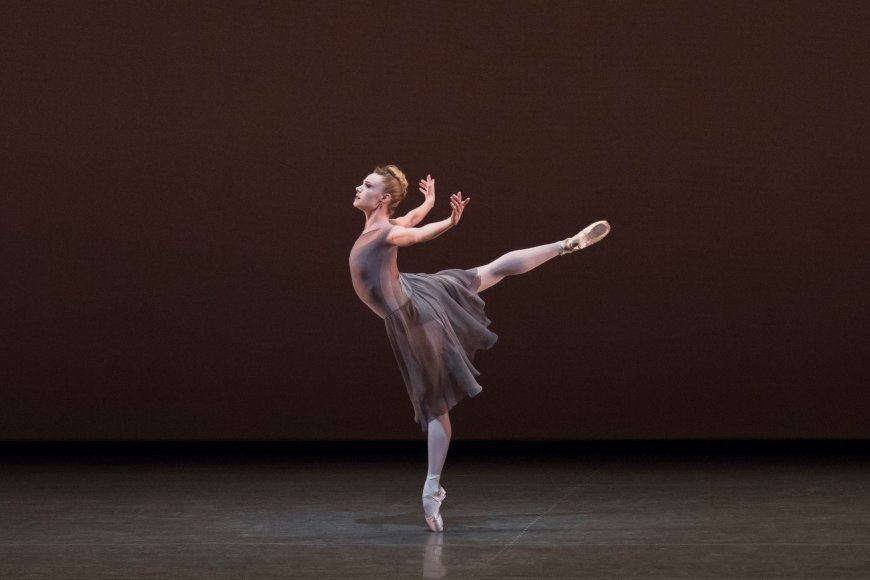
For the finale, Tiler Peck returned in a different capacity, as choreographer of Concerto for Two Pianos, premiered two years ago, her first work for NYCB. An ambitious and fast-moving entertainment set to Francis Poulenc’s chic Parisian score, performed with infectious élan by pianists Hanna Kim and Stephen Gosling, it combined classical ballet moves with elements of Broadway dance style. Bravura soloist Roman Mejia was the standout in the cast of 19 dancers, leaping across the stage in a series of spectacular grand jetés and aerial turns.
Brandon Sterling Baker’s striking lighting effects, and fashionista Zac Posen’s dazzling costumes helped to make this one of the new surprise hits of the NYCB repertoire.
Judging by this highly disciplined, energetic and outgoing performance of ballets both new and old, NYCB is not resting on its distinguished laurels but continuing to find and nurture exciting new talent and ideas. Kudos also to NYCB Orchestra Music Director Andrew Litton, who conducted with extraordinary sensitivity to both the musicians and the dancers.