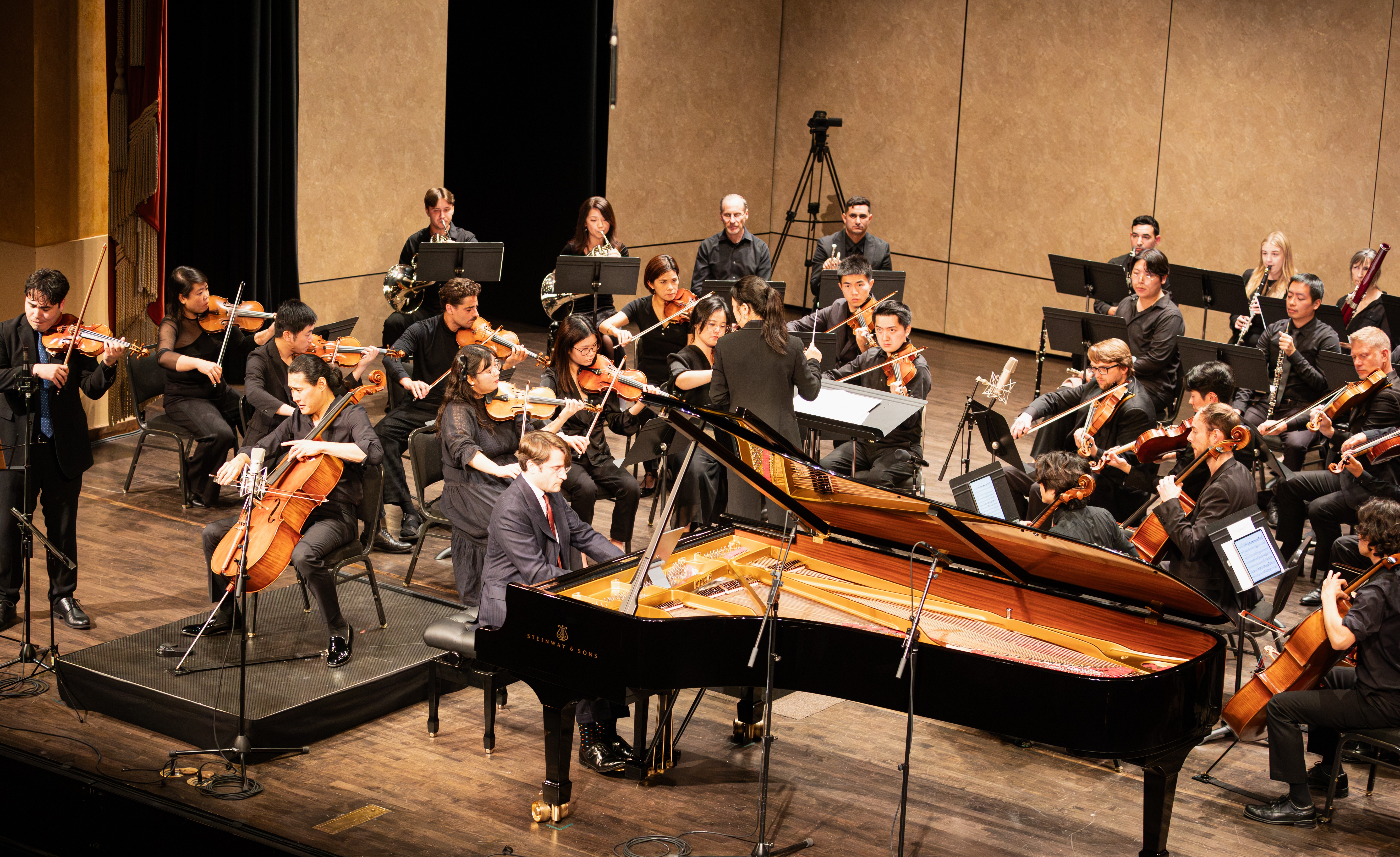
There’s a new chamber orchestra in the Bay Area. SF Camerata was founded by Artistic Director Yuxin Dai and a group of young freelance musicians ranging from professionals to conservatory-trained musicians with day jobs and parallel careers.
The group presented the first concert of its inaugural season Saturday in the Civic Center’s grand Herbst Theatre. Well before the doors to the auditorium opened, concertgoers lined up at the entrance in eager anticipation to see the fruits of the hard work the musicians had done to make SF Camerata a reality. What resulted was a concert that, although at times bumpy, displayed the orchestra’s potential to cultivate a unique voice among San Francisco’s many ensembles.
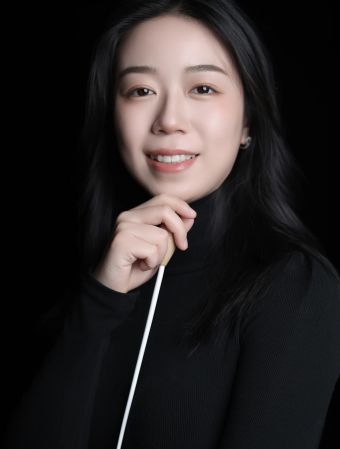
Under Dai’s clean, crisp conducting, SF Camerata brought alive the festivity of the Overture to La clemenza di Tito and with a brisk tempo radiated energy to every corner of the auditorium. Despite a few instances of uncoordinated playing, especially in passages of exposed staccatos, the orchestra was confident in its sound.
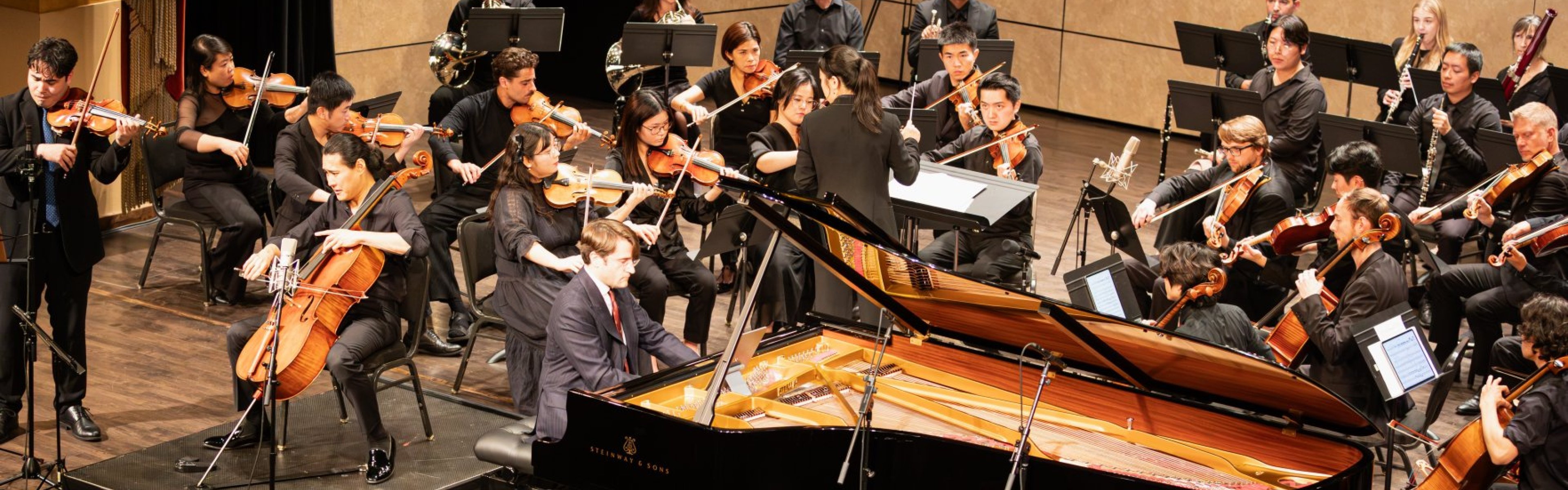
Founding an orchestra had always been Dai’s dream, she said. Her passion and gratitude carried over into the next piece, Beethoven’s Triple Concerto, in which she was joined by the concerto’s soloists — violinist Eric Silberger, cellist Jonah Kim, and pianist David Kaplan. Before performing, the musicians introduced themselves and told the audience that this concerto was no less than a big party.
The audience discovered this for themselves as Kim played the opening theme with a passion that equaled his description of it moments before. He exuded a grace that landed, when his solo concluded, on the shoulder of Silberger and Kaplan.
All three played exquisitely, matching each other dynamically and rhythmically, but Kim was the clear leader throughout. In the second movement, the emotion with which he sang into his cello was breathtaking. His measured phrasing, leisurely tempo, and immaculate rubato — and his stage presence outshone all others. In the third movement Kim played with such energy that at times he nearly jumped out of his seat.
He and his partners played the final movement with nimble, fierce articulation and unmistakable character, and the orchestra followed with fidelity and a humility that gave the soloists the spotlight. The audience’s applause at the final chord was thunderous.
As soon as the first chord of Beethoven’s Symphony No. 7 sounded, one could tell that Dai had set aside her crisp conducting of Mozart to assume a softer, more agile character. Her motions flowed with the woodwinds’ rolling melodies, and the structure was clear as she led the orchestra through to the climaxes.
The orchestra’s largest sounds were, alas, not as commanding as the symphony’s rhetoric demands. The brasses were particularly culpable — the horns played wrong notes too frequently for comfort, and their unstable tone unbalanced the orchestra. The first chord of the second movement was similarly disappointing: the woodwinds were not together, and they played with a lack of conviction, causing the chord to peter out haphazardly. The low strings rescued them with assured bowing, Dai conducting with admirable restraint.
The conductor’s conception of the movement was wonderful but again marred by mistakes from the brasses and mistimed hits on the timpani. Luckily, the beginning of the third movement went better, and the orchestra’s cheerful liveliness was in character. The trio was especially beautiful — the woodwinds’ lilting melody danced upon the strings’ suspended shimmer, enfolding the audience in a reverie. However, sloppy notes from the horns and mistimed entrances from the clarinets were conspicuous. Wrong notes sounded across the orchestra at a few exposed moments in the fourth movement, as well.
Despite this, the orchestra played the finale with fiery energy, and Dai drove them to a vigorous conclusion. Despite the hiccups in its inaugural performance, the orchestra is clearly capable of becoming a force to be reckoned with. The standing ovation showed that the audience had already recognized that.