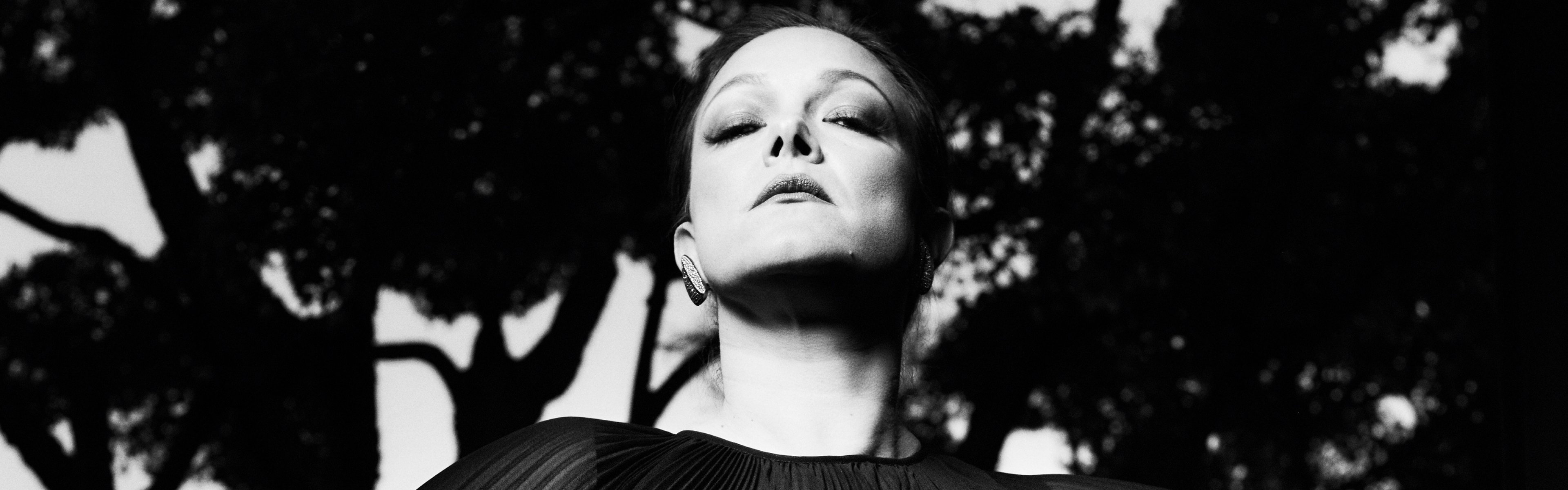
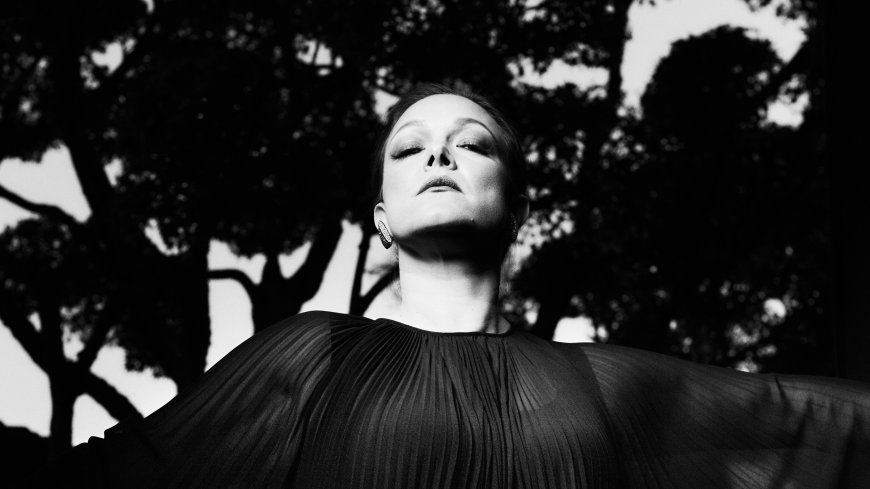
She loves Aretha Franklin, Metallica, and Aerosmith. But it was Luciano Pavarotti who helped her choose opera over a career in pop music. She’s soprano Eleonora Buratto, and she’ll be making her San Francisco Opera debut as Amelia/Maria in Verdi’s Simon Boccanegra, Sept. 12–27 at the War Memorial Opera House.
Indeed, hailed as “the most precious and complete soprano that the Italian school has produced in recent years” (Il Foglio, 2022), Buratto, who was born in Mantua in 1982 and is a graduate of that town’s Conservatorio Lucio Campiani, is enjoying a thriving career. Among the many milestones is her long-standing collaboration with Maestro Riccardo Muti, with whom she has performed Susanna in Mercadante’s I due Figaro, Norina in Don Pasquale, Alice in Falstaff, and Countess Almaviva in Le nozze di Figaro, as well as numerous concerts and gala performances.
Buratto also appeared as a soloist at the 2024 New Year’s Concert broadcast worldwide from La Fenice. Elsewhere she has sung Amelia in Simon Boccanegra at the Teatro alla Scala, and the title roles in Tosca and Madama Butterfly as well as Micaëla in Carmen at the Bayerische Staatsoper.
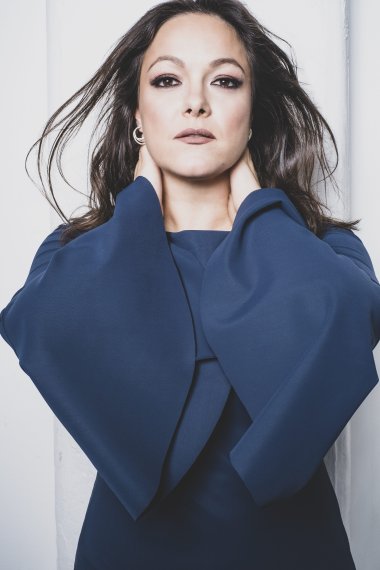
No stranger to the Metropolitan Opera House, Buratto, who bowed in 2016 as Norina, was described by The New York Times’ Anthony Tommasini as “bright-voiced” and “vivacious,” with other roles following: Mimì, Cio-Cio-San, Elisabetta in Don Carlo, and Liù in Turandot. Buratto returns to the Met to sing the title role in Tosca in April and May 2027, and sings it again that month at the Bayerische Staatsoper.
The singer’s symphonic repertory continues to grow, including Rossini’s Messa di Gloria, which she recorded with the Accademia Nazionale di Santa Cecilia under Antonio Pappano. That disc was awarded the 2023 International Classical Music Award for choral music and the 2023 Premio Abbiati del disco for symphonic repertoire. Buratto’s debut solo album, Indomita (Pentatone), was released in April 2025 and features scenes from operas by Bellini, Donizetti, and Verdi.
SF Classical Voice had a lively conversation with Buratto over Zoom, in which her ebullient laugh punctuated topics ranging from her SF Opera debut and her collaboration with Muti to her approach to dramatic roles.
How did growing up in Mantua, Italy, help shape the artist you’ve become?
Of course, Mantua is very, very beautiful [and] a cultured city, and we are surrounded by beautiful, artistic things. So, when I signed up at the Conservatorio Lucio Campiani, it wasn't so clear what I really wanted to do, [because] before that, I started another path — singing pop music [and] rock. Since I was a teenager, I listened to Pearl Jam, Guns N’ Roses, and Metallica.
But studying at the [conservatory], there was a beautiful meeting with Maestro Pavarotti, who helped me choose my path. Finally, when I met Pavarotti, everything was clear, because he believed in me. He believed in my voice. So, I thought, “Okay, if someone like Pavarotti believes in me, I have to do the same.”
What are your thoughts on making your debut with San Francisco Opera, and have you worked with Maestra Eun Sun Kim before?
It’s my first time in San Francisco and I started to discover this beautiful city, because when I work in a new city, I want to visit everything, so it’s really nice. During the day, you have to manage very different temperatures, the wind, the clouds or sun, so we have to have many clothes to put on and put off. It’s difficult to manage, but it's interesting.
And yes, I worked with Eun Sun before, on two Puccini operas. The first was La bohème at the Metropolitan, and the second was Madama Butterfly in Munich, which was a beautiful experience there. Finally, we work on another beautiful piece of music – our first Verdi together.
You’ve sung many Verdi heroines. What is the emotional or technical “key” to singing Amelia/Maria?
I believe there is only one key to interpret any role. We have to step into the character and understand the emotions and bring them to life through our own. In this case, Amelia is a woman who needs to know who she is. She has lost her mother and never knew her biological father, so I must always ask, “How will I react? What would my emotions be?” We have to go into the character through our emotions and [by] understanding emotions.
Amelia is both a political symbol and a daughter longing for connection. How do you balance her public and private identities?
Thank you for that amazing question. In my opinion, it’s important not to treat them as two separate identities. First of all, Amelia is a daughter who finally finds her father. This is important [and] I would like to give Amelia political meaning from the first moment. If, like singers, we constantly think, “I am the symbol of reconciliation between plebeians and patricians,” we risk missing the most moving thing: Amelia simply wants to know who she is; where she comes from; and who her father is.
This is the most important thing, because she suffers for a long time. And the beautiful thing is that Amelia doesn’t have to interpret the symbol – it’s the other characters who turn her into a symbol. She becomes the living bond between plebeians and patricians. Her strength is her ability to keep humanity and tenderness within a world dominated by men, power, and violence. So, I would like to interpret this role in a humanitarian way.
Tell me about your long collaboration with Muti, a Verdi expert of the first rank. What have you taken from him that remains foundational?
Oh, Maestro Muti was really, really, really important in my career. The first time I met [him] was in 2009, when he chose me for Creusa in [composer Niccolò Jommelli’s] Demofoonte in Salzburg. Then our collaboration continued, and my first Amelia was with him in Rome in 2012. In that moment, with this opera, I started to switch from lirico-spinto to lirico puro [soprano].
Before this, my repertory was Nannetta in Falstaff, Susanna in Le nozze di Figaro, and Musetta. This was an important change for me, and I’m really grateful to him. He was important also, because he was the first and one of the most important conductors who believed in me. He taught me how to read a score: how to find the little details in a score; the importance of the words; the meaning of the words; how and when to underline something and when not to.
So, thank you so much, Maestro Muti, and finally, next year in April, I will sing with him Rossini’s Stabat mater in Chicago with the Chicago Symphony Orchestra.
How has your approach to Puccini’s heroines — Mimì, Cio-Cio-San, Tosca — evolved as your voice has matured, and how do you approach multi-faceted characters?
When you study a new role, a dramatic role, I treat them like I always do with roles. I start reading the libretto and listen to the most important recordings we have. I let the big singers from the past inspire me, and then finally, I try to go into the character by myself and follow my instincts and sensitivity.
Every time it’s very interesting, because you can find more details from production by production. This is also important to sing the same role many times in different productions, because you meet a different conductor and a different director. You have a lot of stimulation and thoughts by other people, [so] you can put these together and discuss and build something together, and it’s fantastic.
Continuing in that vein of thought, what do you want most from a director?
From a director, I would like to have, first of all, the respect of the libretto. Because for us, it's really important to find the meaning of what we have to do. So, it's not enough for us, that someone says, “Okay, you have to move from right to left.” We need to work with something very deep.
We have to find a real meaning, and after this, we can do everything. It’s important to find a director that knows what he wants for the production, and especially from us. Of course, we need to find a positive collaboration; that’s really important.
What’s been one of the most meaningful operatic experiences for you and why?
I think it’s the opportunity to be another person, but in the same time, use your experiences and your emotions to sing the emotions of someone else. It’s complicated. But it’s really a magic world, because you can find a lot of beautiful experiences to have also, because you sing with other people.
You have to find the connections with other people. Because if you do something, the reaction of others can be different from one and [another]. So, it’s really magic. We create something new every time, and so every time is different.
How do you balance the demands of an international career with a personal life?
Oh, it’s so difficult. I’m jealous of my private life, and I try to defend my private life from everything. It’s a complicated world, and you are always on social media. You’re always out of your home. You live in other cities, other countries, other apartments, so you have to find a balance to live in a good way.
The most important thing is to keep your private life at the first level of your thoughts. For me it’s important for my family: I find a way to call them [or] to video call. It’s not the same as to visit them, to stay in the same room and spend time together, so, when I’m home, I run to them to do a big hug and if it’s [only] for a few hours, it’s enough, because the most important thing is the quality, not the quantity.