

Composer Tobias Picker has written seven full-length operas, and it’s a mystery why they don’t appear onstage more often. Nearly every one showcases a versatile musical vocabulary, an ear for the voice, and an innate sense for how music can inhabit a story. A recording of Picker’s most recent opera, Lili Elbe (2023), is finally out, and the strength of the entire project is proof enough that the neglect is undeserved.
The story of Lili Elbe has been told twice already: in David Ebershoff’s novel The Danish Girl and its film adaptation by Tom Hooper (starring Eddie Redmayne). Lili was a Danish painter and one of the earliest people to undergo gender-affirming surgery. Today we would say, perhaps oversimplifying, that she was one of the first visible trans women in the modern world.
“Oversimplifying,” I say, because that fails to capture the vast ignorance that Lili was up against. Librettist Aryeh Lev Stollman (Picker’s husband, incidentally) wisely drains the story of any didacticism or easy sentiment, so that the sheer force of Lili’s boldness is at the center. (Lili petitions the Danish king himself to make her transition official.) Lili’s actions come at a heavy price, though, as her relationships with her lovers, family, and friends are forced to change. Whether Lili’s determined actions prove brave or foolhardy is left to us to decide.
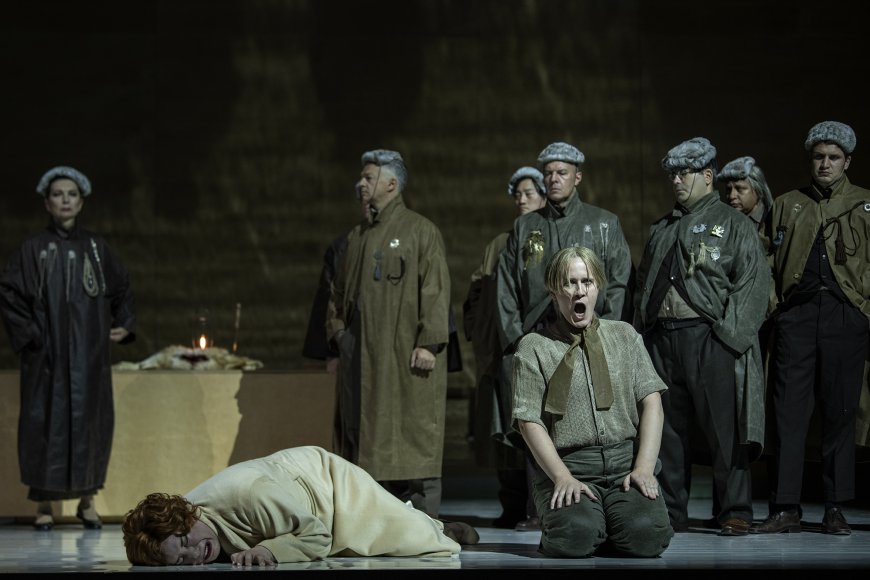
Bright Shiny Things’ recording, drawn from a dress rehearsal and performances of the original 2023 Theater St. Gallen production under Modestas Pitrėnas, gives baritone Lucia Lucas the title role. A trans woman herself, Lucas drew on her own experiences in shaping the role. On the recording, she has a colorful, resonant presence. The role itself, though, occasionally seems one-dimensional, with a limited range and unchanging melodic style. Lucas surely would shine with a more dramatic part, but that restraint nevertheless adds an enigmatic dimension to Lili’s introspective, undaunted character.
The rest of the cast performs admirably, especially Sylvia D’Eramo as Lili’s wife, Gerda Wegener, who sensitively communicates an unimaginable mix of love, pain, and resignation. The constant merry-go-round of minor characters, from lovers to family and even the Danish king, is handled well and heightens the sense of Lili’s confrontation with the world around her.
The story and its characters are Technicolor, benefiting from Picker’s blend of styles, which evoke everything from Gershwin to Berg. It is a fast-paced score, perhaps moving too quickly (more on that below), but this draws attention to the few moments when time slows, such as in the finales of both acts. Each is an encounter with Dr. Kurt Warnekros, the sinister doctor who performs Lili’s gender-affirming surgeries. Warnekros is no generous benefactor, but a man hungry for success and recognition—a neglected point in the story’s other versions. Picker slows the music to an ominous tread, and, as a timpani ostinato gradually takes over, the specter of death comes to the fore. This is the revelation of the opera. Today, trans lives have unfortunately become a political flashpoint. But all it takes is a glance at Lili’s story, psychologically shaded in Picker’s score, to realize that gender identity is not role-playing but a matter of life or death.
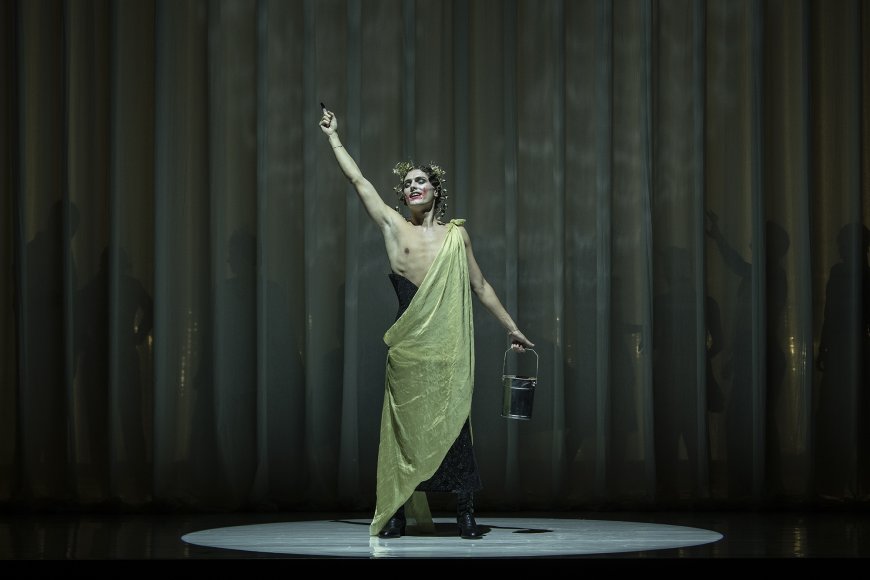
Admittedly, the opera on its own can come off as rushed or patchwork; Stollman fits a lot of Lili’s life into these two hours. A strong directorial hand, one that could link these scenes together in a magical operatic logic, would easily solve this problem. Santa Fe Opera’s American premiere last month, again starring Lucas, appears to have done exactly that. Hopefully this recording and that performance draw more attention to Picker and his still-expanding catalog.