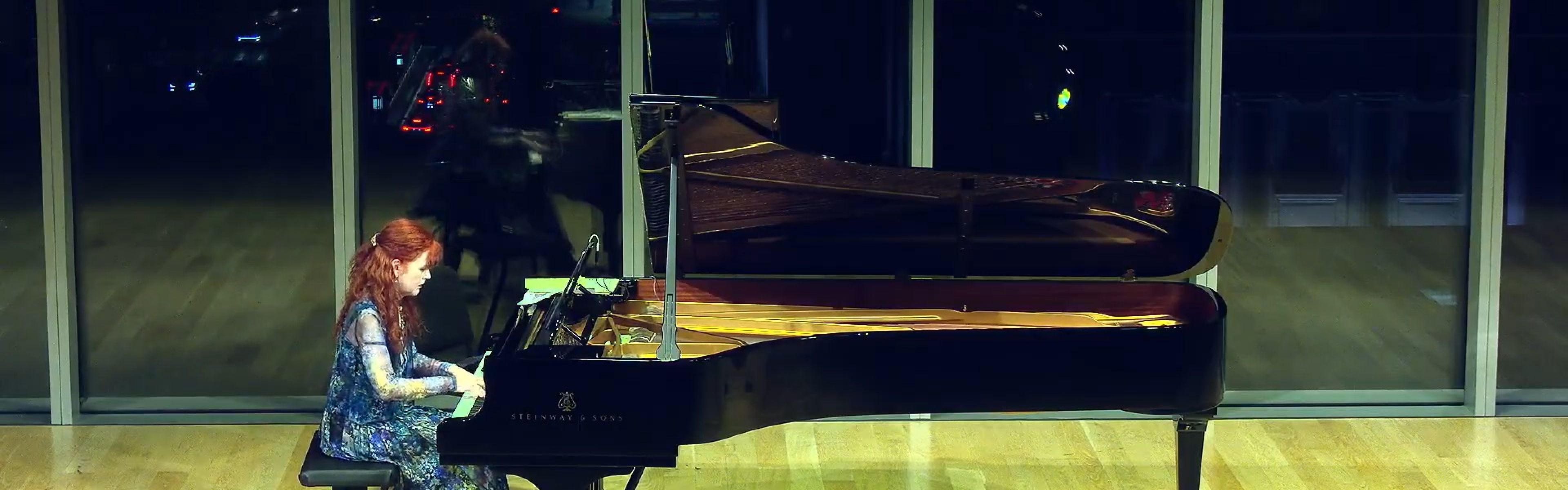
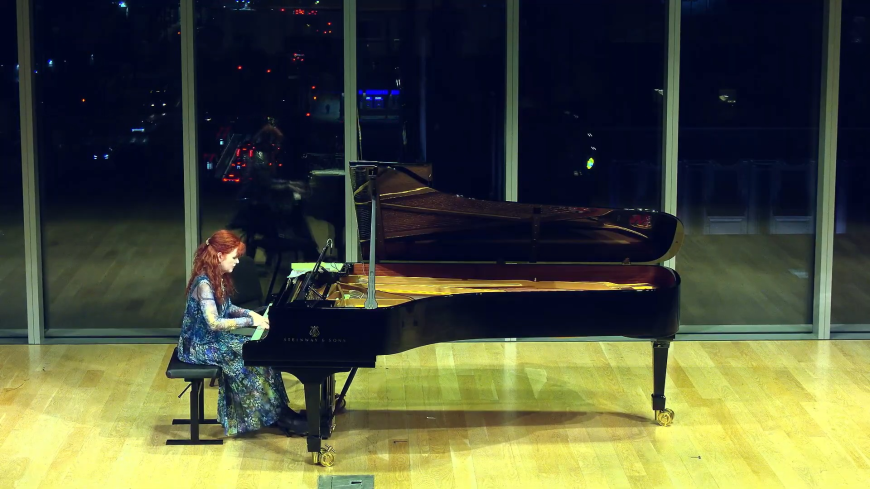
A cloud of mourning for composers past, a country broken, and loved ones unnamed lingered over Sarah Cahill’s latest solo recital, “No Ordinary Light.”
The contemporary pianist’s Feb. 9 program at the San Francisco Conservatory of Music’s Barbro Osher Recital Hall was dedicated to the feeling of loss — a feeling which seeped into every note of Cahill’s performance.
Her program notes begin with former Prime Minister of India’s Jawaharlal Nehru’s famous quote on the assassination of Mahatma Gandhi: “The light has gone out, I said, and yet I was wrong. For the light that shone in this country was no ordinary light.”
The pianist introduced every piece with a short speech about the composer and the people to whom the piece paid homage. Each of the eight pieces on Cahill’s program was a transfiguration, Cahill explained, of grief into music. These words transformed her recital into an intimate, honest event in which the audience participated alongside Cahill in remembrance. Listeners heard not just Cahill’s playing but the losses from which the music was born, and the room sat accordingly in reverence.
The newest piece on the program was Samuel Adams’s “Prelude: Hammer the Sky Bright,” commissioned by Cahill and composed in 2025. A tribute to Adams’s late godfather and composer Ingram Marshall, “Prelude” featured obscure, haunting chords separated by resonant silences that slowly gained light and clarity as Cahill’s touch strengthened. Halfway through the piece, a filtered field recording of a foghorn began to accompany Cahill’s playing, operating as a spectral voice from a distant realm. And in the foreground, an interlude of rhythmic passagework gave way to bright, high chords that Cahill struck repeatedly, their lingering resonance concluding the piece.
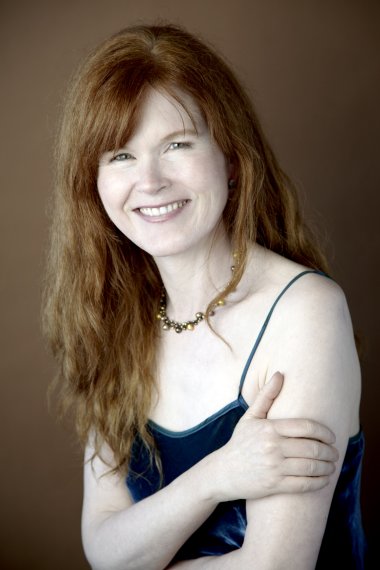
Cahill’s playing was crystalline. She remained true to her professed belief in the magic and purpose of Adams’s piece — to prompt otherworldly listening, reach the ears of the departed, and empower communication with the beyond.
Maggi Payne’s “Holding Pattern” also involves electronics — EBows, which allow artists to suspend notes indefinitely, in particular, which Payne filed down with sandpaper for the piece’s premiere in 2001. Commissioned by Cahill, “Holding Pattern” honors twentieth-century composer Ruth Crawford Seeger, whose 100th birthday the commission celebrated. The EBows proved finicky at last week’s performance, and an opening accident forced Cahill to restart. Nevertheless, they were the piece’s central and most powerful component.
After a quick striking of low clusters, Cahill let the EBows sustain, occasionally varying in dynamic intensity while sporadically fading out and in. Soon, it felt as though the room itself were suspended inside the glow of the ringing EBows.
The last piece on the program was Maurice Ravel’s Le Tombeau de Couperin, an apt finale to Cahill’s homage-themed recital. Composed during World War I, Le Tombeau is comprised of six movements, each meaningfully dedicated to the memory of a friend or two of the composer’s killed in the war.
Cahill’s playing, however, was disappointingly jumbled. She missed notes frequently and even apologized inadvertently for a mistake in “Forlane” out loud. Melodies were thoughtlessly phrased, while faster passages were slow, heavy, and boisterous. Permeating Cahill’s performance was a lack of conviction that extinguished the depth of Ravel’s suite, turning it into a clumsy showpiece.
But though Cahill did not present herself as a classical pianist, she more than displayed her virtuosity in the sphere of contemporary music. As she played and spoke of the losses around which she organized her recital, she brought grief into the spotlight.
By the end of her recital, night had fallen, and the open, black windows enclosing the hall illumed Cahill’s stage with no ordinary light.