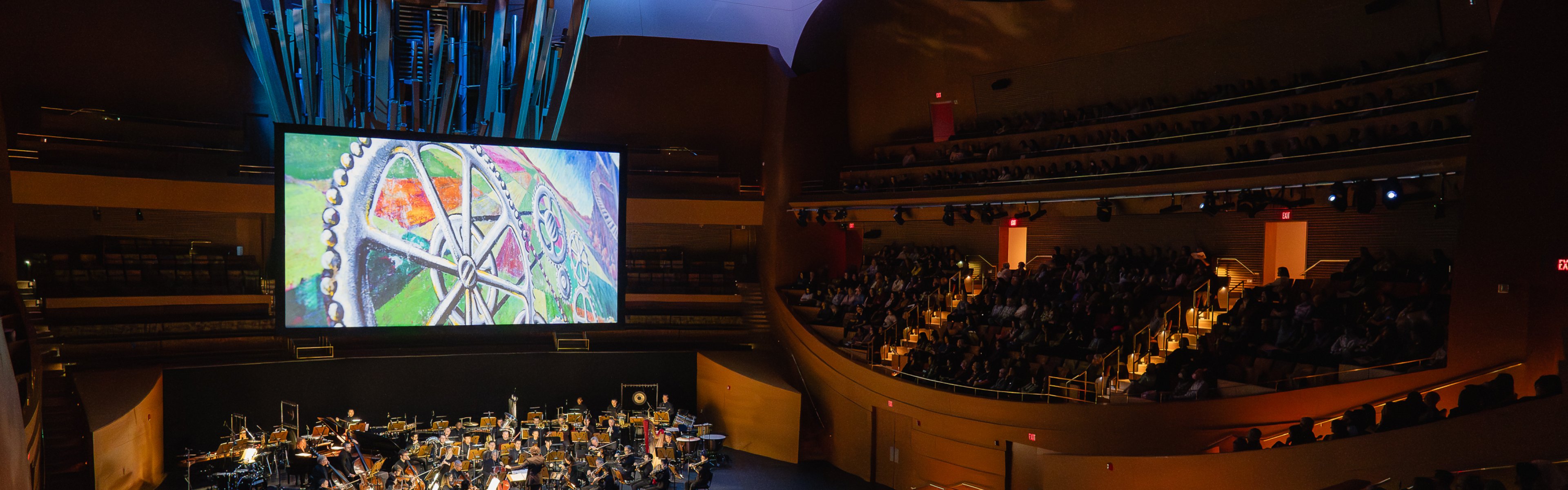
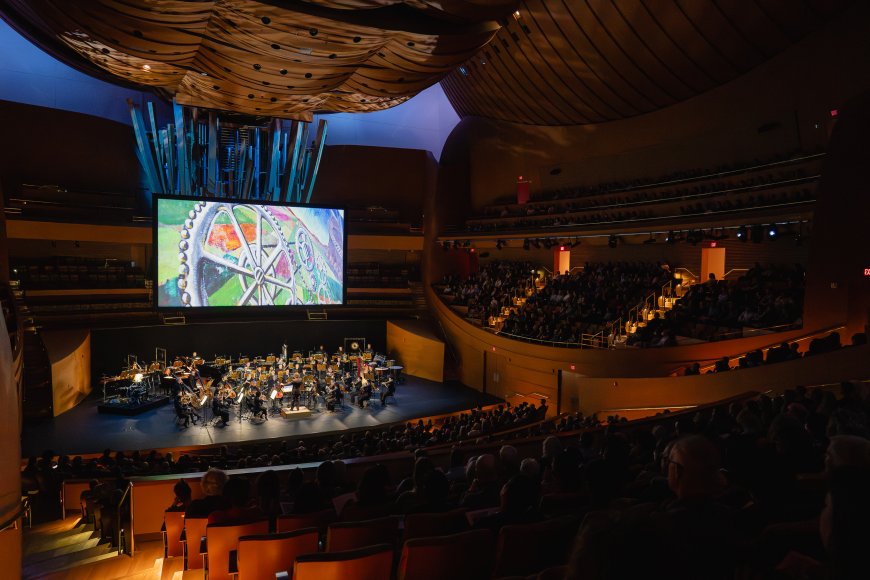
The Los Angeles Philharmonic’s Green Umbrella new music series functions as an innovative laboratory for contemporary orchestral music. Saturday afternoon’s concert was also a portrait of Judith Baca’s monumental mural, The Great Wall of Los Angeles, which chronicles California history from prehistoric times through the mid-20th century, highlighting stories often omitted from dominant narratives.
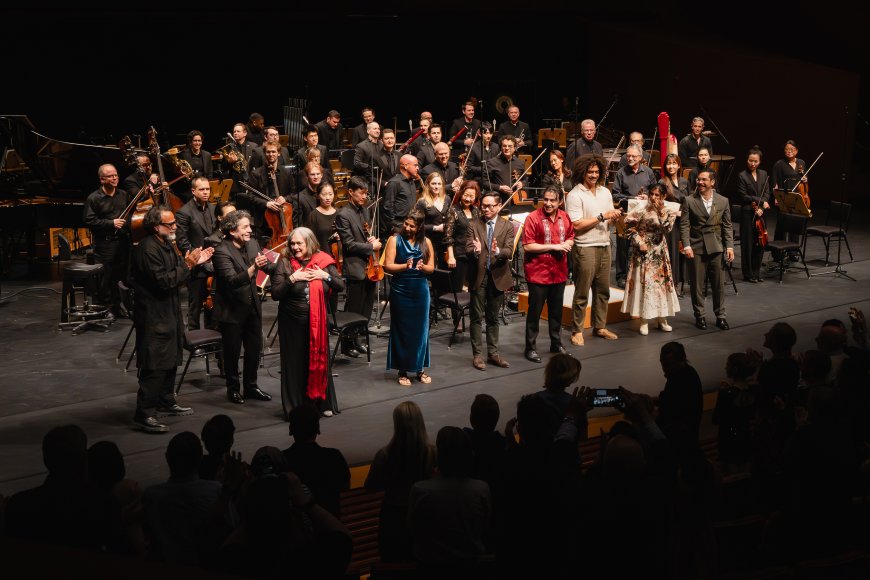
Six composers with ties to the city joined in a symphonic response to the mural and the history it portrays. Conducted by Gustavo Dudamel and curated by Gabriela Ortiz, the concert was accompanied by video of the mural by filmmaker Alejandro G. Iñárritu and cinematographer Emmanuel “Chivo” Lubezki.
The concert was strikingly cohesive, with each composer’s unique approach bound together through recurring musical gestures. Each piece claimed its own terrain, while seemingly rooted in a larger musical ecosystem of swelling piano arpeggios, driving percussion, and solo instrumental voices emerging from the ensemble.
Juhi Bansal’s A Lone Voice in the Darkness began with airy orchestral textures giving way to an interlocking duet for cellos, before darker brass and percussion gradually gathered underneath, building to broad swells. By the end, the now-solo cello voice that was central at the beginning dissolved into a luminous halo of high strings, sublimating into a vaster texture.
Nina Shekhar’s Westbound, inspired by the mural’s depiction of Chinese railroad laborers, began with a sharp, angular gesture before settling into a quietly intense rhythmic pulse. Musicians stomped in time from their chairs, the potential dangers of progress made sonically manifest. Textures fractured and reassembled, culminating in a hauntingly plaintive viola solo that rose slowly out of the surrounding stillness.
Estevan Olmos’s Sin Tierra Sin Voz responded to the mural’s panel depicting the deportation of Mexican workers during the Great Depression. Restless percussion and brittle orchestral textures brought documentarian clarity to the piece. In a poignantly effective moment by Olmos, a luminous English horn solo appeared, only to be cut short before reaching its potential.

Nicolás Lell Benavides’s ¡AGUAS! responded to the Zoot Suit Riots with powerful brass writing and rhythmic surges occupying the space between dance and danger. In a clever moment of orchestration, what began as the tight wooden pulse of claves unfolded into a melodic line on the xylophone. The music’s intensity seemed to echo the violent history depicted in the mural.
Xavier Muzik’s God, The Brand built a sparing, spacious sonic world from a solitary viola line, which expanded into kaleidoscopic melodies punctuated by orchestral flashes. Even in its lyrical moments, the music retained an undercurrent of uneasy stillness that wove its way through the evening’s program.
The final work, Viet Cuong’s Ladders, brought shimmering, bright textures to the concert. Familiar harmonic shapes were subtly recombined and refracted. A drum set beat added a sense of celebration after an afternoon spent tracing the city’s deeper histories.
The afternoon’s served as a vehicle for telling Los Angeles’ stories. Like Baca’s mural, the composers assembled fragments of memory, resilience, and celebration into something larger. The result was neither nostalgic nor sentimental.
Direct and vivid, this musical response to The Great Wall of Los Angeles embodied the essence of the city and its music.