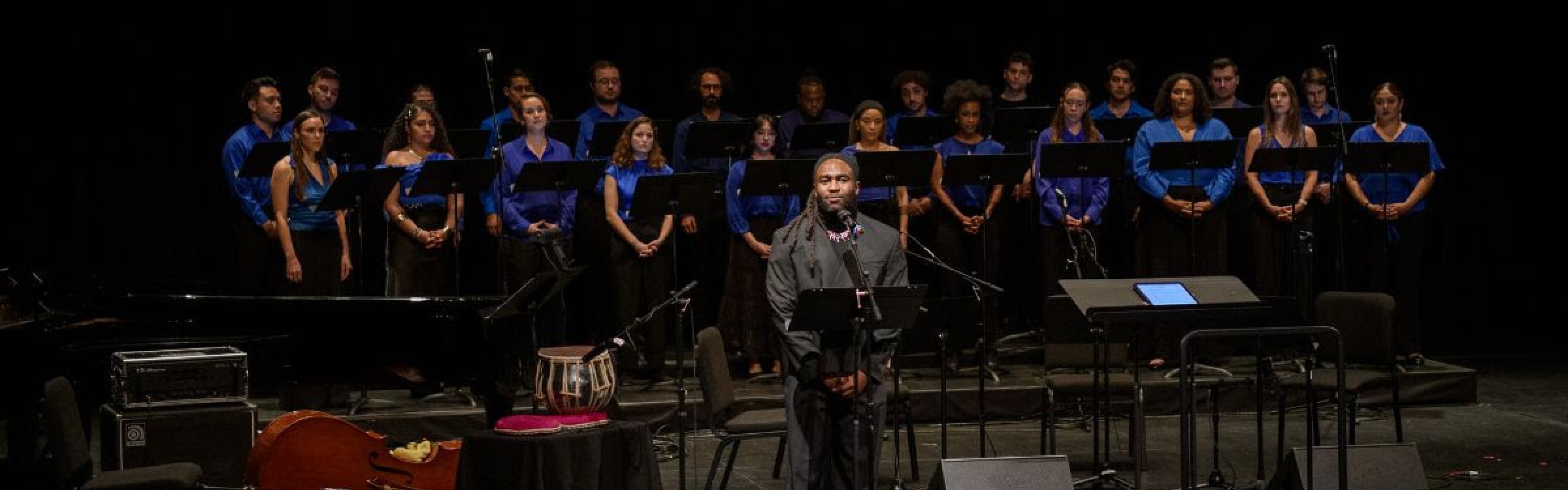
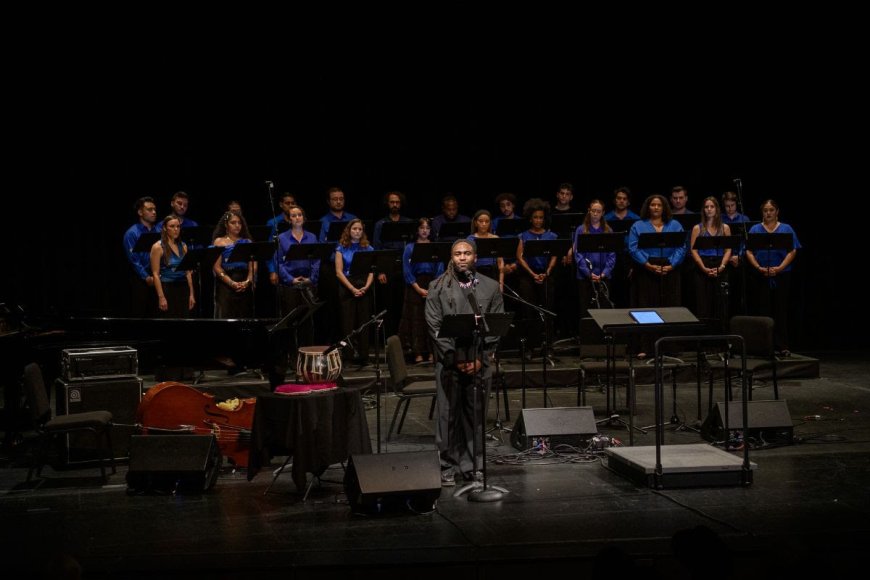
It has been six years since Ahmaud “Quez” Arbery was fatally shot while jogging through Satilla Shores, Georgia.
The 25-year-old was chased for five minutes by three white men: Travis McMichael, Gregory McMichael (Travis’s father), and their neighbor William Bryan. All three perpetrators were convicted of racially-motivated murder — a federal hate crime — and attempted kidnapping. Ultimately, the McMichaels were sentenced to life imprisonment for brandishing and discharging a firearm during a violent crime. Bryan, who didn't have a gun, got off with 35 years.
In remembrance of Arbery, Grammy-nominated composer/conductor Dr. Alexander Lloyd Blake has penned the album Running From, Running To: A Musical Reflection on Ahmaud Arbery in collaboration with vocalist/composer Ogi. Recently released by the label Bright Shiny Things, the eight-movement, 32-minute choral work for soloists, chorus, and chamber orchestra includes Blake's arrangements of "Deep River, "Poor Wayfaring Stranger," and a powerful a cappella version of "No More!"
Short though it may be by some standards — its 43 minutes are the perfect length for the Dolby Atmos version — this is a major recording.
The Grammy award-winning Tonality chorus, which Blake founded in 2016 “to inspire, innovate and spark social change through the power of diversity,” is a highlight. The soloists, soprano Angel Blue (famed from her performances at the Metropolitan Opera), baritone Jamal M. Moore, and alto Ogi, are equally accomplished. The album’s nine-person instrumental ensemble is Wild Up, a self-proclaimed "ambassador of West Coast music” that has premiered works at LA Opera, National Sawdust, and Walt Disney Concert Hall, and often collaborates with the Martha Graham Dance Company.

Ultimately, none of the artists’ accolades amount to much if the music doesn't make its mark. But we have no worries there. Running From, Running To is extremely accessible.
The album manages to be sad, urgent, grief-stricken, emphatic, and quite touching without either pummeling you over the head or putting you through the emotional ringer. Its genre-crossing blend of classical, pop, spirituals, and a touch of jazz incorporates variations on some popular chants, including “Without justice you will find no peace” and “Say their name. Say her name,” at an ideal volume.
However, I'm not totally convinced by Blake's arrangements of “Deep River” and “Poor Wayfaring Stranger.” The earliest recordings of “Deep River” I've found, by Marian Anderson, Paul Robeson, and the Fisk Jubilee Singers, all go deeper than Blake's version, and I'm partial to simpler-is-better versions of “Poor Wayfaring Stranger.” Regardless, as part of a recording that is self-recommending to choral lovers, music lovers, and all who treasure justice, peace, equality, and freedom, Running From, Running To: A Musical Reflection on Ahmaud Arbery deserves all the attention it may receive.
It certainly has ours.